Factors to consider when planning sales territory alignment
It might seem logical to base your realignment strategy solely on volume of sales. While understandable, this approach could limit your company’s overall success for two primary reasons.
First, revenue doesn’t have a linear growth relative to effort. Certain clients may require lots of hands-on attention that yields consistent mid-level revenue over time. Other clients may be virtually autonomous, but yield consistent large sales even with a low time and energy input.
Second, aligning territories based on sales doesn’t account for the human element of the sales process. A high-performing salesperson may end up having a portion of their territory redistributed to a lower-performing salesperson, limiting future growth and potentially overwhelming a less capable salesperson.
So what factors should influence your sales territory alignment?
If a sales rep’s goal is to secure new business and manage existing client relationships, sales territory alignment should enable sales teams to be successful. It helps sales managers set proper quotas, define territories strategically, lower costs, and provide teams with effective, efficient sales processes.
With this goal in mind, take a look at the factors you should consider.
Data
As with most business decisions, it helps to look a hard look at the data to inform your territory alignment decisions. The data sources that will help you best align sales personnel to territories can live in a number of places, from your CRM platform to census data.
Benchmarks
Armed with data about your prospects and customers, you can begin to create a successful plan for territory alignment that also meets larger business goals and objectives. This plan should use consistent logic for determining staffing needs by location and provide quantifiable, predictable criteria for success.
Local adjustments
Once you have a central benchmark in place, you can incorporate local input and data to ensure your sales territory alignment will be effective in response to local conditions. Collaboration with your sales reps in various locations will also ensure your team’s “on-the-ground” experience is heard and help you gain buy-in on any new alignment plan.
Workload
It’s important to balance workload across territories to optimize sales coverage of opportunities and customers. Sometimes, it’s not possible to balance workload and potential. However, keeping this balance in mind will also help you balance productivity and burnout among reps, while ensuring every potential client and existing customer gets the attention they need.
Account potential
Some prospects require a heavier lift than others. Regardless of lift, some accounts also have more potential for success and revenue. Balancing this potential across your sales team will ensure an even distribution of opportunity and reward.
Location
If the primary goal of sales territory alignment is efficiency, then it makes sense to build geographically compact, workable sales territories that align both to your biggest areas of opportunity—but the location of your sales reps. This factor will also minimize travel costs and maximize customer coverage and interaction.
Tools to begin: Showing the value of sales territory realignment
Territory maps
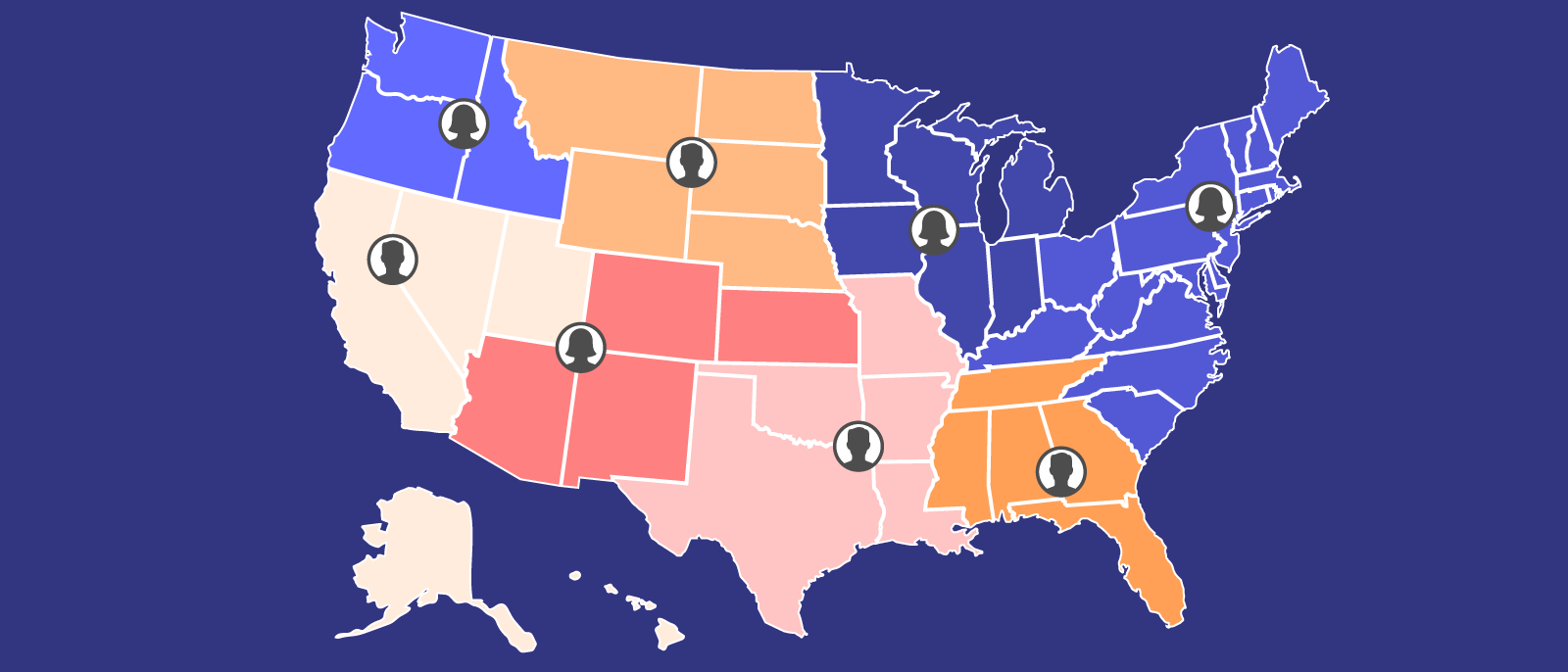
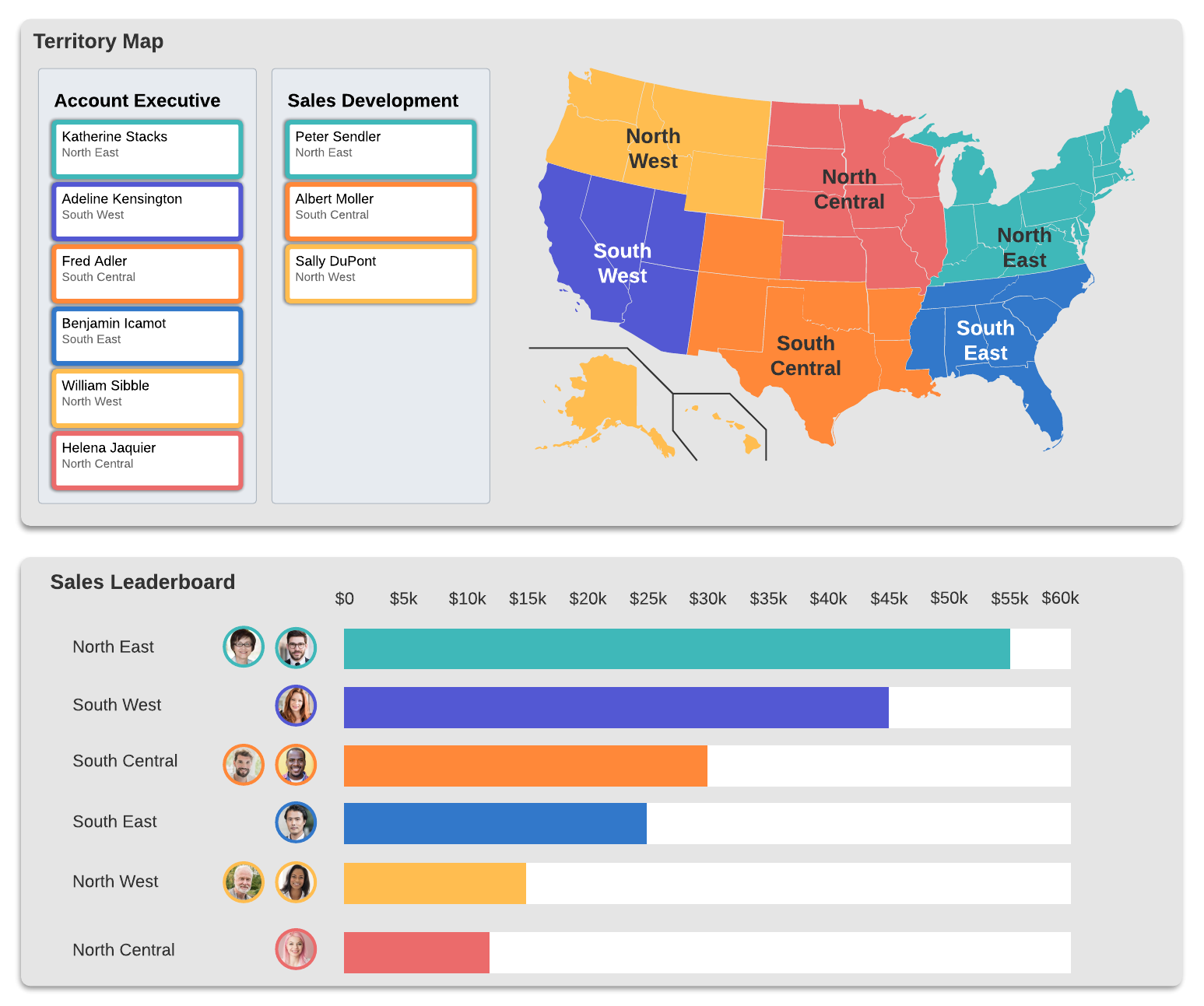
Whether you are assigning territories for the first time as your sales org grows or undergoing a territory realignment, territory maps are an essential visual to designate where each territory is, assign reps, and increase ownership. Use an online solution that updates in real time to ensure that reps always have the latest territories and assignments—you can even attach revenue data to promote some friendly competition between the different teams.