As I've worked to build marketing organizations over the years, I've tried to solve the problem that companies across the globe constantly grapple with: How do we bring together teams with diverse perspectives and create an inclusive environment where team members can share and communicate those different perspectives effectively?
It’s important to answer that question, because without diverse perspectives and effective communication, innovation gets lost. To help us understand the communication side of that equation, we partnered with the Economist Intelligence Unit to learn more about communication barriers in the workplace. As we looked at the results from a variety of perspectives, it became very evident that there is a lot of room for growth.
It turns out that frequent communication breakdowns are almost universal. The survey findings shows that 86% of senior executives, managers, and junior staff regularly feel the effects of poor communication.
This stat probably isn’t too surprising to you—wasn’t it just the other week that Joe on your team tried to give feedback on an idea and it got lost in the mix? And you know that wasn’t the first time a communication barrier caused your team to miss out on a more efficient way of completing projects.
The shocker comes when you realize the massive impact of thousands of these types of miscommunications: The data shows that as breakdowns add up, companies lose significant productivity, miss project deadlines (44%), are unable to close sales deals (18%), and invite a host of other issues that filter down to impact the bottom line.
So what’s the solution? How do we arrive at a more nuanced understanding of what makes communication break down so that we benefit more from diversity of thought, understand our colleagues, and ultimately grow the bottom line?
Identifying communication styles...
According to the Economist’s study, differences in communication styles are one of the most commonly cited causes of communication breakdowns. As humans, we like to use attributes like gender, role, and age as shortcuts when we decide how best to convey our message to different people. For example, people may assume that women are more receptive to intuitive communication or that people in the finance department tend to be analytical communicators because the job requires that they always study the cold, hard numbers. The data tells us differently:
…By functional role
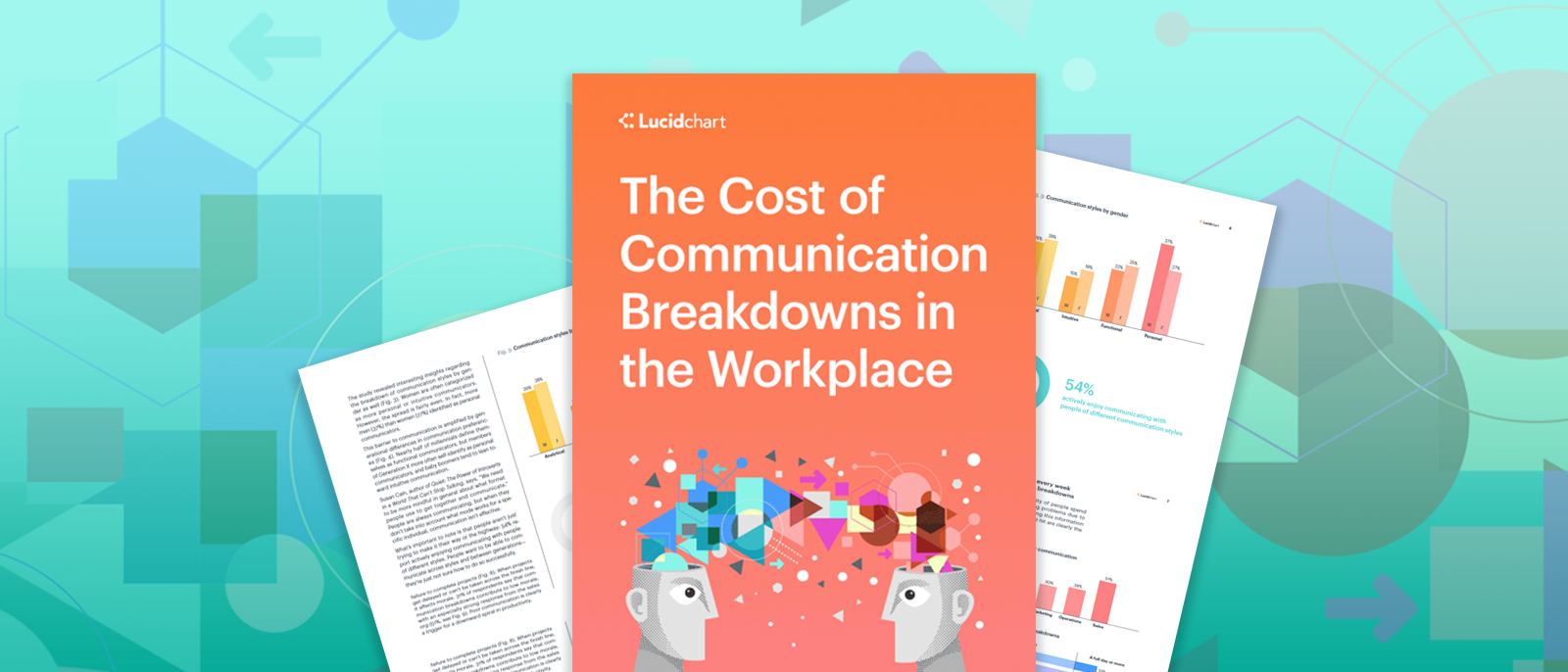
When you try to predict communication style by functional role, you can throw your expectations out the window. Whether you’re in finance or marketing, you’re almost just as likely to find an analytical communicator (finance: 33%, marketing: 27%) as a personal communicator (finance: 33%, marketing: 29%). This even distribution of different communication styles within a department is surprisingly consistent across various job functions.
…By gender
But wouldn’t gender be a good indicator of communication style? Guess again—traditionally women tend to be seen as more personal communicators and men as more analytical or functional communicators, but men and women were roughly even on every communication style. In fact, 10% more men identified themselves as personal communicators than women.
…By generation
Some of the clearest differences in communication style became apparent when we sliced the data by generation. Nearly half of millennials define themselves as functional communicators, but members of Generation X more often self-identify as personal communicators, and baby boomers tend to lean toward intuitive communication. Even so, there’s still some significant variety between members of different generations.
...doesn’t work very well
Regardless of how you slice it, the data clearly shows that communication styles are richly diverse and that it’s time to reexamine our assumptions when determining the best way to communicate with someone at work.
Getting away from one-size-fits all
With so many communication styles—across roles, across genders, across generations—it is a fool’s errand to say that we should all communicate in exactly the same way.
Yet when you look at the tools we use to communicate, there’s almost no diversity. Almost everyone relies on email, instant messaging, video conferencing, and presentations to get their message across. And people use these methods faithfully even though the data clearly shows that those same people think that these methods are ineffective.
How did we end up with this set of standard communication tools that are expected to fit everyone's needs, and why do we use them even if they don’t work?
When I look at the data and consider the past twenty years I have spent in the tech industry, I see a workforce that is dealing with baggage and limitations from the past. Digital communication came of age at a time when computing power just wasn’t far enough along to allow us to communicate in different ways, so these limited methods forced us to use one-size-fits-all solutions that are suboptimal for almost everyone.
Now that tech is capable of so much more, it’s time to step back to see how we can really make communication work—for everyone.
Driving innovation with communication
But are more tools for communication the answer? According to our respondents—yes. Over half of survey respondents agreed that their companies could significantly improve communication if they had and used a wider range of communication tools.
And that response makes sense. It will take a wide range of communication tools to stay ahead in an innovation-driven economy and to communicate new ideas. Why? Looking at the key skill sets that will be in demand in 2020, critical thinking and creativity top the list. If creating things becomes our primary role, being able to communicate those new solutions and ideas to a wide variety of communication styles becomes more critical than ever.
Because we live in the information age where we have terabytes of data at our fingertips, that is only increasing in complexity. More jobs are touching more systems and technology. The skill that companies will increasingly crave is the ability to understand what is going on between data, systems, and people and then synthesize insights and communicate them effectively. Unless employees are provided with the tools they need to get that job done, companies will start falling behind.
So what does this mean for us? Businesses need to take a long, hard look at how they enable communication.
There’s no time for slowdown, for missed handoffs, for failed implementations, for missed sales. The ability to build great products and bring them to market is heavily reliant on a team’s ability to communicate. How will you help your team to get there?