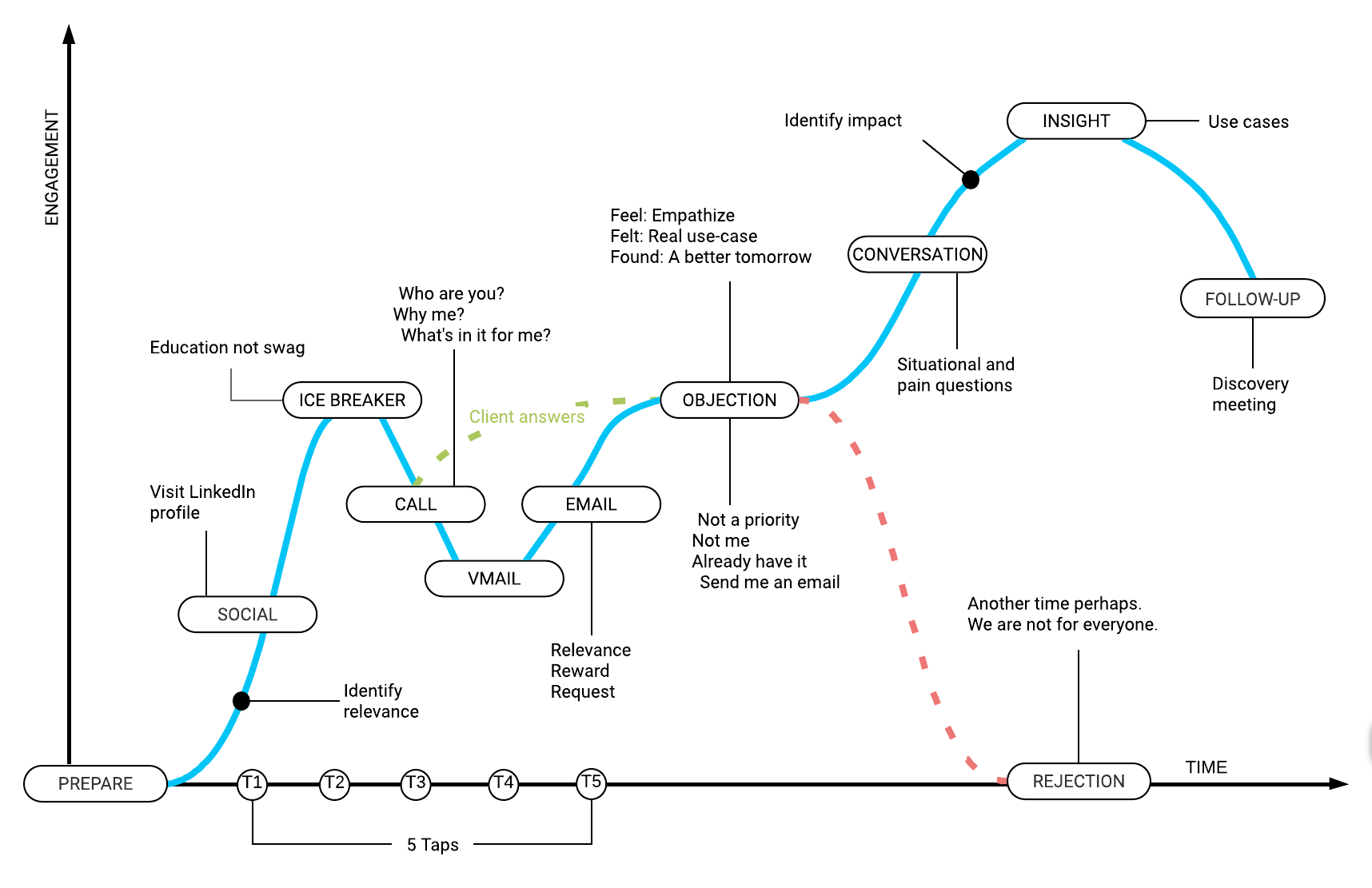
We’ve all been in the situation when our “sales pitch” doesn’t go exactly as planned. It’s inevitable, and if it hasn’t happened to you yet, it’s just a matter of time. After talking with hundreds of inside sales reps in the past six years, a common reason why this happens is a lack of preparation.
You see, when sales reps don’t do their homework in advance, sales conversations become more of a monologue… and this does enough damage to turn away a would-be customer. Sales reps have to research their buyers, the company, and competitors prior to the first sales call or meeting in order to become relevant and build trust right off the bat.
With that said, in the early stages of a sales deal, what would happen if sales reps deemphasized the focus on themselves (company, product, services, etc), but instead focused primarily on understanding and solving their buyer’s problems first?
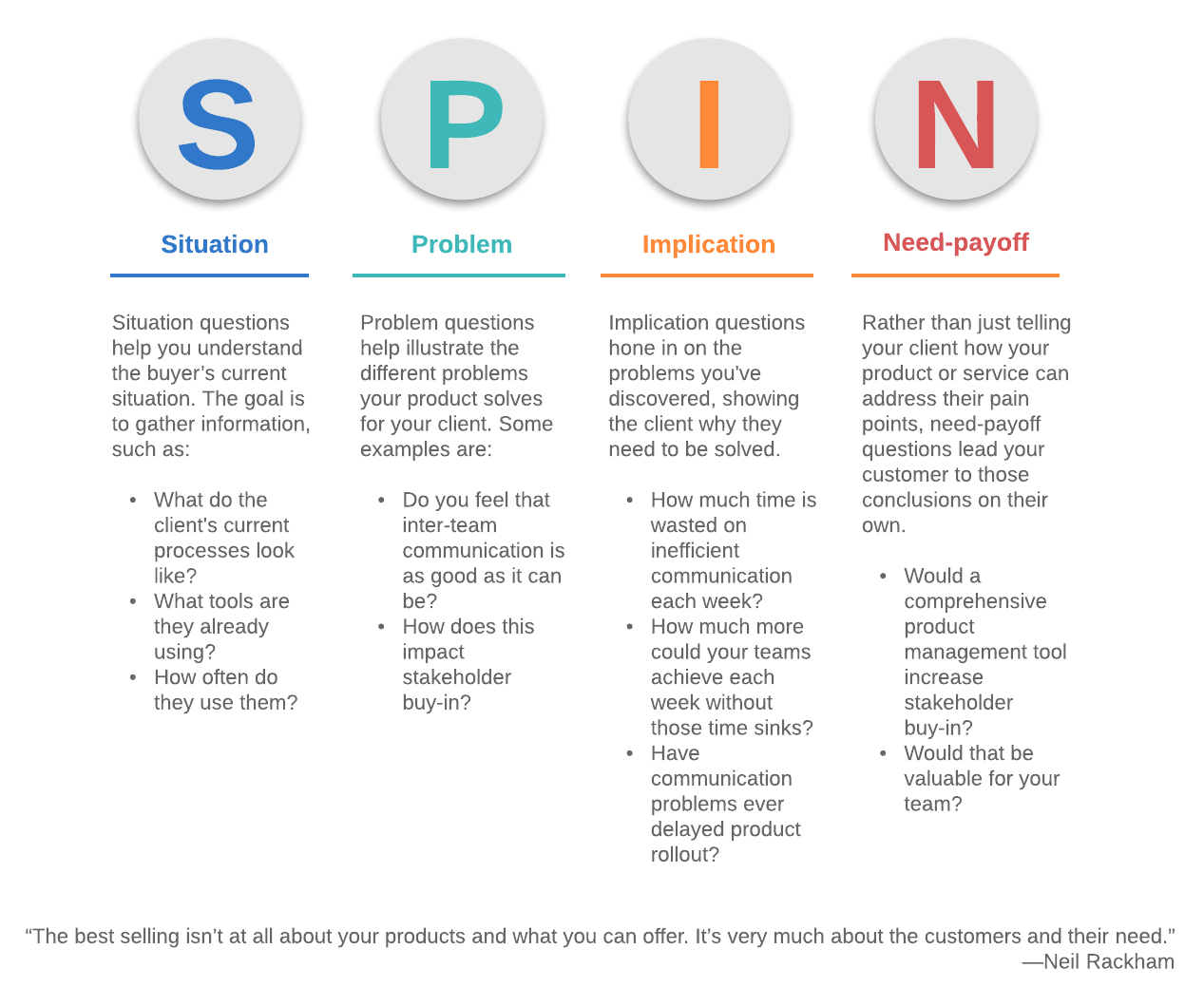
Well, this is precisely what the SPIN selling method is designed to do.
There is more to the SPIN sales methodology than meets the eye. Here’s why:
- SPIN selling is the result of 35,000+ sales calls and over 12 years of research.
- Since 1988, it’s been revered for its status as the how-to guide on problem solving.
- SPIN adherents cite its value for shaping them into trusted advisors to customers.
For a greater appreciation of SPIN selling, test one (or all three) of these best practices to your sales repertoire.
Best practice #1: Research your customer before you start
People don’t buy from salespeople because of how well they understood the products being sold, but because of how well they felt the salesperson understood their problems.
Sadly, up to 80% of buyers don’t believe that the salespeople they deal with understand their business. Don’t reinforce this perception: Before you start asking questions, take time to research your customer. With SPIN, good selling starts with good planning.
Learn everything you can (in advance) about your buyer, their company, and their industry. Fortunately, there are many effective research tools at your disposal.
How it's done: First, make sure that your product offering is relevant to the needs of your customers. Tools like Siftery can help determine which products could be a great fit for a company while also revealing which products they’re already using. With Owler, acquisitions, leadership team changes, IPOs, and other events trigger real-time alerts to help you keep tabs on key accounts and provide you with different reasons to connect.
Second, apply that research to create a high-quality sales pipeline. With LinkedIn Sales Navigator, you can choose from over 20 filters to target the types of leads you’re looking for, using filters such as company, job title, job change alerts, industry, company size, and geography.
Amazingly, you don’t even have to be a LinkedIn connection with your customers to get updates via Sales Navigator. Those insights make it easier to find the common ground necessary to craft SPIN questions—long before you reach out to them through InMail or if you’re connected with them via LinkedIn message.
Best practice #2: Start where you think is best for your buyer
So, you’ve invested time researching your customer, gained a better understanding of the company, and recognized the challenges they face within their industry. As part of the SPIN selling process, it only seems logical to start off with the Situation questions.
Given the SPIN acronym, the follow-up questions you’d ask would be Problem, then Implication, closing with Need-Payoff. Or they would… if SPIN were just a checklist.
The purpose of a Situation question is to establish rapport with the customer. But again, if you’ve done your homework, you already understand the buyer’s current situation. If that’s the case, it’s up to you to start SPIN selling where you think is best for your buyer.