4. Present value, not features
This stage of the sales process consists of a formal presentation or demo of your product. Remember—sell value, not features. We can’t emphasize that enough. Now is the time to whip out that research—address their needs and outline why your product is the solution they’ve been looking for (bonus points if you become the solution they didn’t even know they needed). Rely on the needs assessment to make sure your presentation reflects the prospect’s perspective rather than your own, and make it interactive and tailored to the buyer.
As you’re preparing your presentation, remember to use visuals. The human brain processes visuals 60,000 times faster than text. Visuals grab attention and make any idea easier to understand—remember, a picture is worth a thousand words. Lucidchart makes it easy to create professional and compelling visuals that will both spice up and add clarity to your presentation.
5. Handle objections
Undoubtedly, your prospect will have some concerns. Although this may be a frustrating step in your sales process, keep in mind that objections can actually be a good omen—a prospect wouldn’t be trying to work out potential problems if they weren’t at least considering buying. Make sure all your prospect’s questions are answered so that you are properly set up to go in for the close.
6. Close the sale
80% of sales are lost due to a salesperson failing to close. So this step in the sales process is crucial. You’ve done all the work—now it’s time to seal the deal. Activities in this stage vary from company to company but may include delivering a quote or proposal, negotiating, achieving buy-in from decision-makers, etc.
Don’t ever leave a sales conversation without ensuring you and your prospect have agreed on next steps. There are infinite ways to close a sale, but it ultimately boils down to the fact that you need to make the ask while gauging how aggressive you can be. Here’s a quick look at just a few closing techniques.
- Ask For It Close: “What needs to be done to get this product into your organization?”
- If-Then Close: “If I could demonstrate how this product provides you with (values based on needs assessment), would you be willing to (demo, buy, switch, etc)?"
- Process of Elimination Close: “You like the model, you have a use case, it’s within your budget!”
- Either Or Close: “Will that be cash or charge?”
- Lost Puppy: “I must not have done my job very well.”
7. Follow up
After closing the deal, resist the temptation to bolt out of fear that the prospect will change their mind. Instead, make the effort to stay in touch with the customer—you may see rewards down the line. Retaining current customers costs six to seven times less than acquiring new ones, and increasing customer retention rates by 5% increases profits by 25-95%.
There are many ways to continue the conversation, such as sending newsletters and product updates or engaging on social media. In maintaining the relationship, you are opening doors for yourself—you can set the stage for repeat buying so that when their uncle, sister, son, or boss also needs your solution, you’ll automatically be the point of contact. The best sales process ensures the relationship endures beyond the final handshake.
Benefits of establishing a sales process
We’re not saying building the best sales process for your company is easy, but we are saying it’s worth it. An effective sales process can result in:
- Better understanding of what stage a prospect is at in the buying process
- Best practices that take a prospect from interest to deal closure
- Increased productivity
- Improved sales efficiency
- Decreased cost of sale
- More accurate forecasting
- Increase in deals closed
- Ability to focus on qualified leads
- Development of customized value props
- Stronger relationships between company and customers
- Increased chance of upselling and repeat business
How to build a sales process
So how do you go about developing a sales process solution for your own organization? Well you’ve already got a pretty good template just by using the steps outlined above. There are a few things you can think about to help customize those steps for your organization.
Take a look at past deals
Start by gathering examples of recently closed deals at your organization. Determine the major steps and customer touch points involved, the length of the entire process, and the time between steps.
Create a model
Based on what you observe from these past deals and the steps we outlined above, create a generic example to serve as a starting point for your own sales process.
Identify how a prospect moves between stages
For every stage that you define in your model, make sure you can clearly explain why and how a prospect moves from one stage to the next. Don’t leave this open to interpretation—make sure your reps are clear on what the triggers are.
Measure results
You also need to think about how you will measure the success of your sales process. Identify the key metrics you need to track at each stage, such as how long a prospect stays in a given stage or how many prospects move through a given stage in a certain time period.
Iterate
Building a sales process is not a one-and-done activity. It will evolve as your team becomes more experienced and efficient. Always be revising and updating your process based on feedback from your team and the results you see.
Try using Lucidchart
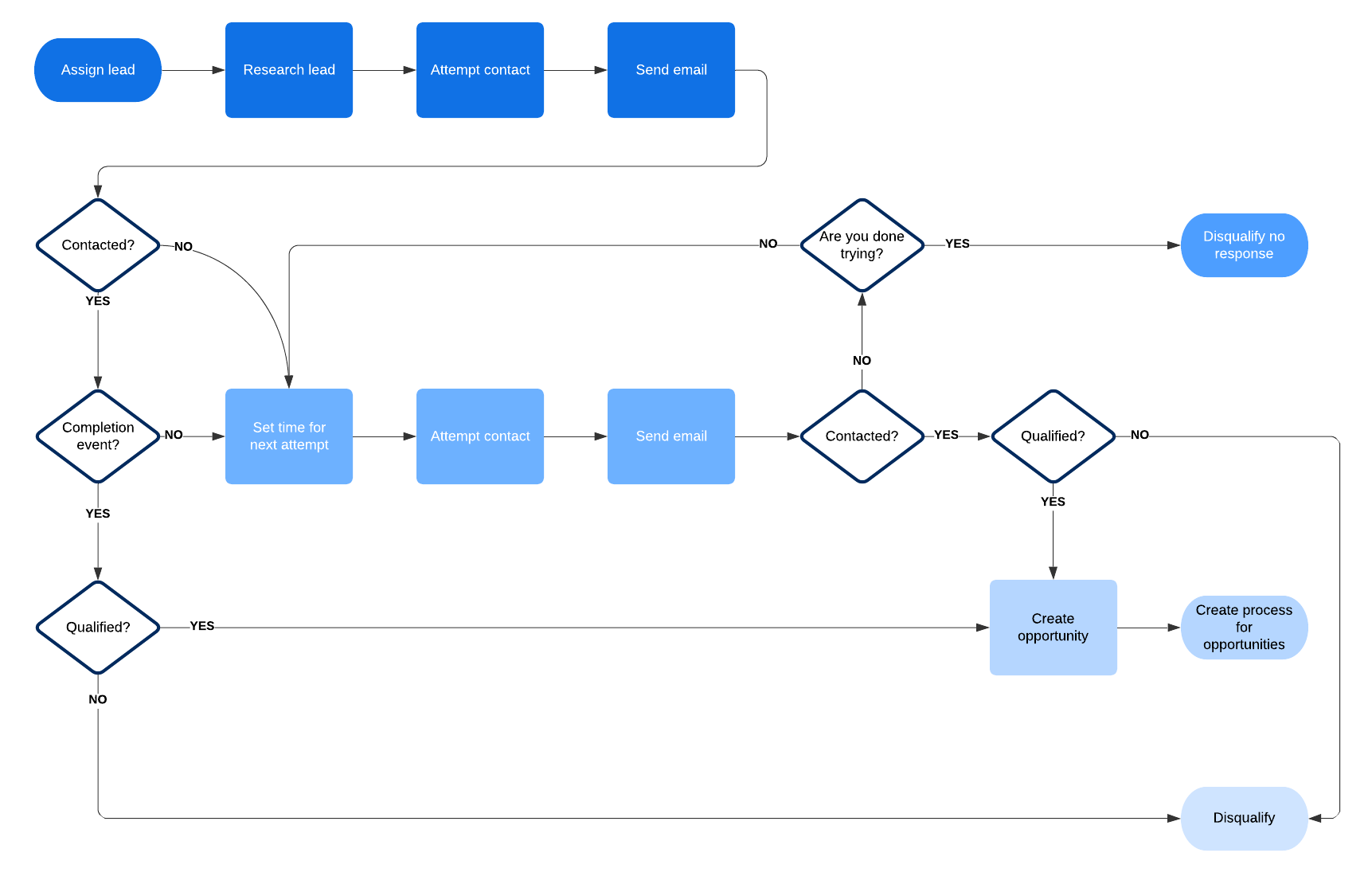
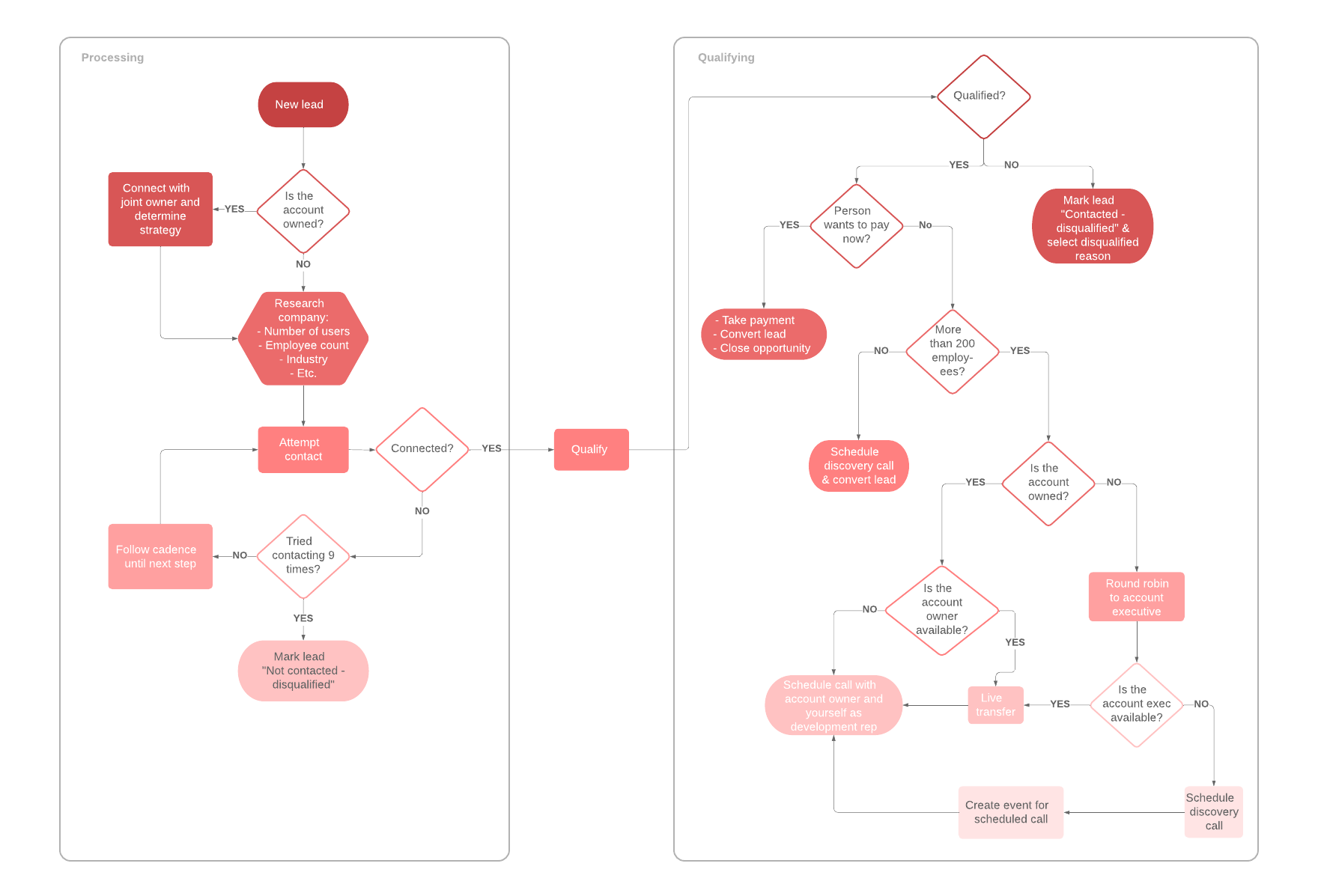
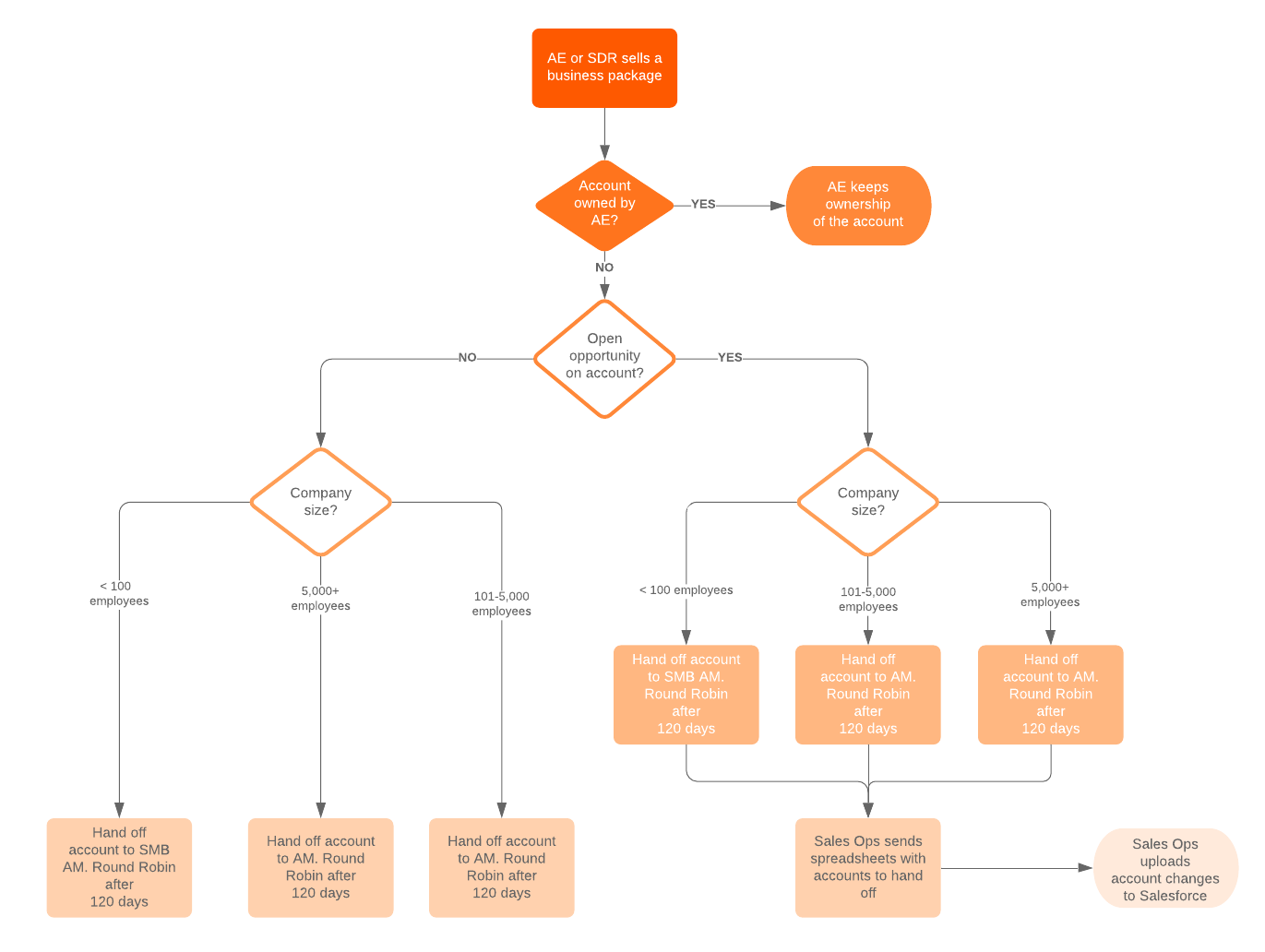
Once you’ve got a defined sales process, it needs to live somewhere. We recommend a visual format such as a flowchart. Communicating a process through a flowchart is far more effective than doing so with blocks of text. A visual makes it so much easier for your team to digest and understand the process. In fact, sales teams report that using Lucidchart saves them nearly five hours of time in their sales process and makes them 40% more productive.
You can use Lucidchart to easily create a polished sales process map that you can share with your entire team. And that’s not just a shameless plug—our own sales team uses Lucidchart to build and maintain their own processes, which involve the sales team, deal desk, accounting department, and customer success team. Using swimlanes, each of these involved parties has clearly defined steps. Mapping our process helps us spot inefficiencies and revise on the fly.
If your biggest hangup is that blank canvas staring back at you, try starting with one of our sales process templates and tailoring it to fit your organization.