Your employees are your most valuable asset. Together, they bring a diverse array of experience, talent, and skills to the table that help your company reach its goals.
But do they have all the skills you need? And are you leveraging those skills effectively?
According to a 2021 report by McKinsey & Company, 87% of companies know they have a skills gap or will have one within a few years. Weaknesses and gaps in your workforce’s skills impact your company’s ability to compete and succeed.
So how can you bridge those skills gaps? Enter the skills gap analysis.
What is a skills gap analysis?
A skills gap analysis helps you understand what gaps exist between the skills your employees have and the skills your organization needs to achieve its goals.
By conducting a skills gap analysis, you can identify opportunities and strategies to improve training, recruitment, and your organizational structure so you have the people with the right skills in the right places.
A skills gap analysis involves conducting questionnaires, surveys, performance assessments, and interviews to collect feedback and data on current workforce skills and performance. Additionally, leaders should review current strategies and organizational goals to compare current state with future-state objectives.
Together, these data show a bigger picture of where the company is now and what gaps it needs to fill to meet its future goals.
What are the benefits of a skills gap analysis?
A skills gap analysis helps organizations understand their current talent structures, performance, and weaknesses. These insights can lead to valuable benefits including the following.
An overview of your organization
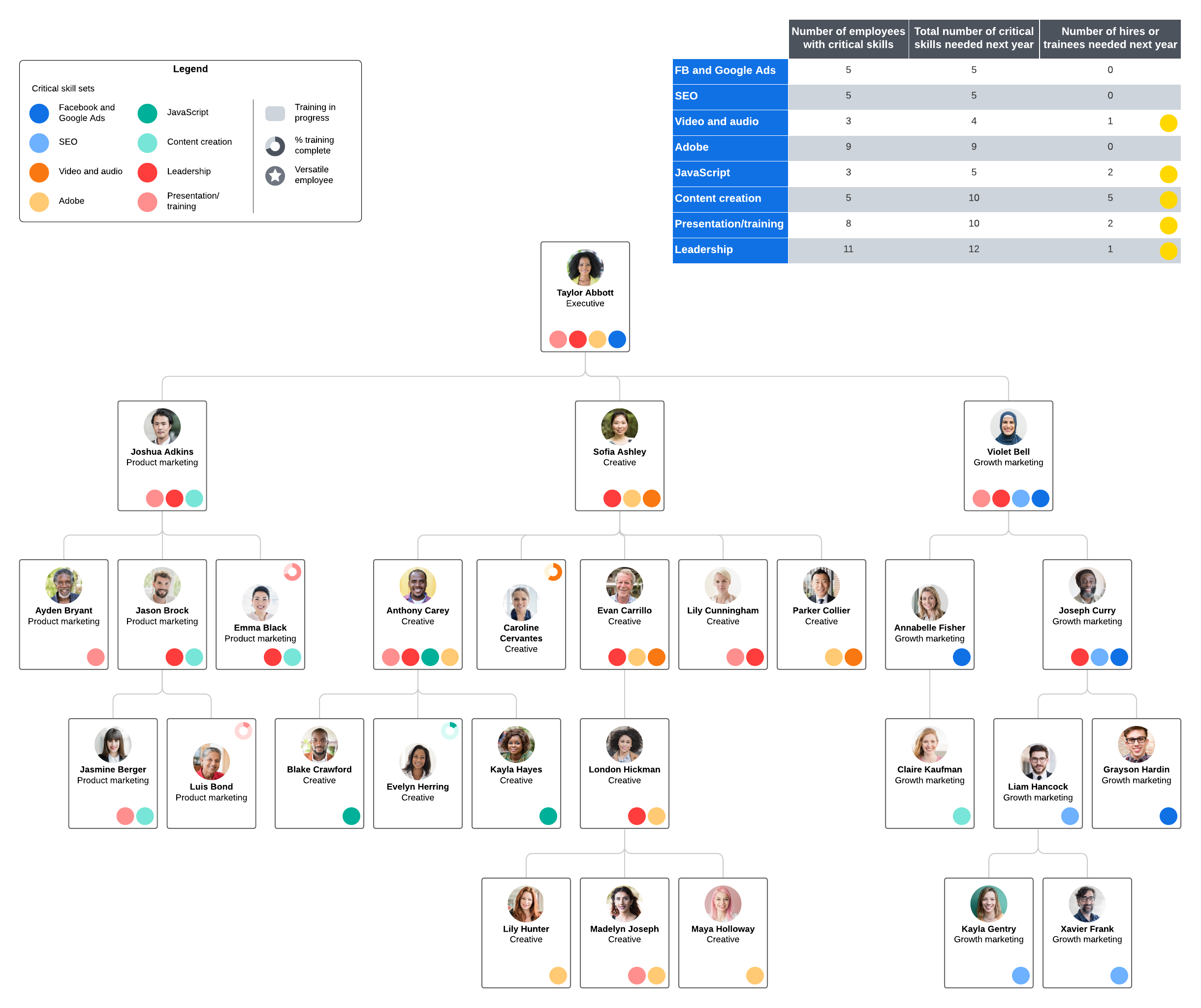
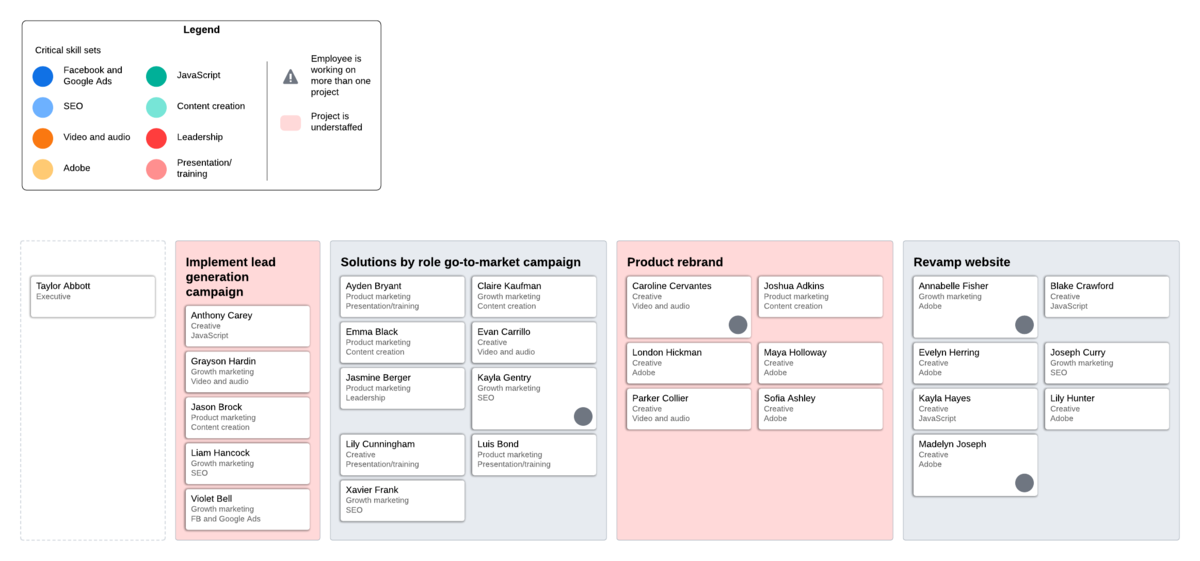
A skills gap analysis provides a valuable overview of your entire organization that helps you see how each team and department functions, what resources or skills they lack, and what support they need in order to perform now or in the future.
Better recruitment practices
A skills gap analysis also helps your HR leaders conduct strategic workforce planning to ensure you have the right recruiting, hiring, onboarding, and training processes in place.
When you understand what roles exist, what new roles need to be added, and what skills each employee needs to perform, you can target the right people and integrate them into your operations.
Increased performance and productivity
A skills gap analysis gives you the insight you need to optimize your workforce organization and processes. Naturally, as you improve your workforce planning and hiring processes and put the right people in the right places, performance and productivity will improve across the board.
Greater competitive advantage
Once you know where your weaknesses are, you can fill those gaps and position your company strategically in the competitive market.
A skills gap analysis can help you outmatch your competitors—whether that’s through attracting top talent, leveraging your current skills base more effectively, or optimizing your training and career development programs.
According to a 2022 survey by Deloitte, organizations that prioritize skills are 98% more likely to retain high performers, 52% more likely to innovate, and 49% more likely to improve processes to maximize efficiency.
How to conduct a skills gap analysis
Plan your skills gap analysis
Your analysis will include collecting data about individual and team skills (both what skills they have and what they are missing). To understand what skills your company needs, identify your short- and long-term organizational goals. When you know what you’re aiming for, you can determine what skills you will need to get there.
Next, to get the best information (and make the most of it), you’ll need to plan ahead.
Consider:
- Who do you need to talk to?
- What questions should you ask to uncover current needs?
- How will you measure your employees’ existing skills?
Once you have your assessment plan mapped out, you can begin your skills gap analysis.
Understand current and future workforce trends
The business landscape is always changing. Is your company prepared to adapt and meet new challenges? Review workforce trends to uncover potential skills your company will need to attain.
For example, how will changes in technology influence future jobs and skills for your organization? What roles might be automated? What new technology will employees need to learn? What skill needs are currently on the rise that may become highly competitive? By identifying skills your company will need down the road, you can create strategies that prepare you for the future.
Determine what skills are essential to achieve your goals
Your employees and their unique combination of skills and experiences are the driving force behind your company’s performance. In other words, the talent you acquire and nurture will determine your ability to achieve your goals.
So what skills are essential to achieving your business goals? This list of skills should guide your questions and assessments so you can answer:
- Do your employees have these skills?
- Which skills are missing?
- Are you leveraging these skills effectively?
Take stock of your organization’s current workforce
To analyze and uncover key skills gaps in your company, you need to measure and observe your employees’ current skills. There are several different ways to collect and measure these data, including:
- Employee surveys
- Performance reviews
- KPIs
- 360-degree reviews
- Management assessments
You could also measure skills based on importance for each role you evaluate. For instance, if you are evaluating a sales team, you might weigh communication skills as a higher priority than Excel skills and assess how well each sales rep matches up to those high-priority skills.
When you see gaps between the employee’s current skill level and the required skill level, you can start to make decisions about how best to fill those gaps.