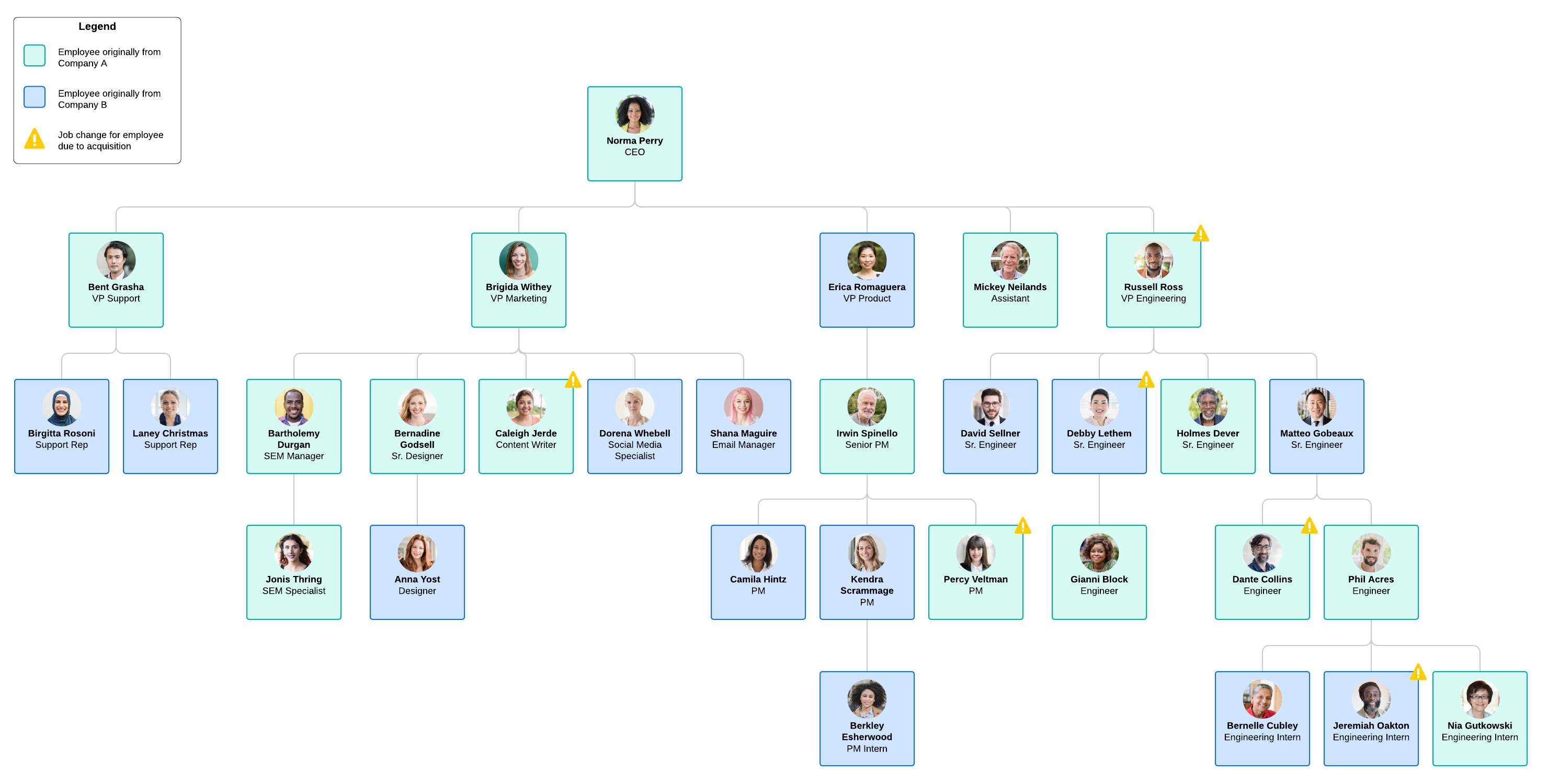
Similar to our previous suggestion, share these plans with your employees. Use the org chart as a single source of truth where employees can go to understand their role in the company, where they fit in relation to other teams and departments, and who they can go to for more information.
You may even want to sit down with employees individually and, using the org chart, explain what the transition will look like and how they can continue to grow with the company long-term. Many employees from both organizations may feel like their days are numbered after the M&A process is complete, and you don’t want to lose your best talent because you have left them in the dark.
It’s cliche, but knowledge is power—and the key to easing employee fears.
3. Align company culture
A concern that upper management may overlook is how well the companies will fit together culturally. According to the International Journal of Innovation and Applied Studies, a main reason M&As fail is that the two companies don’t fit together from a cultural perspective.
A lack of understanding about how the employees in the purchasing company think, behave, and work to meet goals and objectives can lead to misunderstanding and miscommunication, which in turn lower productivity as employees are confused about their role in the new organization.
Assess your company’s culture. Culture is far more than benefits and company perks like free bagels every Monday. Evaluate how employees get work done in both companies. Evaluating both work cultures can help you identify where there may be gaps between the two organizations. Use this information during integration planning sessions to determine how the two companies work together as one.
For example, one company may take more time to design and develop new products while the other company moves more quickly. These differences can cause friction down the road if they are not recognized early and prepared for on both sides when the two companies come together.
4. Unify organization objectives and goals
Many times people from the purchasing company come in with an attitude of “we bought you so you are going to do what we say.” This type of attitude can create division between the two companies and keep the two from working together effectively. Teams may be reluctant to share information, training efforts could be stifled, and production could suffer.
Bring the leaders from both organizations together to establish goals and objectives that are beneficial to the entire company and not just the purchasing company. When goals are set without the input of people from the acquired company, they can feel like they are of no worth. Collaborating together and coming to a consensus is a good way to quash any “us versus them” attitudes.
5. Be positive
Throughout the whole process, remain positive. Rumors can fly fast and free. When employees spend too much time worrying about the negative rumors they hear about the M&A or negative news about the company that is acquiring you, it can cause discouragement and can lead to poor productivity.
Do your best to dispel rumors quickly. Keeping everybody up to date with regular and frequent communication can help to keep rumors from taking hold. Make an effort to keep your employees from focusing on negative news so they can remain positive and productive.
Be positive and respectful of the company’s brands, technologies, and reputation. Emphasize the benefits and challenges associated with merging two companies into one. Help your employees realize their worth so they can “sell” themselves to the new company. Keep them positive so they can confidently talk about how their skills and talent will help the new company achieve its goals.
Mergers and acquisitions are a way of life in the corporate world. As of September 2019, there had been 12,713 M&A deals completed in the United States. The impact of mergers and acquisitions can leave employees feeling uneasy and confused about their role in the new company, but keeping the lines of communication open during the M&A process can alleviate apprehension among all employees.
Use org charts and other visuals to help employees understand where they fit into the new organization and help them keep current with information at each stage of the M&A process.