Every organization has a different definition of key account management (KAM). In general, the term refers to the strategic approach companies take to manage and grow its most important customers, but the way each company determines who their key customers are, how to approach them, and what they’d like to gain will change dramatically.
If you haven’t created a key account sales strategy specifically for your business and your clients—or if you are looking for ways to improve your current key account management process—take a look at our tips below.

Advantages of key account management
As we stated previously, key account management is the approach a company or salesperson takes to manage and grow an organization’s most important accounts. The ultimate purpose of KAM is to develop long-term, mutually beneficial relationships with specific businesses in order to meet strategic goals and optimize value in both companies.
Why does your company need a key account sales strategy? By implementing a KAM strategy, you create opportunities for both you and your clients to sustain and grow your businesses—as well as opportunities to bring in more revenue. A solid KAM process gives you the opportunity to not only create a stronger relationship with valued clients but also to mitigate competition, as you’ll have a strong enough relationship to withstand almost anything the competition can throw at you.
Additionally, by having a key account sales strategy in place, you can:
- Maximize sales velocity.
- Increase the average size of sales deals.
- Boost customer loyalty.
- Become valued partners to your clients.
- Develop and improve business relationships.
- Generate awareness for your company.
- Report pertinent data.
4 ways to improve your key account management process
Whether you have your process nailed down or are just starting to use key account management, keep these best practices in mind to improve your overall strategy.
1. Choose your key accounts carefully
You can’t choose just any of your clients as key accounts. You’re going to spend a lot of time and company resources on this account, so choose an account you think will significantly benefit your company and deliver a large amount of revenue. This process may involve researching your client's current business plan, objectives, and overall financial health.
When researching your clients, pay close attention to the clients who are more likely to grow with you in the future or have been the most consistent and loyal. If you’re unsure about an account, ask yourself, “If we lost this account, how difficult would it be to fill the revenue gap?” If filling that revenue gap would be almost impossible, then that account should be designated as a key account.
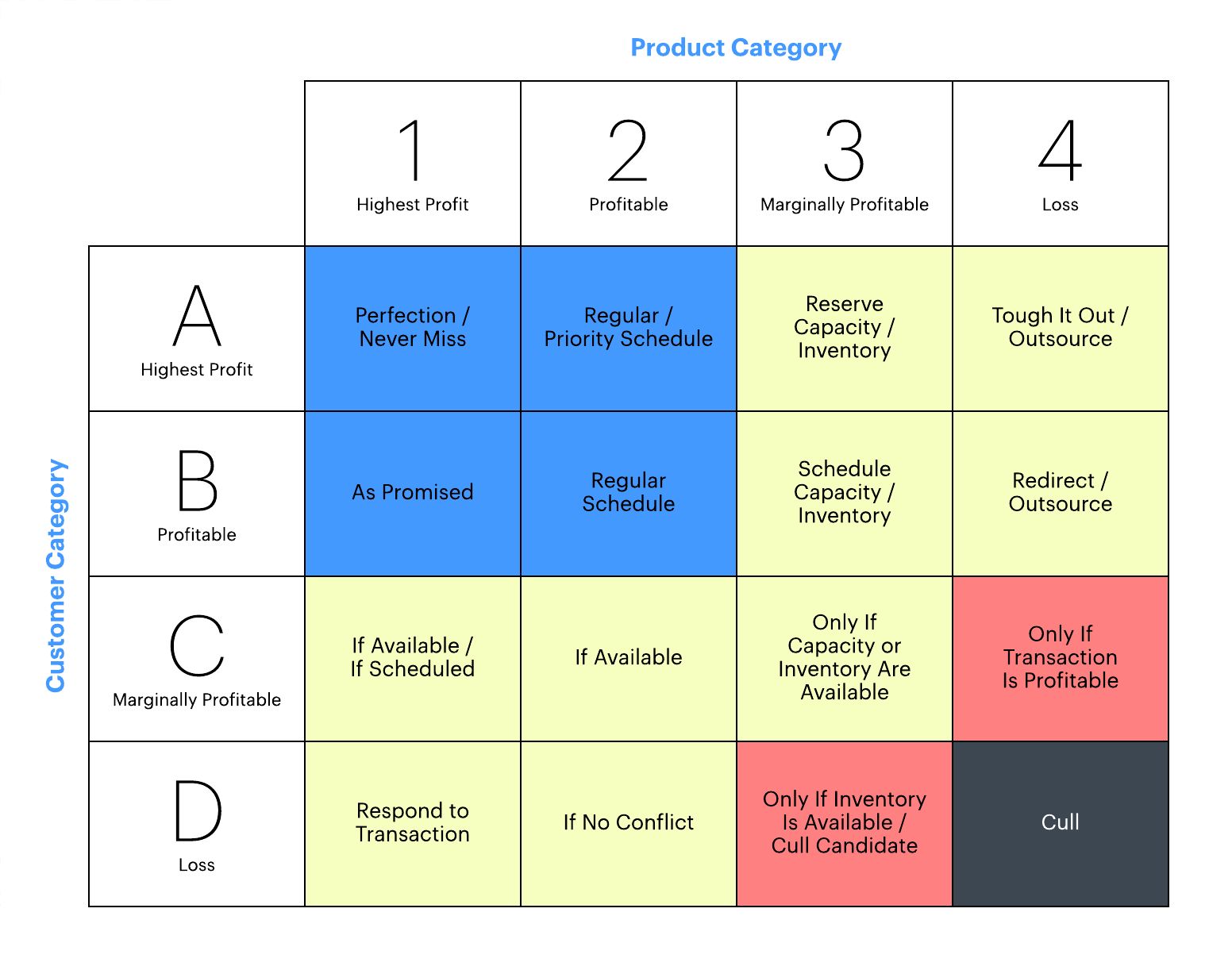
As part of the qualification process, you can use Lucidchart to create a profit matrix and determine which clients would be the most profitable to invest in.