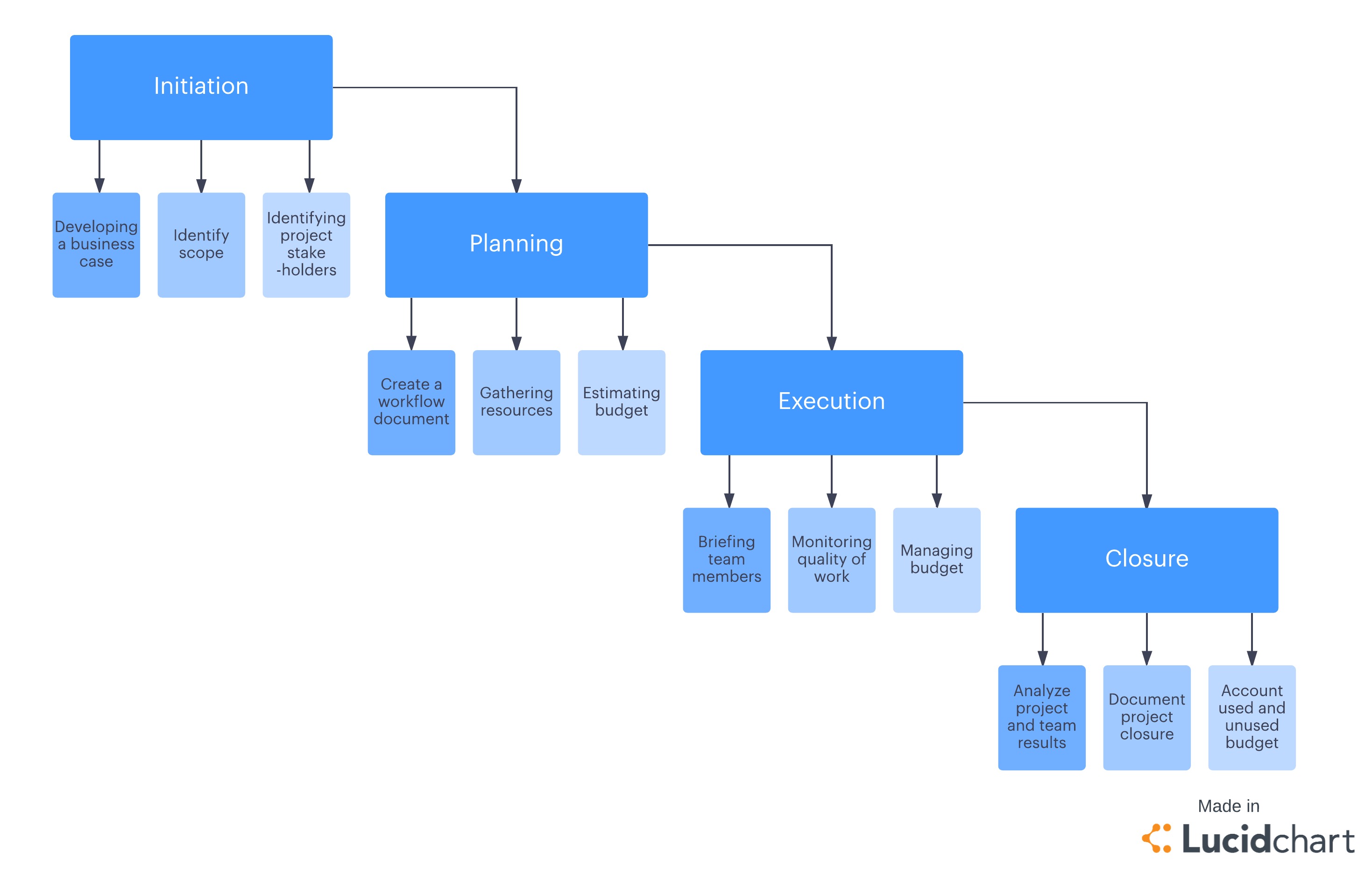
If you’ve ever worked under the guidance of a project manager, you know how indispensable one is to the success of your project. The role of project manager is so paramount to a business that entire companies depend on their competence; after all, if a large project fails, it could spell disaster for an organization’s bottom line.
But you don’t need to be an official project manager to wind up managing projects, which is why we’ve compiled this guide to project management for beginners.
Follow our project management tutorial below to gain the fundamentals of project management and become the kind of organized project superstar that will gain you eternal fame and fortune… or at least a round of applause in the next team meeting.
What is project management?
Project management is the process of taking a task through its entire process—from initial stages to completion—to achieve certain goals. For instance, if you’re building a new software project, as a project manager, your role would be to oversee, guide, track, and analyze the entire process of bringing that new software to fruition.
Before we dive into how to manage a project, here’s a quick word of advice and encouragement: The best project managers aren’t necessarily incredible at managing people or supremely knowledgeable about business. What they are, however, is organized.
Effective project management comes down to keeping track of every aspect of the project and making sure everyone knows what their roles are and what needs to be completed by when. Without organization, no project can succeed.
Why project management matters
If this all sounds like a whole lot of work, you’re right: It is. But good project management is how the best companies in the world perform. You’ll also find that, while everything looks straightforward on paper, humans are innately complex, so you’ll need to account for variables like team members fighting, getting sick, and being obstinate. Ultimately, project management is more about managing people and less about managing steps.
But how else will this initiative benefit your company? Project management, when executed effectively, can result in:
- More realistic project planning, including budgets and timelines
- Clear focus and objectives
- Strategic alignment between stakeholders and cross-functional teams
- Designated processes that help teams be proactive
- Quality control
- Reduced costs
For more information on any of these benefits, check out this article on 6 reasons why project management is so important.
Oh, and always keep track of the projects you manage. It’s an important part of your resume and will prepare you for more advanced roles in the future.
Project management lingo
Like many other areas of business, project management has its own language, with terms like “scope creep,” “bandwidth,” and “deliverables.” Take a moment to learn the jargon with our comprehensive guide. Once you start speaking like a project manager, you’ll begin feeling more confident in your abilities.
Project management methodologies
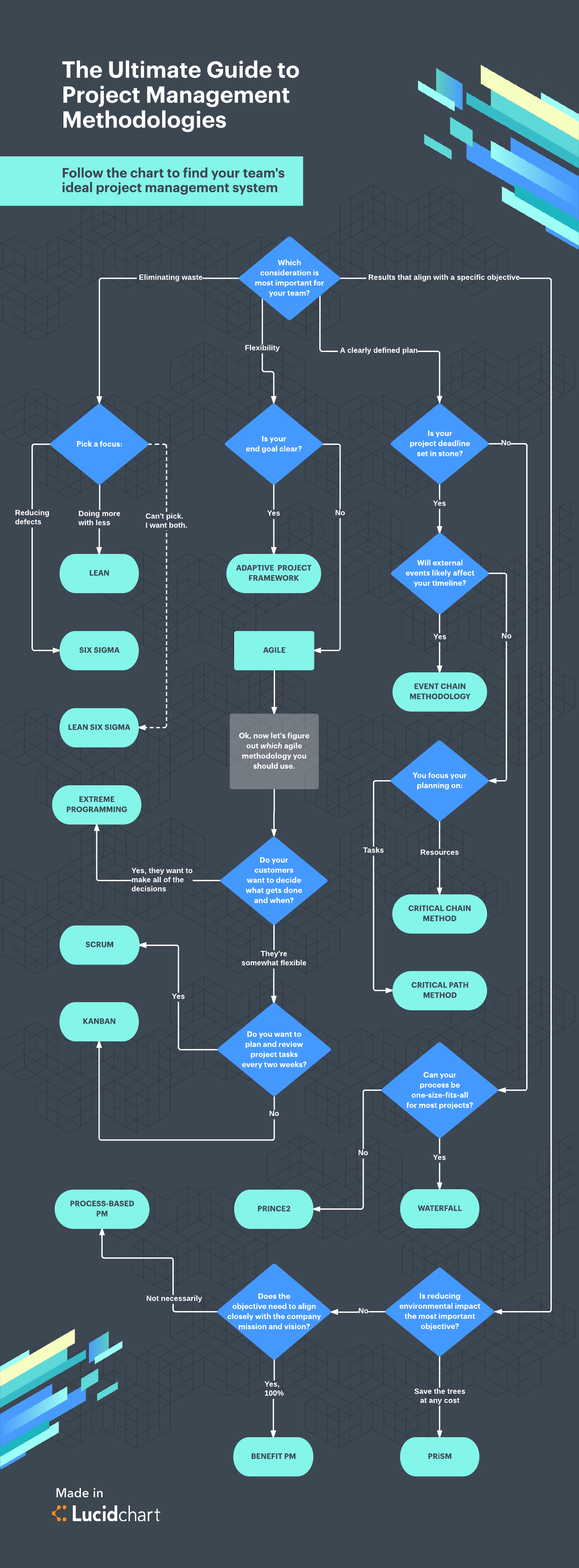
There’s no one right way to manage a project. Thank goodness for that, because different projects require different management styles. Lucidchart offers templates for every type of methodology.
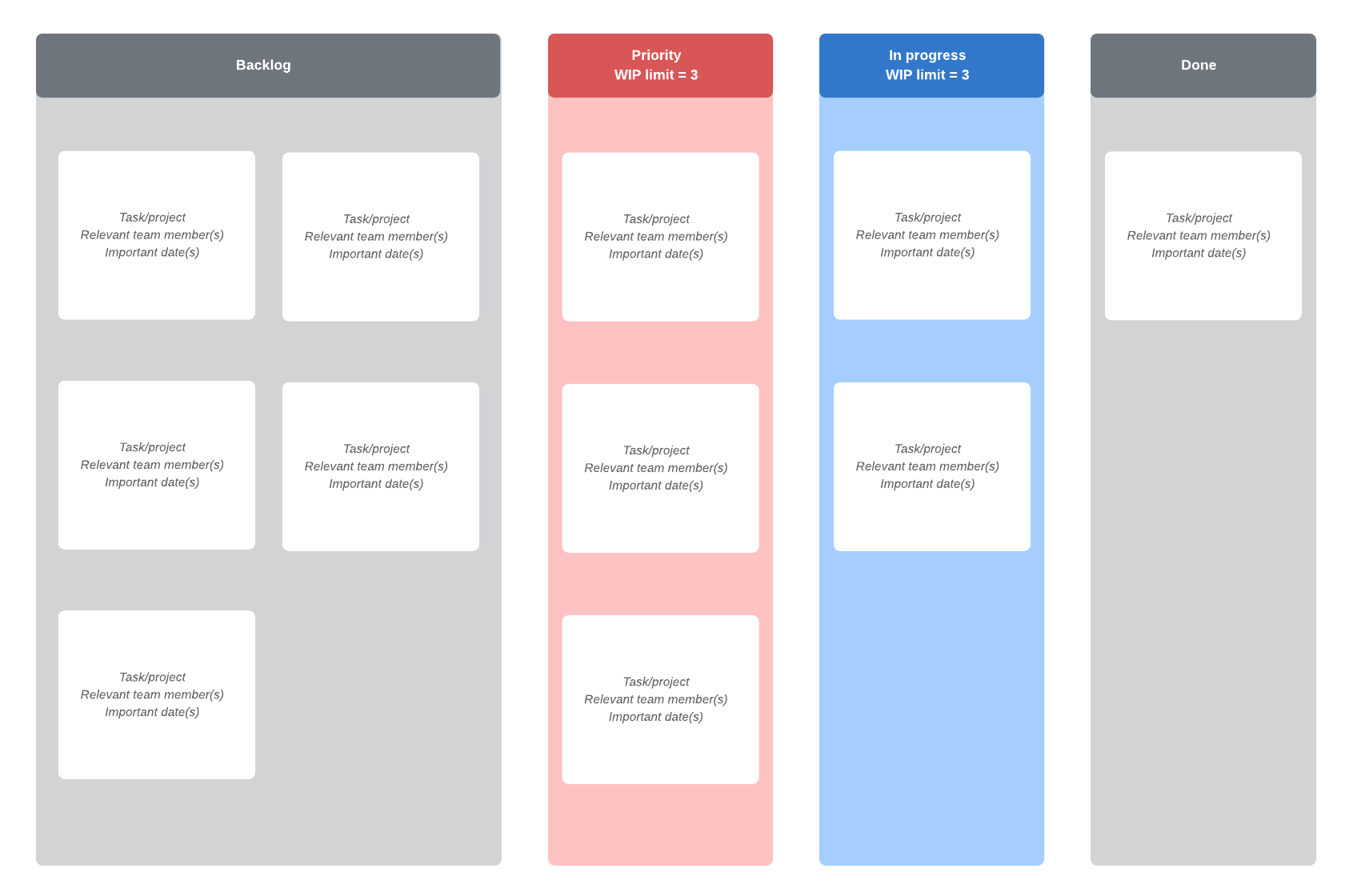
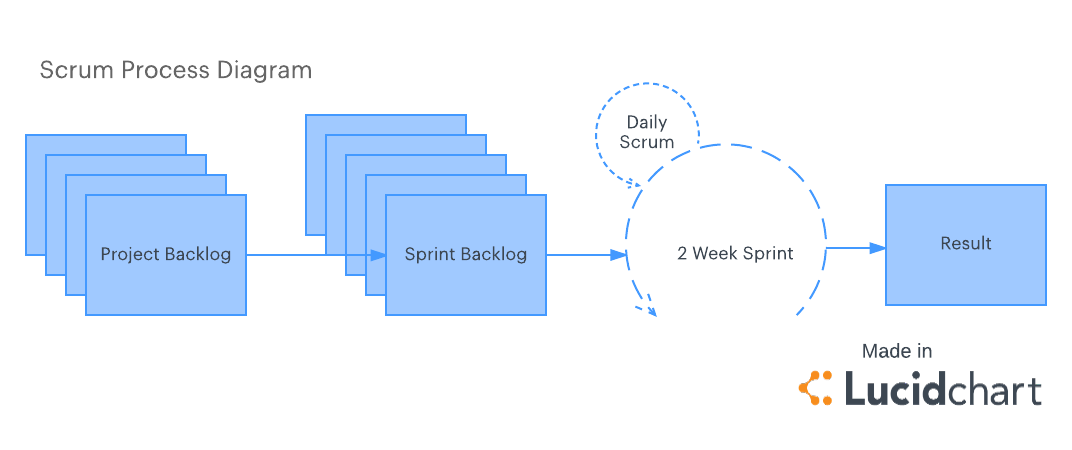
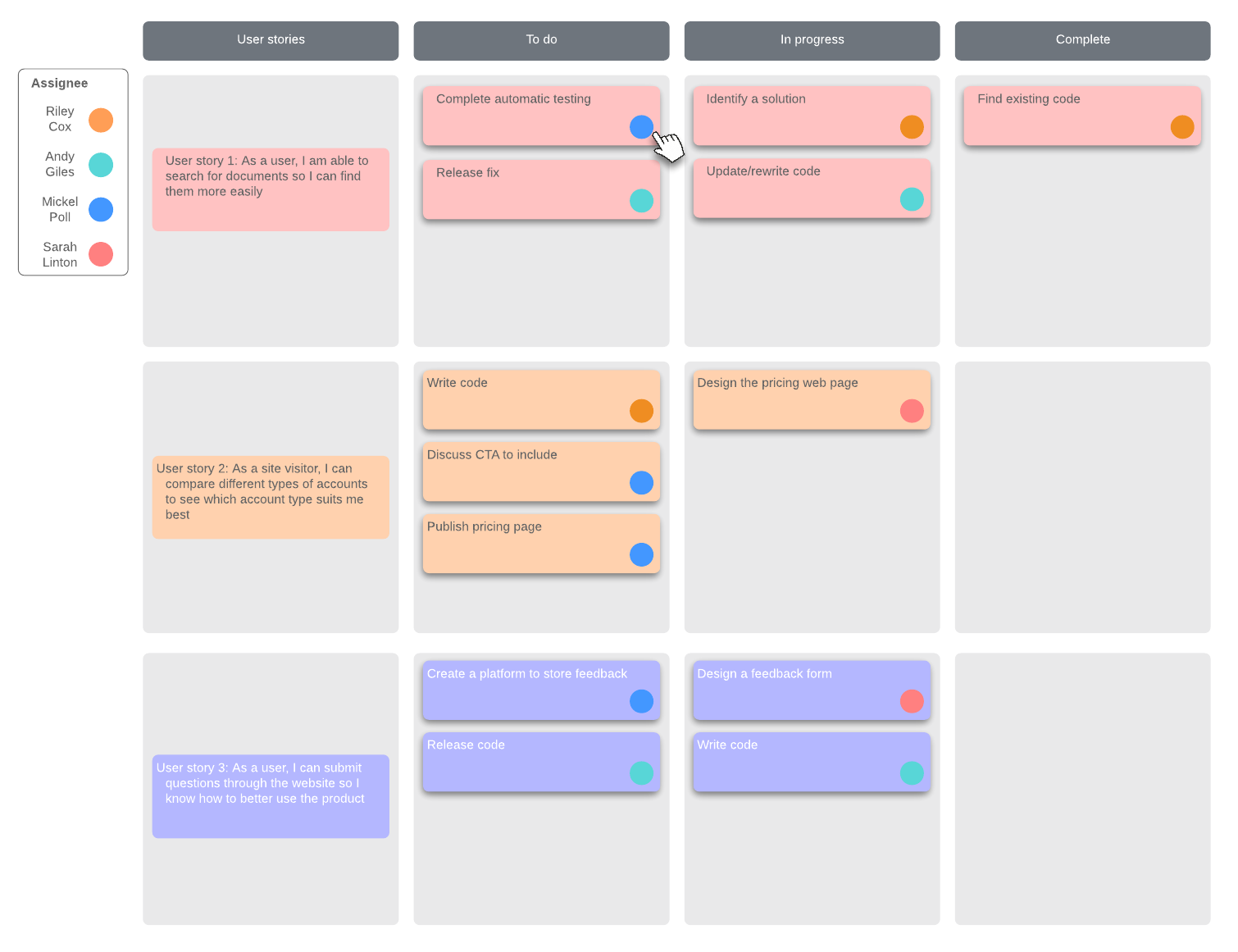
We’ve linked to some of the major project management methodologies below, along with a quick summary for each. If it sounds like the methodology might be a good fit, be sure to read the linked article for a more detailed introduction to get you help started.
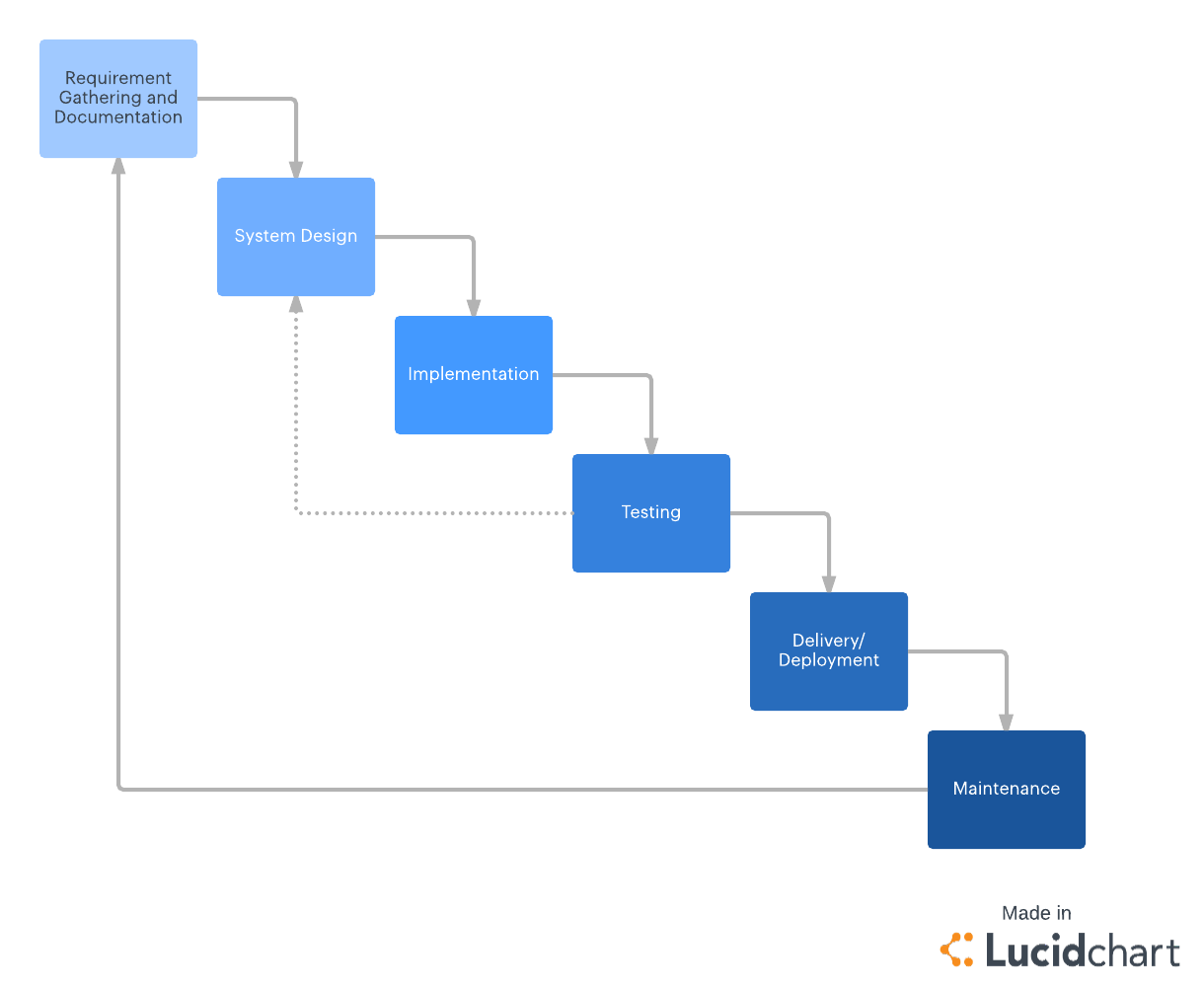
This is the “domino style” of project management methodology: The next step of the project can’t be started until the previous step is completed, and you cannot return to a previous phase without restarting the entire project.
Waterfall began in industries like manufacturing and constructions, where project phase must happen in sequence. While this method is straightforward, it’s not very practical for constantly evolving industries like software development. Experts suggest the waterfall project management methodology if your project requirements are fixed and time and budget are variable.