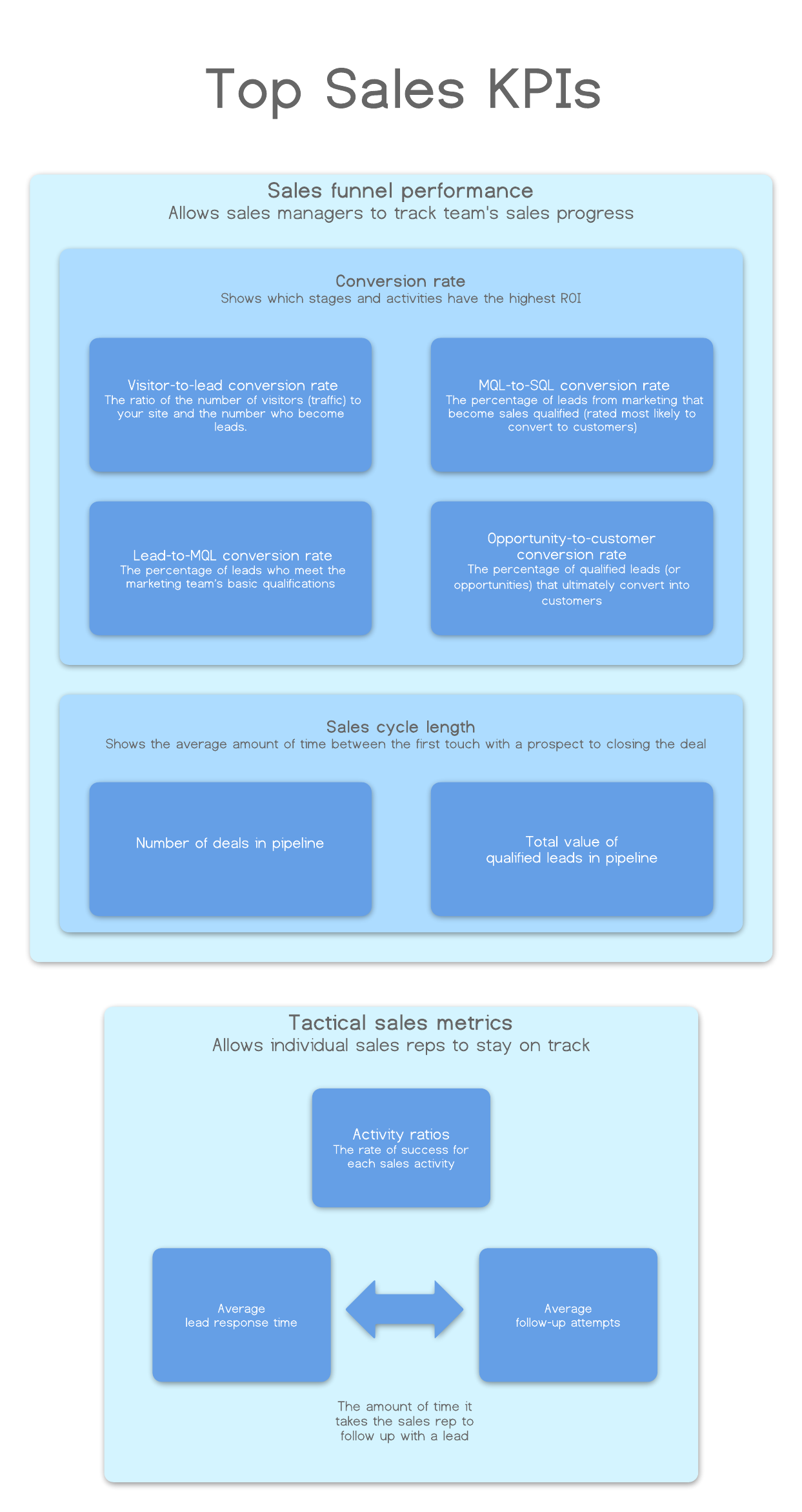
Number of deals in your pipeline
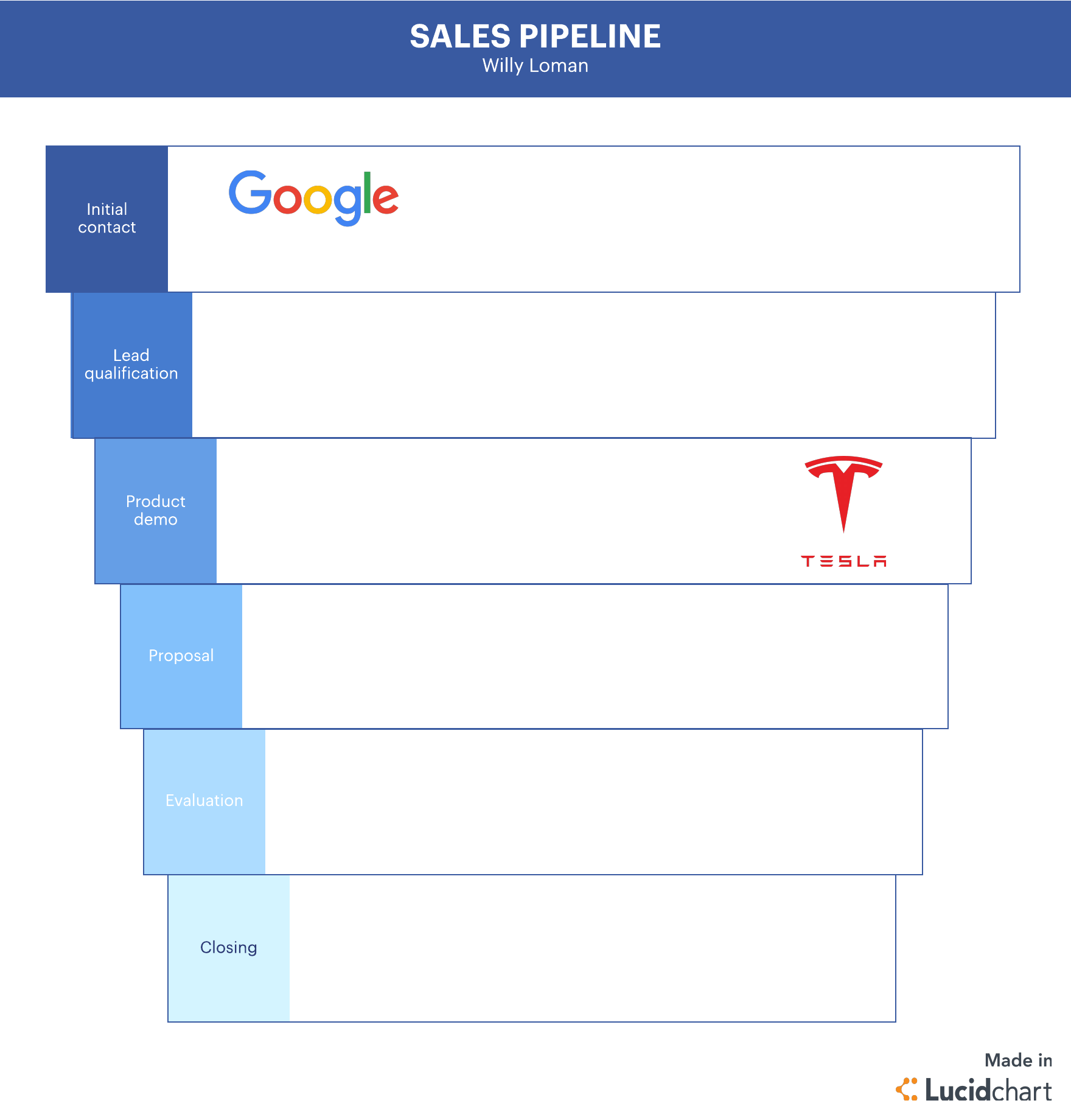
As a sales manager, you need to know how many active deals are currently in the sales pipeline. This metric will help you gauge how healthy your pipeline is (e.g., do you have enough leads to meet your sales quota?) and more accurately forecast sales.
Pipeline value
Similar to the number of deals, you’ll also want to track the total value of your pipeline, or the total value of all the qualified leads in the pipeline).
In order to accelerate sales, you need to grow your pipeline value and number of deals while shortening the sales cycle. By tracking these metrics, along with your conversion rates, you can optimize your pipeline and strategically manage your sales team activities.
Sales reps: Tracking tactical sales metrics
A high-level, holistic view of the sales team’s performance is necessary for managers to nurture a healthy pipeline.
But teams shouldn’t ignore smaller, tactical sales KPIs.
These are the activities that show daily individual performance on the ground. Tactical sales activities include phone calls, emails, follow-ups, etc. These sales KPIs help sales reps stay on track and focus on the right tasks at the right time.
Activity ratios
One of the best ways to drive sales and optimize your sales efforts is to measure activity ratios, which means tracking each sales activity and measuring their rate of success.
For example, you could measure the following activity ratios:
- Dials to connected calls
- Connected calls to scheduled events
- Scheduled events to SQLs
In other words, track how many phone calls you make, how many of those dials connected to a lead, how many connections resulted in a scheduled event (e.g., a meeting), and how many events resulted in a sales qualified lead.
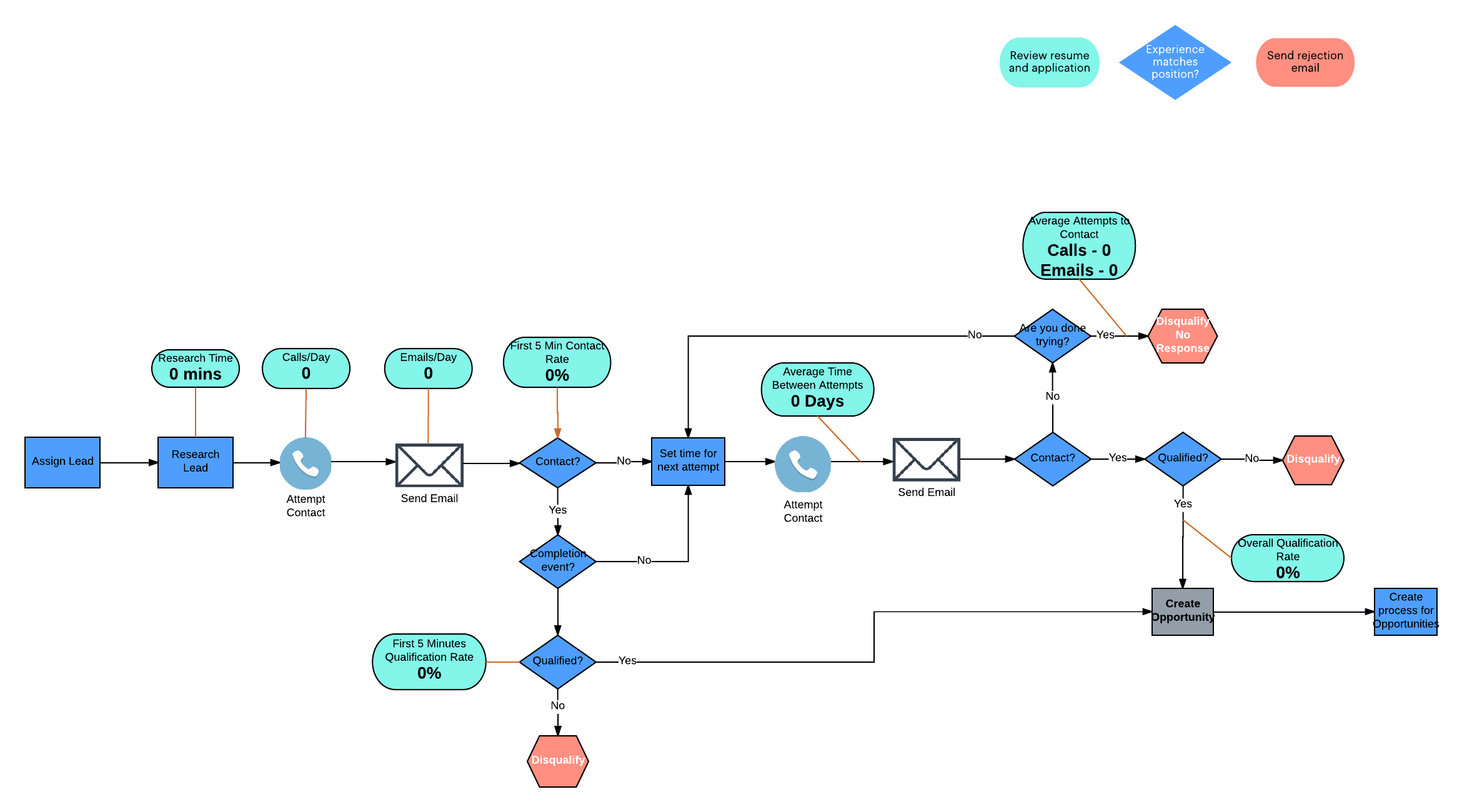
One sales development rep used Lucidchart to track these activity ratios and nearly doubled his numbers in one quarter. By simply measuring his activity day to day, he was able to pinpoint which tasks to focus on to hit quotas and stay on track.
Average lead response time + average follow-up attempts
These two sales KPI metrics go hand in hand to help reps track leads and improve conversion rates. The average lead response time tells you how long it takes the sales rep to follow up with a lead. This is a crucial metric of success because response time can mean the difference between conversion and a lost lead.
In fact, one Harvard study found that businesses who responded to leads within an hour of the first touch were seven times more likely to qualify the lead than those who waited longer to reach out.
Additionally, the number of follow-up attempts can make or break a sale. In today’s busy world, persistence pays off. High-growth companies report an average of 16 touchpoints per prospect within two to four weeks.
However, though 50% of sales happen after the fifth follow-up, a whopping 44% of salespeople give up after just one follow-up.
By tracking follow-up and response metrics, both sales managers and reps can drill down on the most effective activities and make sure sales reps aren’t missing opportunities to close.
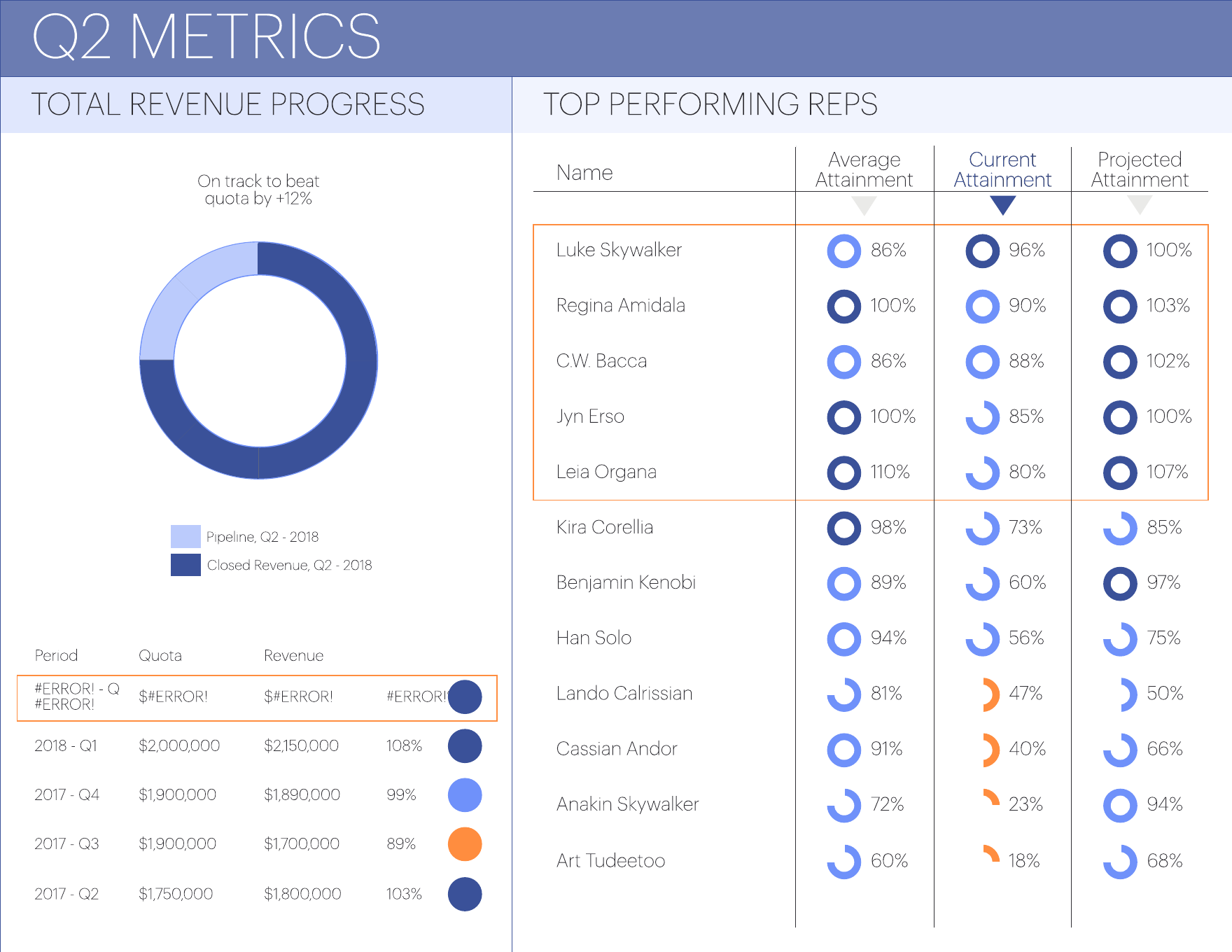
Using Lucidchart to create sales KPI dashboards
Sales managers are busy and often juggle multiple tech platforms and reporting systems, and their hectic schedules make it difficult to keep the most important information front of mind.