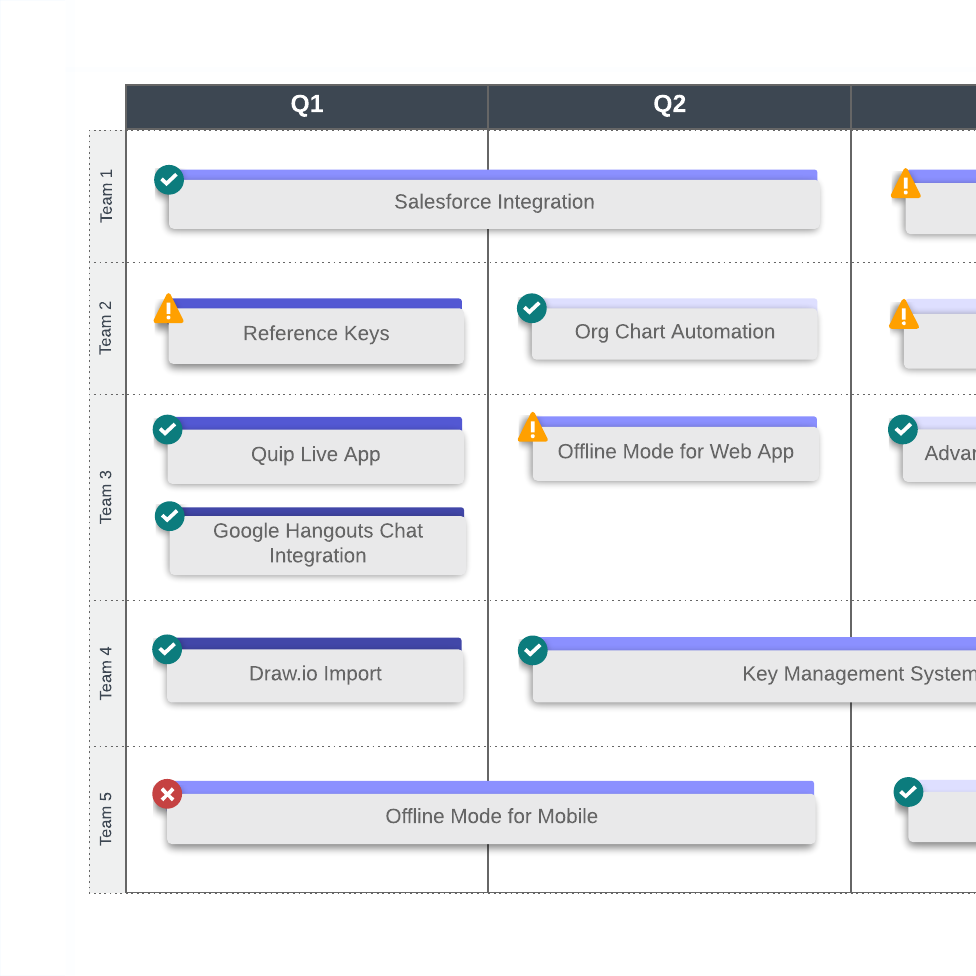
As businesses continue to move at a rapid pace to keep up with increasing consumer demand, releasing software forces companies to make a difficult choice between quality vs. speed.
Do you choose to get a product out faster but end up having to sacrifice quality? Or do you focus on quality and risk getting beat to market?
It’s a delicate tightrope walk.
The challenge is finding the right balance for your organization. In this article, we’ll cover release management tips to help you stay competitive and deliver higher-quality products faster.
Why you need both speed and quality
In the world of software development, speed is critical. The faster you can deliver products to market, the stronger your competitive edge, and the more opportunity for profit and further innovation.
However, the danger comes when you overvalue speed at the expense of quality.
So what does it mean to deliver quality products? “Quality” is a somewhat vague term that can include metrics like accuracy, efficiency, reliability, function, and excellence. And any time you speed up the release timeline, you risk sacrificing one or more of these values along the way.
In other words, the less time your team has to work out bugs, validate ideas, and test features, the more likely that issues will get lost in the cracks and come up later.
Speed without quality can earn you short-term gains. But in the long run, lower-quality products result in costly time spent fixing bugs you could have prevented, unsatisfied customers, and a damaged brand reputation.
That’s why it’s critical to find a balance between fast delivery and reliable, quality product delivery.
Tips to release software more quickly without sacrificing quality
Fortunately, there are many ways you can shorten delivery timelines while maintaining high-quality standards. Use the following tips and best practices to improve your release management process and deliver better software faster.
Assess your current state
Before you can make improvements to any system or process, it’s important to understand where you’re starting from.
You should assess the current state of your release process to get an accurate picture of what is working well and what opportunities exist for changes and improvements. Work with software developers and other key stakeholders to walk through the process and uncover insights from multiple perspectives.
Pay attention to:
- Testing environments
- Release timelines (and any roadblocks)
- Product backlogs
- Documentation (or lack thereof)
- Automation processes
- Release management roles
- Team morale
All of these can affect your speed and quality. When you understand what your process actually looks like now, you can make strategic decisions and create more effective plans to improve.
Set clear goals and expectations
What are your release goals? What timeline makes sense for your business and what expectations do you have for quality standards? The answers will, of course, depend on your team and company’s individual priorities, resources, and strategy. But when you understand (and outline) your goals and expectations, you can more effectively communicate and create a plan to achieve them.
This is especially important for motivating your development team and getting everyone on the same page. After all, in order to maintain reliable quality standards and consistent delivery, your team needs to know what constraints they’re working within.
Communicate your priorities and expectations clearly to get buy-in from the team. When everyone understands what is expected and is committed to achieving those goals, you are more likely to meet those standards.
Document your release plans
Both speed and quality rely on a streamlined process—which means communication is critical.
Make sure your team has visibility into your release process and clear channels for communication. While no one likes to hear it, documentation is key. Document your release plans and make sure everyone has access to the information and can update and reference those plans as needed.
Clear documentation will help you avoid miscommunication and keep everyone on the same page. Record what you do as well as how you do it. Involve everyone in the process so that documentation is clear, collaborative, and more easily adopted and implemented.
When everyone understands the goals, expectations, and process (and their roles within that system), everything will run more smoothly.