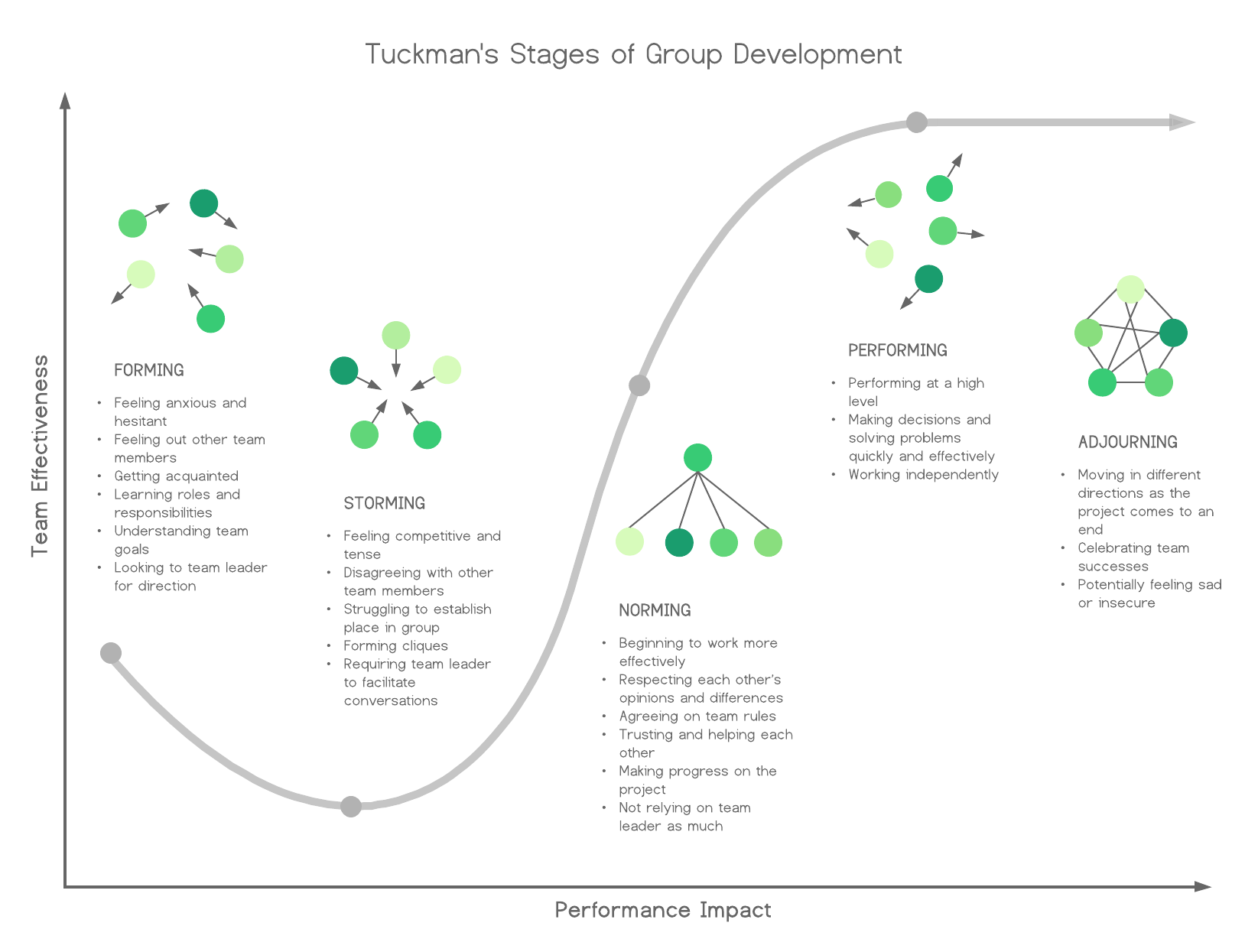
Once the group members become more familiar with one another, the next stage of group development begins.
Storming
This stage is aptly named, as it is here that tensions first arise. The storming stage is marked by competition and conflict. Here, team members are starting to speak their minds and solidifying their places within the group, which means that power struggles may arise and cliques may form within the group. And, if team members don’t feel their responsibilities are clearly defined by this point, they may feel overwhelmed and stressed.
In order to withstand the storming stage, it’s important for the team to remain focused on its goals and desired outcomes. Otherwise, the group is likely to become mired in relationships and emotional issues and never progress to completing the actual task.
If you’re a manager, you can help the storming stage resolve and progress by negotiating compromises among team members. Compromising during the storming stage resolves conflict and pushes the team to forward. Facilitate team discussions and remind team members to be respectful of others’ opinions and comments.
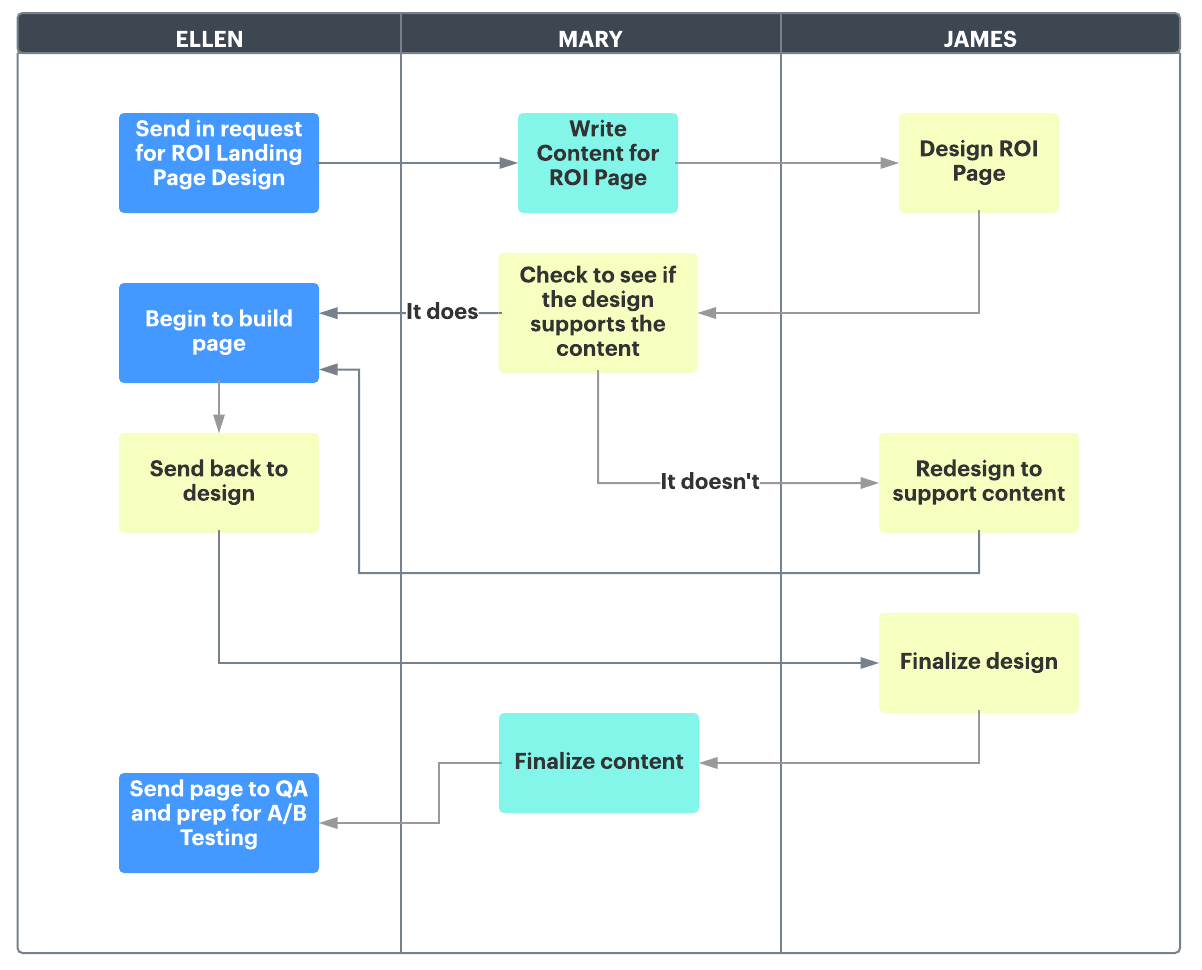
If you’ve visualized team hierarchy and processes during the forming stage, you can use those visuals to reiterate how team members should be working together.
Norming
The norming stage is the quiet after the storm. During this stage, conflicts start to resolve, team members appreciate each other’s strengths, and respect for authority grows. Team members are also less dependent on the team leader to provide direction and make decisions—they start working together and helping each other to achieve the team’s goals.
It’s important to note that, since you’re dealing with humans, there’s no way to fast-forward to this stage because your team needs time to become comfortable with each other. Trust takes time, and often bonds arise out of conflict, so the storming stage is actually necessary to develop the kind of cohesiveness that propels successful groups forward.
The group development stages aren’t as linear as they appear on paper. After all, it’s not like the group shows up to the office one day and decides unanimously to peacefully progress to the norming stage. Sometimes your group may revert back to behavior from the storming stage. Sometimes there’s overlap between the storming and norming stage. And sometimes the storming stage seems to last for much longer than is necessary. Keep to the project’s timeline and keep referring to the organizational tools you’ve developed.
Performing
This is where the real alchemy happens. At the performing stage, the group is functioning together as a cohesive unit. The team has a shared vision and can function without the leader’s interference. It’s here that the group has learned how to resolve conflicts when they arise, and if changes need to occur, they’re implemented well. Structures and processes are now second nature.
As a team manager, you can delegate your work without having to micromanage its completion. This stage is more about fine-tuning and development.
Adjourning
What’s this—a fifth stage?
In 1975, Bruce Tuckman added a fifth stage to his Forming Storming Norming Performing model. Adjourning is the natural break-up of the group. This stage occurs when the original task of the group is completed and everyone can move on to new goals.
This fifth stage gives rise to a kind of mourning. By this time, the group has worked closely with one another and has developed relationships; it’s natural for feelings of insecurity to arise and for some to even feel threatened by the change.
As a team leader, it’s your job to help the group navigate through these insecurities and emotions and prepare for the next group formation and leadership successor. No matter what, it’s important to celebrate the team’s achievements and give them the opportunity to say good-bye to each other.
Helpful hints
As a manager, you’re now familiar with the 5 stages of group development, but your team likely isn’t.
Prepare your team for each stage, and use tools like Lucidchart to outline their roles and responsibilities throughout the journey. Keeping visual guidelines throughout the process is vital for maintaining the integrity of your team and avoiding conflict and confusion. Since Lucidchart is a cloud-based platform, you can easily update the progress of your project as it changes so everyone stays on the same page.
The best groups have an innate understanding of their processes and structure, but that innate understanding only comes after the processes and structure have been articulated. Lucidchart is the perfect solution, as flowcharts and other visuals are easily understood and can be immediately accessed by anyone in your group.
Sign up for free
It’s one thing to be given a task and quite another to get a group to successfully complete that task. However, the stages of group development can show you how to navigate the dynamics of group projects, so you can successfully guide your team to becoming an autonomous, functional unit that produces beautiful work.