You need to have the right people, processes, and technology in place to efficiently handle incidents and service requests on a day-to-day basis—your service desk is basically the frontline of IT support. Without the proper service desk support processes in place, you may end up with frustrated users and overwhelmed employees.
As you optimize your service desk, here's what Lucidchart can help you do:
- Map out service desk and other IT processes.
- Calculate your service desk ROI.
- Provide better insights to help your team make decisions.
- Centralize your knowledge and IT documentation.
- Improve teamwork and collaboration across the lifecycle.
- Streamline training and onboarding.
Let's take a closer look at how Lucidchart can help you optimize your service desk below.
A closer look at service desk support
Although IT teams try to catch issues before they get to customers, it doesn’t always happen that way. In these cases, incidents are reported to the service desk.
Whether your service desk is local, centralized, or virtual, your service desk support team tries to restore “normal service” to users who receive services from the IT service catalog, such as passwords, security, internet services, backend storage, and more.
Given the rapid response of service desk models, there are significant opportunities to deliver ROI. The service desk is made up of specialized staff but differs slightly from the help desk, which is more technically focused and is likely not a single point of contact for users in your org.
Within the IT service desk, there are many roles and responsibilities. Services are built and deployed, requiring cross-functional collaboration between people and teams (for example, the help desk may need knowledge of IT hardware and software engineers). Services are monitored and tracked, and the results often drive future service desk strategies.
Service desk processes are guided by the user and provider needs, although it typically requires guidance from business and IT leaders, like most IT services. Management and leaders set KPIs, make recommendations for service changes and improvements, and are also responsible for communicating changes to the functions that use and provide the services.
As you’ve probably witnessed in your own organization, these support processes overlap and require a multitude of collaboration and communication to ensure a balance between bandwidth and quality service delivery. With the right platform, you can simplify your ITSM and ITIL processes, especially when it comes to the service desk—and Lucidchart can help.
6 ways to leverage Lucidchart for ROI in service desk management
1. Map out your service desk and other IT processes
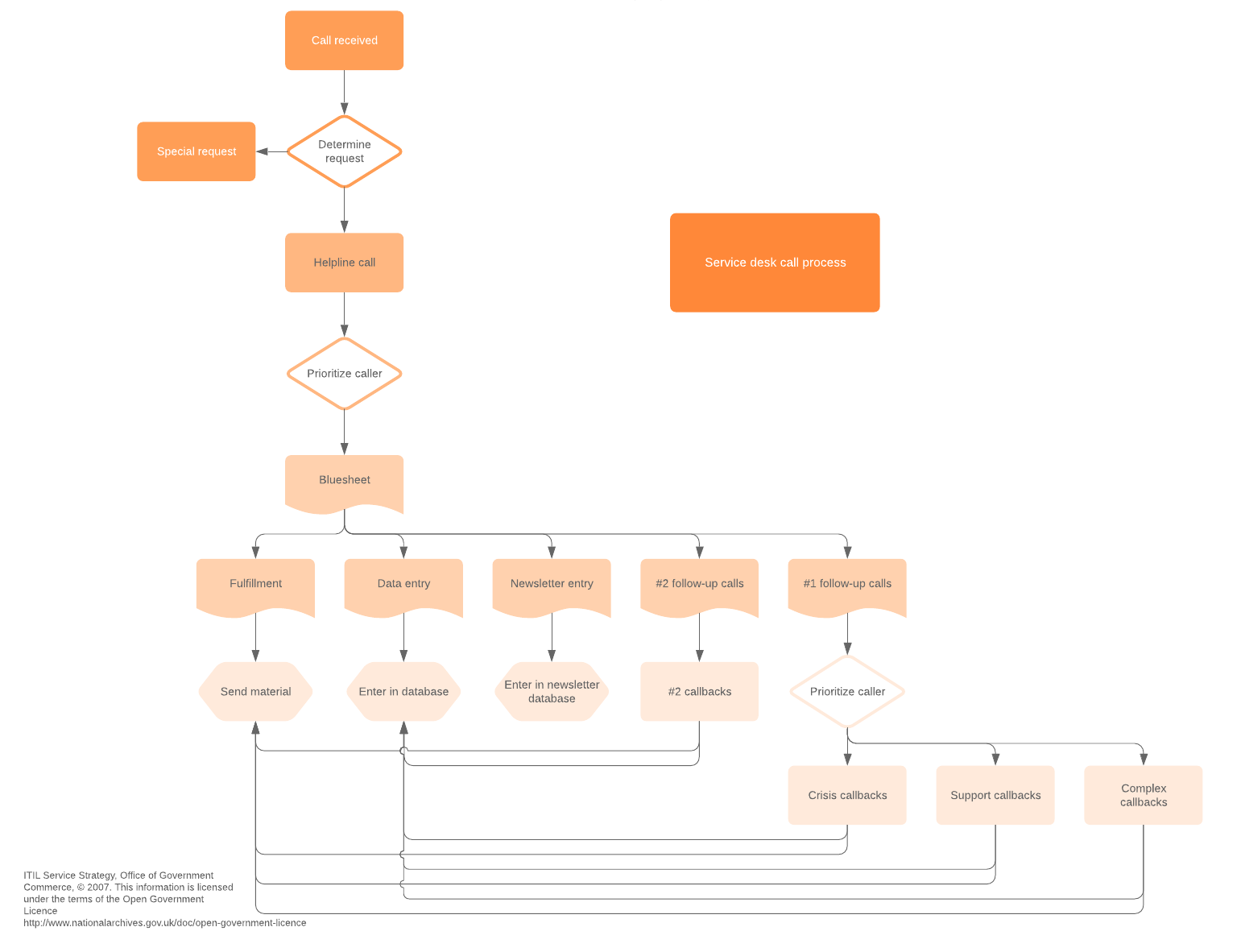
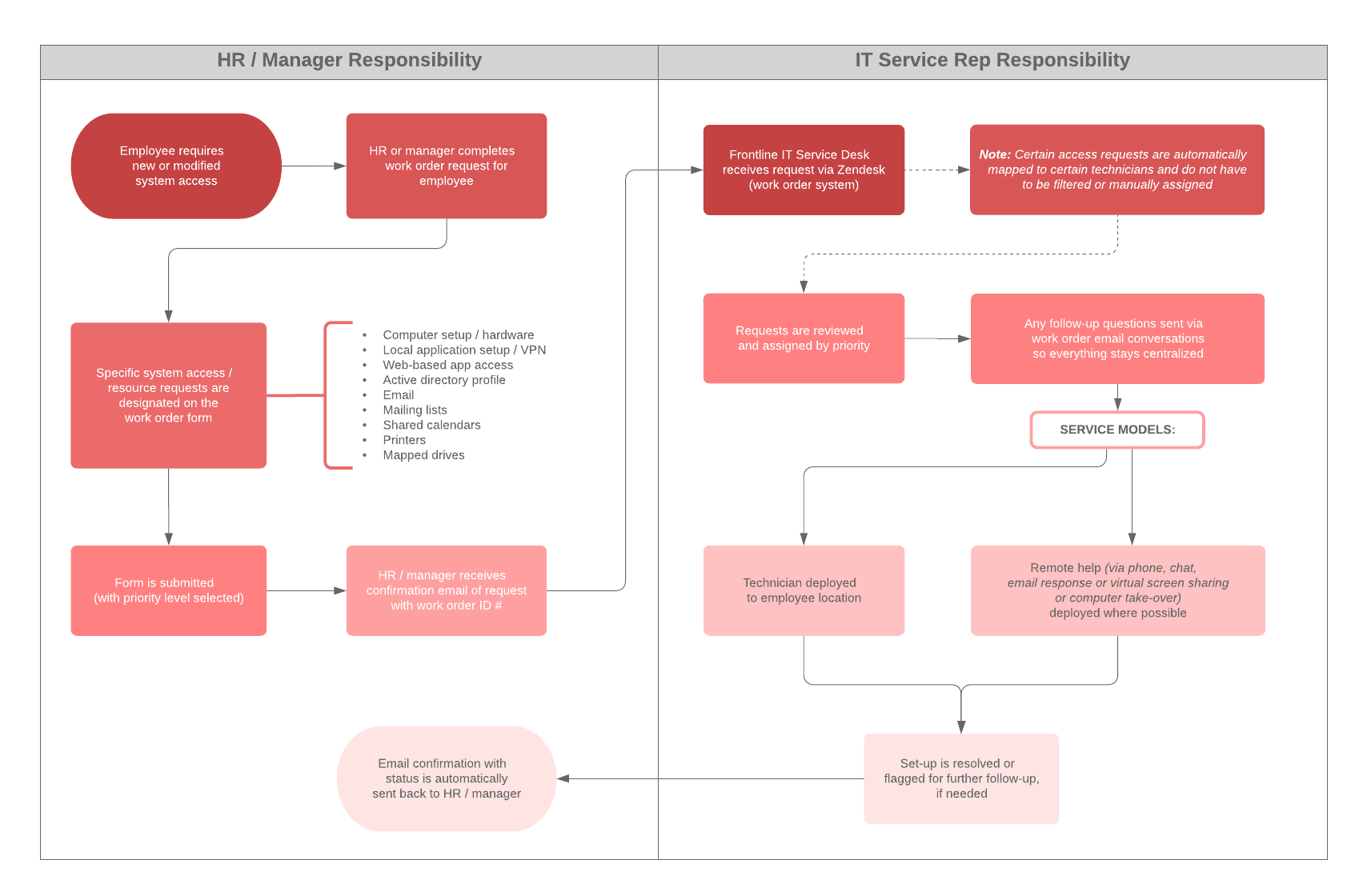
Visualizing and documenting your IT processes in Lucidchart plays an integral part in delivering ROI and effective decision support. Although service desk demands are always changing, any task that is done more than once or is completed by multiple people needs to be documented for consistency purposes.
Map out your service desk processes, support processes, customer journey, and more with Lucidchart. If you’re not sure where to start, Lucidchart has an extensive list of templates for service management, including event management processes and service desk flowcharts.