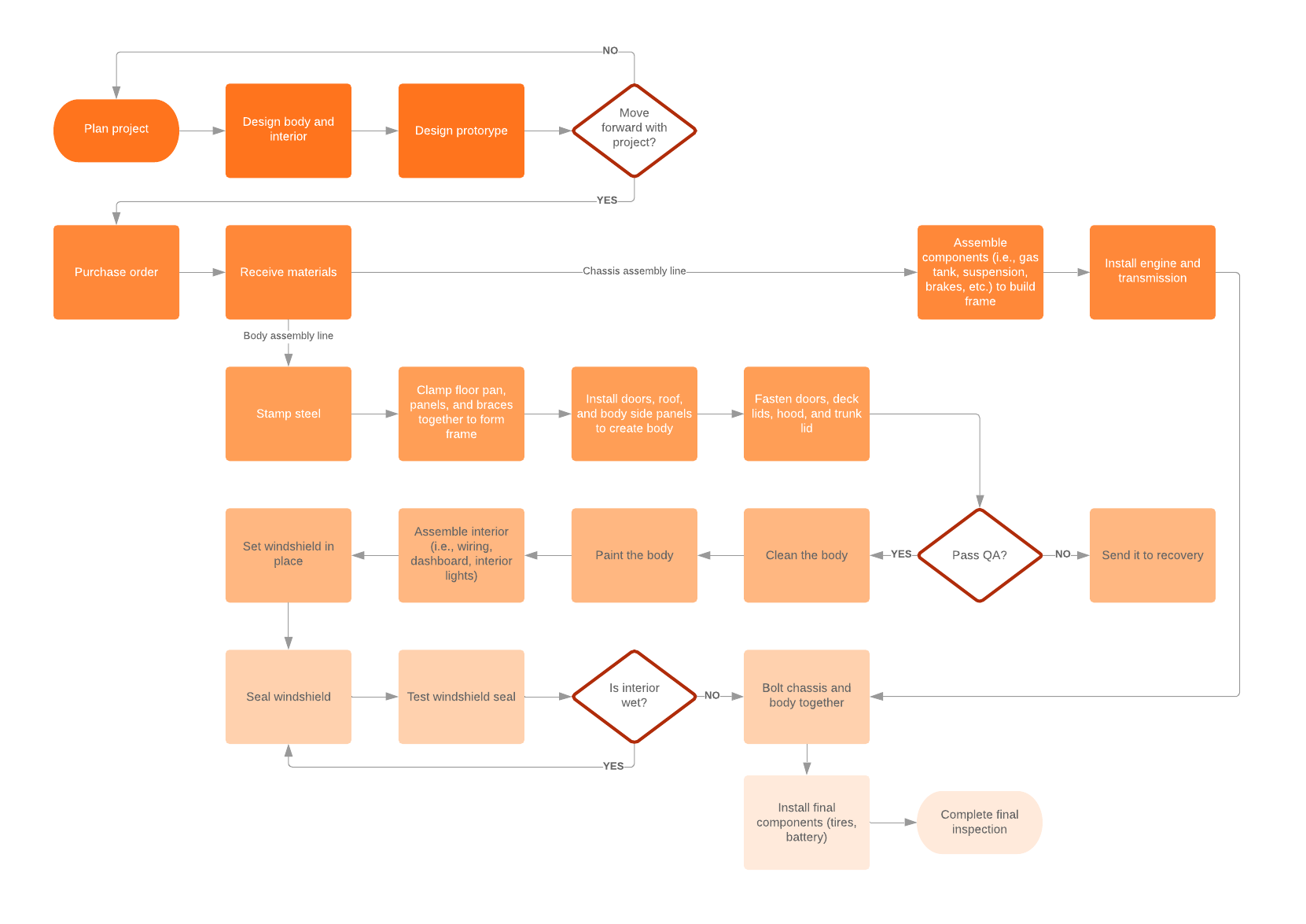
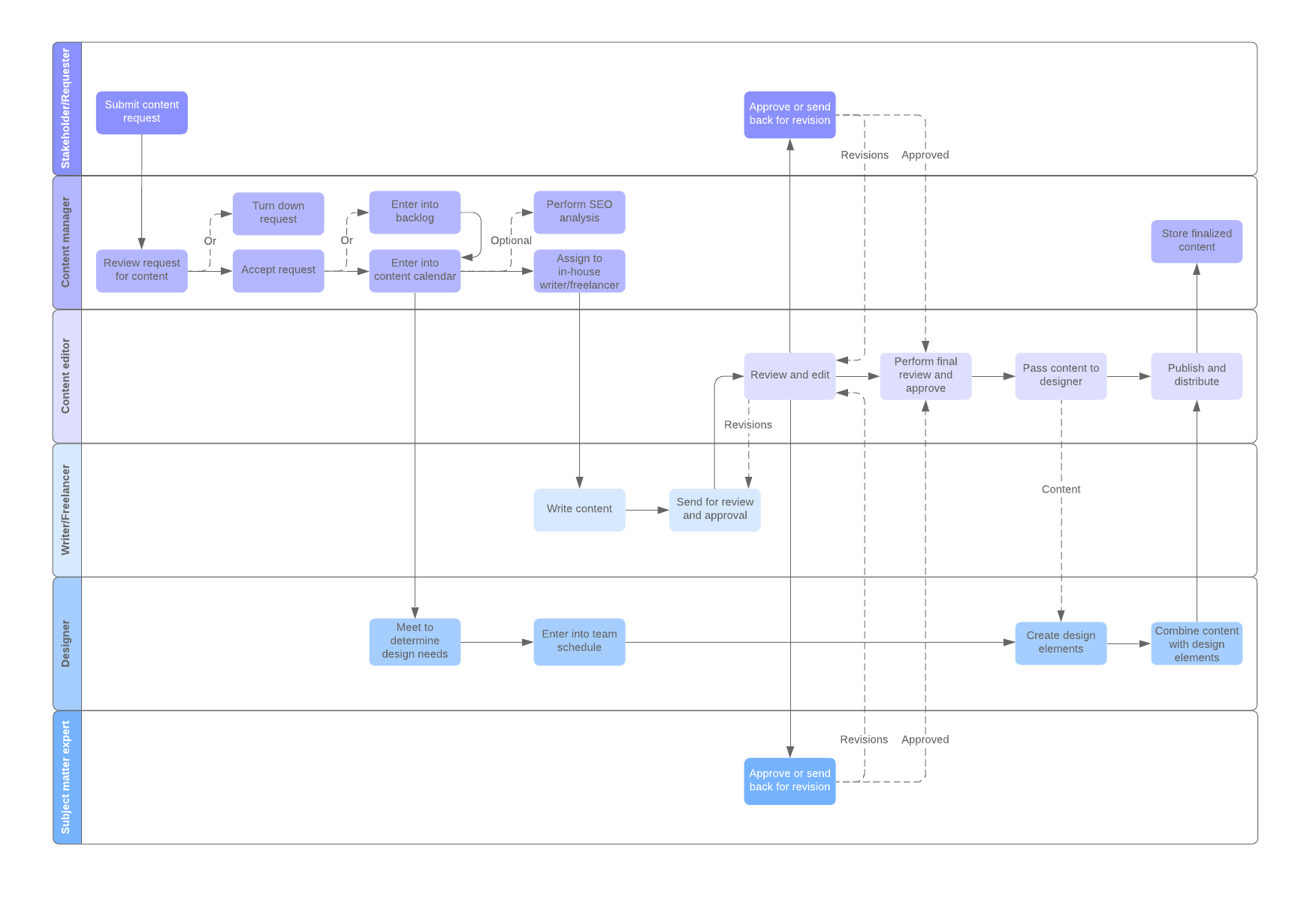
Different organizations may have varying attitudes toward process documentation.
Some organizations require everything to be documented, including any minor change. Some companies believe that documenting processes is the right thing to do, but they may not spend too much time maintaining the documents after the initial process is documented. Others don’t document anything because they think it’s a waste of time and money.
Let’s discuss the purpose of process documentation, the benefits of maintaining and updating process documentation, and why you should create visual business process documentation.
What is the purpose of process documentation?
All businesses have processes that are essential to how they get stuff done, but sometimes their processes are not adequately documented or updated.
This can place a burden on current staff to teach the procedures to new employees—not to mention that it increases the risk of someone misunderstanding the process or performing it wrong. And when teams inevitably alter the process, introducing new steps or improvements, it complicates matters further.
If processes are not documented and improvements are not captured, crucial knowledge could be lost. Documenting business processes helps you:
- Retain institutional knowledge when employees leave the company.
- Create a single source of truth.
- Reduce misunderstandings and confusion because the team has agreed on the process.
- Improve the onboarding process and simplify new employee training.
- Ensure consistency when developing or manufacturing products.
- Easily introduce process improvements.
- Keep all staff on the same page, completing processes the right way.
- Reduce errors and defects so you can deliver higher quality.
- Effectively manage projects and evaluate processes while looking for improvements.
- Create a culture of knowledge that encourages more employee engagement.
- Reduce knowledge gaps so that anybody can step easily into a new role if necessary.
Even if you have been completing a task the same way every day for years, it’s still important to have the process documented.
Think of airline pilots. After thousands of flights, they still run through a documented checklist as part of their process before takeoff. Relying on memory could lead to serious problems if even one checklist item is forgotten.
Why are visuals the most effective form of process documentation?
People learn in several different ways. Understanding how people learn can help you to develop more effective and engaging documentation that your intended audience may actually read.
According to William Glasser, an American psychiatrist who studied human behavior and developed reality therapy and choice theory, we retain:
- 10% of what we read
- 20% of what we hear
- 30% of what we see
- 50% of what we see and hear
- 70% of what we talk about with others
- 80% of what we do
- 95% of what we teach to others
From this, you can see that people learn a lot from seeing, hearing, and doing. Research shows that visual communication and documentation provide an extremely effective way to share ideas, information, and processes. When you use visual process documentation, you can increase your team’s ability to synthesize information with ease, grasp ideas faster, and keep projects running smoothly.