What is a spider diagram?
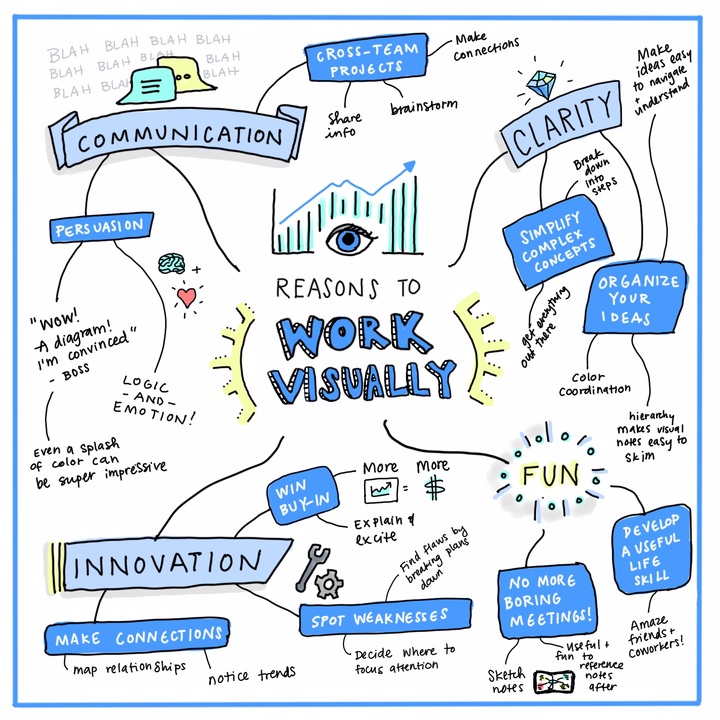
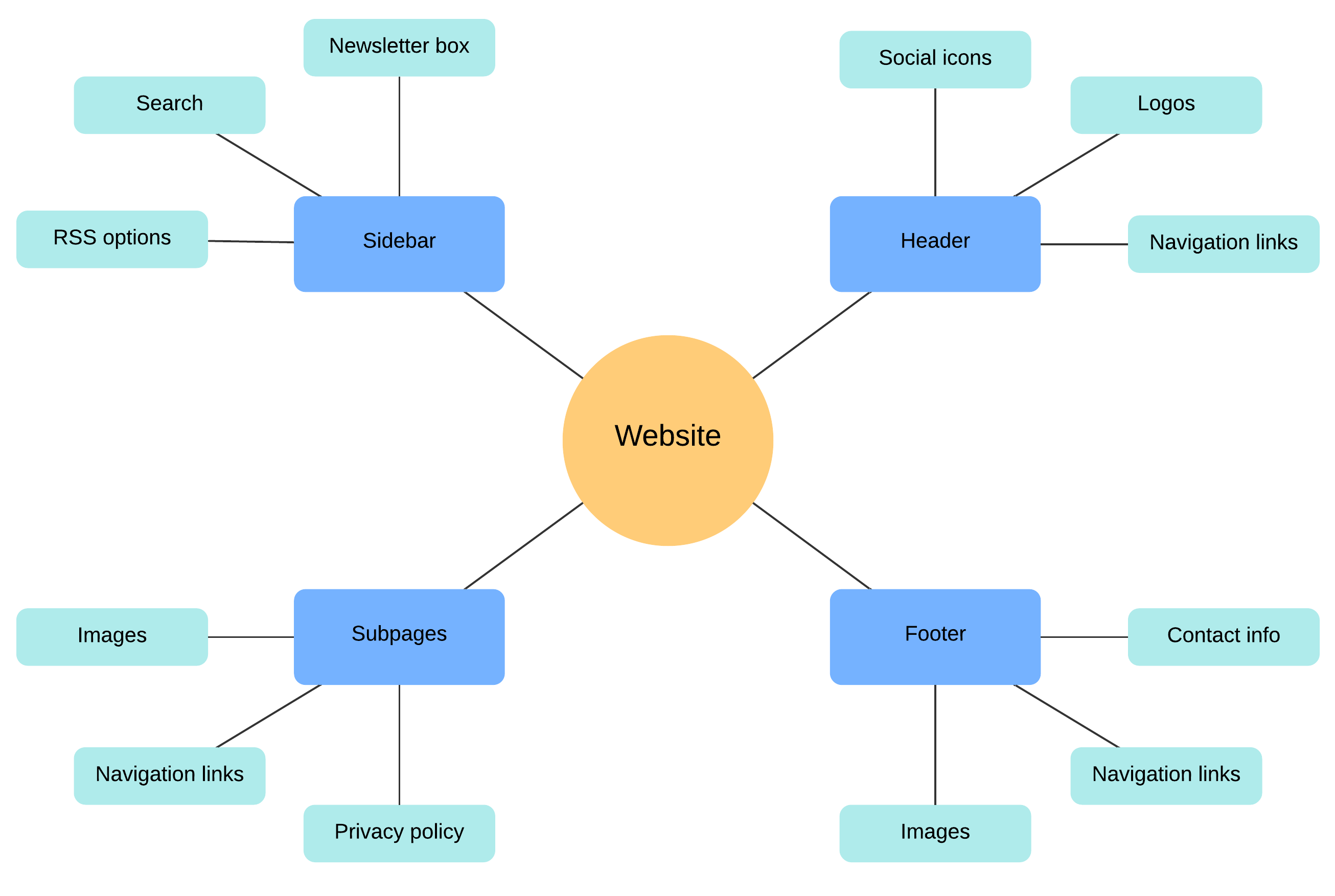
A spider diagram is a visual brainstorming diagram to help you organize concepts and ideas logically so that you can see a complete overview of all your information. It uses spatial organization, color, and images to break down topics.
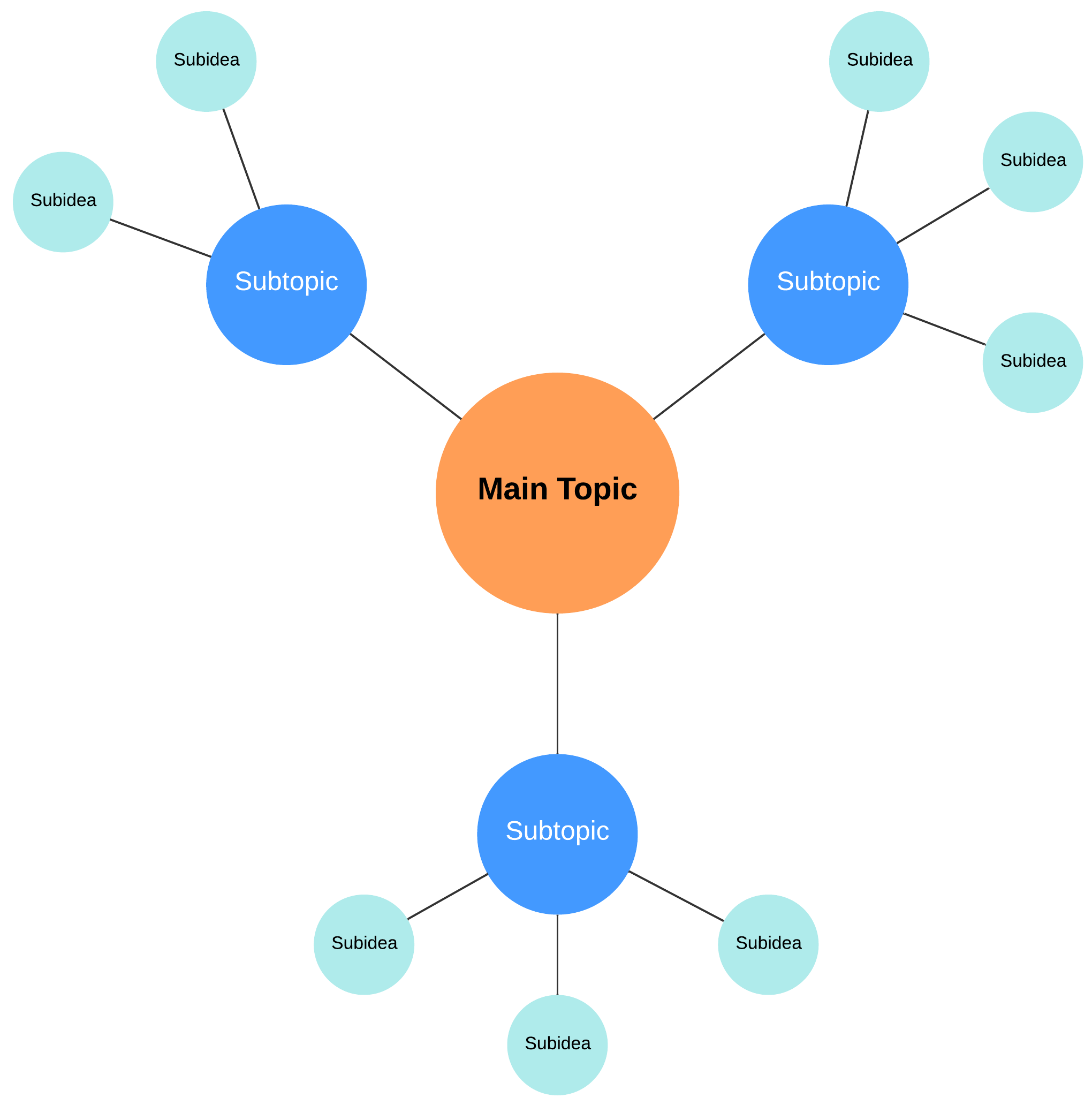
A basic spider diagram starts with a main idea or topic in the center circle, with all subordinate ideas branching off of it. To add more details, you can further investigate certain aspects, make connections between ideas, and fill in the gaps.
Spider diagrams are very similar to mind maps. The main differences between the two are that spider diagrams do not always use color, and there are no specific rules on how to structure a spider diagram.
Benefits of making a spider diagram
- Think quickly and visually: Spider diagrams are quick and simple to make. They are easy for our brains to understand because, unlike linear notes, they closely reflect how our brains are structured.
- Increase focus and comprehension: A spider diagram forces you to focus on the overarching topic, review existing knowledge as you organize it, and assess comprehension to determine where you need additional learning or information.
- Spark creativity: A spider diagram prompts you to actively sort through information as you craft your diagram, make new connections, increase understanding, and surfaces additional ideas.
- Remember more: These diagrams are memorable thanks to their colors, pictures, simple keywords, and spatial structure. Plus, the act of building a spider diagram helps you more easily recall the information.
When to use a spider diagram
Spider diagrams can be useful for many activities, especially when planning or coming up with ideas.
- Writing: Create an overview of your subject matter and sort through your best ideas while also facilitating the discovery of new ones. You can also use it to organize your final ideas to streamline the writing process.
- Studying: Understand and stay accountable for what you already know. The areas where the web diagram is hard to fill out indicate where you need to study harder. The act of creating a spider diagram will help you recall the information later on.
- Brainstorming: Get your creative juices flowing by throwing out any and all ideas and organizing them in a spider diagram.
- Note taking: Make sense of the information you read or hear by putting your notes in a spider diagram, making it more digestible and memorable.
How to make a spider diagram
- Write the main topic or concept in the middle of the page and draw a circle around it.
- Draw lines from your main idea that lead out to each subtopic. These lines can have arrows or a circle at the end—there is no set structure to a spider diagram, so do whatever works best for you.
- Add subordinate ideas to your subtopics until you have all your information present in the diagram. Feel free to add color or customize the diagram any way you please.
To make things even easier, try starting with a Lucidchart spider diagram template. Open the template and fill in your own information, and then customize it to fit your needs.