-
Perform initial as-is assessment
Once you have the who, what, and how of your process clarified, you’re in a good position to answer the question, “Why does this process need to change?”
To answer this question, Alec recommends using a more nuanced form of problem statement called a case for action.
A case for action has three parts:
- Stakeholder-based assessment
- Context
- Consequences of inaction
The stakeholder-based assessment evaluates stakeholders involved in the process such as customers, performers, the owner/manager, and others as needed.
Next, you need to establish the context surrounding the case. Consider “What has changed in our environment that caused these problems to surface?” This step doesn’t look to blame anyone but rather identify the circumstances that led to needed change.
And finally, it’s important to identify the consequences of inaction. In other words, what will happen if the process is left as is and the status quo is maintained? This final step illustrates why the need for taking action now.
Understand the as-is process
-
Complete additional as-is modeling
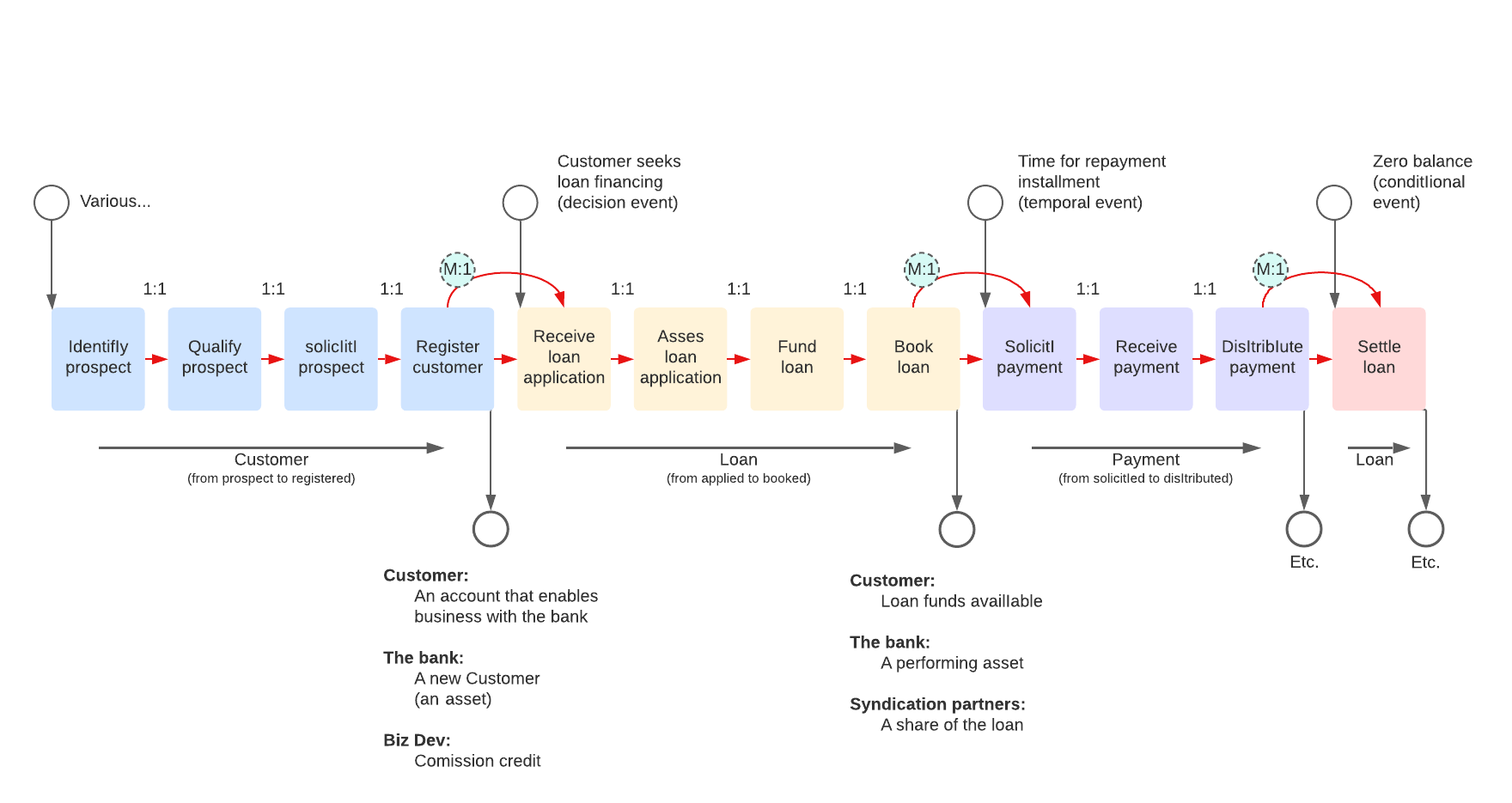
With your initial scope and assessments done, you can move on to more in-depth, as-is modeling. As mentioned earlier, this is often the step that people start with. But now that you have the first two steps as a foundation, you can create a more robust model with the context and “why” already established.
Alec’s approach extends the original scope model to create what he calls an “augmented scope model.”
This model elaborates on
- What the detailed activities are
- Who performs each step and how they will do it
Typically this is all the information you need to model your as-is process. However, if you want to include the initial workflow, Alec recommends keeping it as simple as possible. Focus on flow over detail, using minimal symbols in your model. This helps keep everyone engaged and ensures you understand the overall process flow rather than getting stuck in procedural-level details.
-
Complete final as-is assessment and generate to-be ideas
The next step is to assess your as-is process based on all six process enablers. Process enablers provide context for the functional drivers of a process.
These enablers are
- Workflow design
- IT
- Motivation and measurement
- HR and organization
- Policy and rules
- Facilities/ physical environment
The goal is to understand your as-is process within the lens of each enabler to identify how your process is working and what problems exist within each area.
For example, you may be considering motivation and measurement and realize perhaps the performance measures or the reward system are encouraging certain behaviors that are bad for the process.
This approach gives you further insight into your current processes and how they impact (or are impacted by) each area, generating valuable ideas for your to-be features.
Design the to-be process
-
Establish 5-10 core features of your to-be process
After you’ve finalized your as-is assessment and evaluated your processes within a framework of each enabler, it’s time to refine the ideas you generated from that exercise and select which issues and features to focus on for your to-be process.
Note: A feature is a significant change or improvement to the process or a significant factor in the design of an all new process.
For this step, review the ideas generated from step 4 and narrow them down to five to 10 core features you want to focus on for your new process.
-
Assess each to-be feature by enabler
Once you have your features (or improvements) outlined, it’s time to review them again by enabler. In other words, consider “What changes are needed in each enabler to make this feature work?”
Visualizing these factors in a matrix can help you organize the information and improve the decision-making process. Create a matrix outlining your features against each enabler to get a clear picture and uncover potential roadblocks or issues. This exercise helps you avoid unanticipated consequences to design a seamless and efficient to-be process.
-
Design your to-be process flow
Now you know what you want to see in a to-be process, so it’s time to design your new process flow. Just like the first steps, you’ll start with the “what” first, then move on to “who” and “how.”
To do this, determine the essential activities of your process and lay them out in their basic sequence (like a PERT chart), showing real—not imagined—dependencies, before factoring in who will perform each activity and how.
Then, link these activities in a swimlane diagram, including non-value added but necessary activities, such as transport, record-keeping, and approval.
In other words, the goal is to design around the essence of the process first. The result is a clear and usable to-be process flow that is agile and robust.
Conclusion
Managing business process change takes careful planning and transparent communication with your stakeholders. Tempting as it is, you can’t just take the best practices from other organizations and leap into the to-be design phase. So start at the beginning to get a clear picture of your processes and the context needed to develop strong to-be workflows.
Remember: “Simple but not simplistic techniques, rigorously applied, help us achieve more, in less time.”