Schedule and milestones
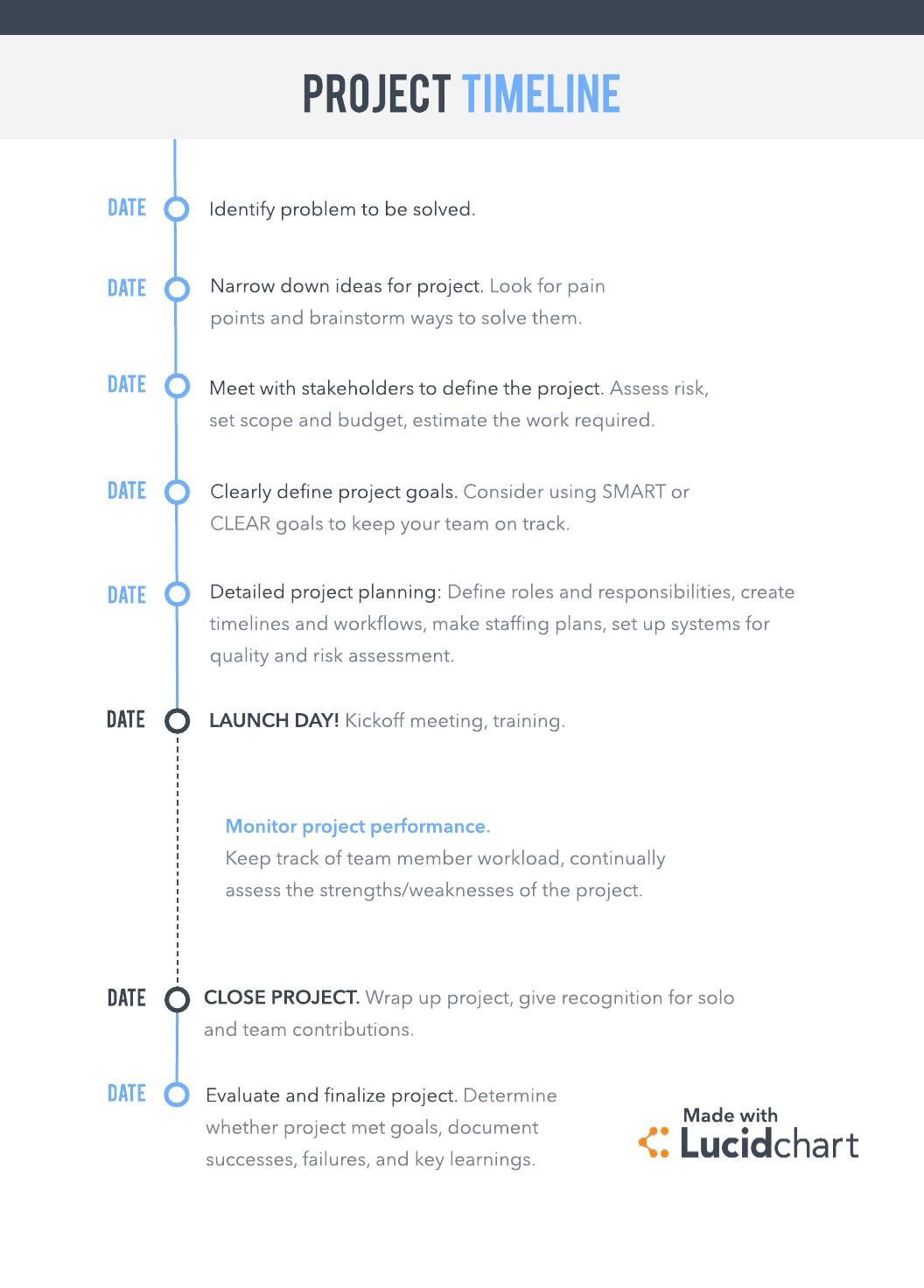
The schedule is more than just a place to mark your launch and end dates. It should identify key milestones and deadlines as well as periodic reviews.
Since time is an important factor in pricing and project mapping, the more specific you can get about what is being done, when it will be accomplished, and who is responsible for each part, the better.
This is a good place to include visuals to make it easy to see how the project should progress.
Definition of success
Clearly define what the requirements are to determine the project a success. This is also a good place to clarify what would be a failure. That way, everyone can agree on whether the project was effective or not.
Payments
Note how payment will be delivered and the deadlines for payment.
Sign-off
Finalize the SoW with signed approval from all stakeholders.
Statement of work vs. scope of work
The terms “statement of work” and “scope of work” are sometimes used interchangeably. However, there is a distinction. A scope of work is one part of the statement of work.
The SoW is a comprehensive document that outlines the project’s goals, deliverables, costs, etc. The scope of work section details how those project objectives will be achieved. The scope of work also describes the high-level steps or tasks involved in the project and sets clear bounds on the extent of work to be done within a given project.
By clearly defining the scope of the project, project managers can more easily keep the project on track and prevent scope creep.
How to write a statement of work
Writing a SoW can be a daunting task. Though the actual document shouldn’t be longer than a few pages, nailing each section takes careful research and consideration.
As you go to write your SoW, keep the following best practices in mind.
Start early
Begin writing the SoW early in the project definition stage.
By documenting initial project plans as you go, you can make sure the SoW is comprehensive and accurately reflects the goals of the stakeholders. Plus, starting early will allow you to adapt the document as the project specs evolve so you don’t have to keep rewriting the entire SoW.
Work in phases
For larger initiatives, it can be difficult to accurately and confidently scope out all the elements of a project from start to finish.
Instead, consider breaking up the project (and SoW) into phases. Then write a separate SoW for each phase. This will help you keep the SoW clear and concise while allowing you to define the scope for each phase more effectively as the project progresses.
Be specific
The SoW is the primary reference point for a project’s stakeholders on the scope and details of a project.
Each element outlined in the SoW should be precise and adequately detailed to avoid any confusion or misinterpretation. This is particularly important for the scope of work and project requirements sections. These sections set the goals and bounds of the project, so they must be specific and clear.
Define what failure looks like
The purpose and acceptance criteria sections will define what outcomes constitute success, but you should also define outcomes that are failures.
Understanding both outcomes will help you keep the project on track and ensure everyone agrees on the project’s effectiveness.
Use clear language
A SoW is a high-level document geared towards a general audience of multiple stakeholders. That means the language should be easy to read and comprehend.
Avoid overly technical language, jargon, or words with multiple meanings. Be sure to define any technical terms or acronyms you do use, so everyone can easily understand the SoW.
Schedule reviews
Build regular reviews into the project schedule. This will give the client a chance to review your progress and deliver feedback to ensure everyone is on the same page and the project never veers too far off track.
Use a statement of work template
The SoW is a detailed document that needs to cover a variety of project specifications and factors. Starting the documentation process from scratch can be overwhelming, and you could run the risk of missing key parts.
Make things easier by starting with a SoW or scope of work template. A template will guide the writing process so you don’t leave out important details and you can ensure the SoW format is clear and complete.
Include visuals
While the SoW is a text-heavy document, visuals are a powerful way to communicate details clearly and succinctly. (They’re also a great way to break up long blocks of text so it’s easier to read and understand.)
Use visuals throughout the SoW including:
- Timelines
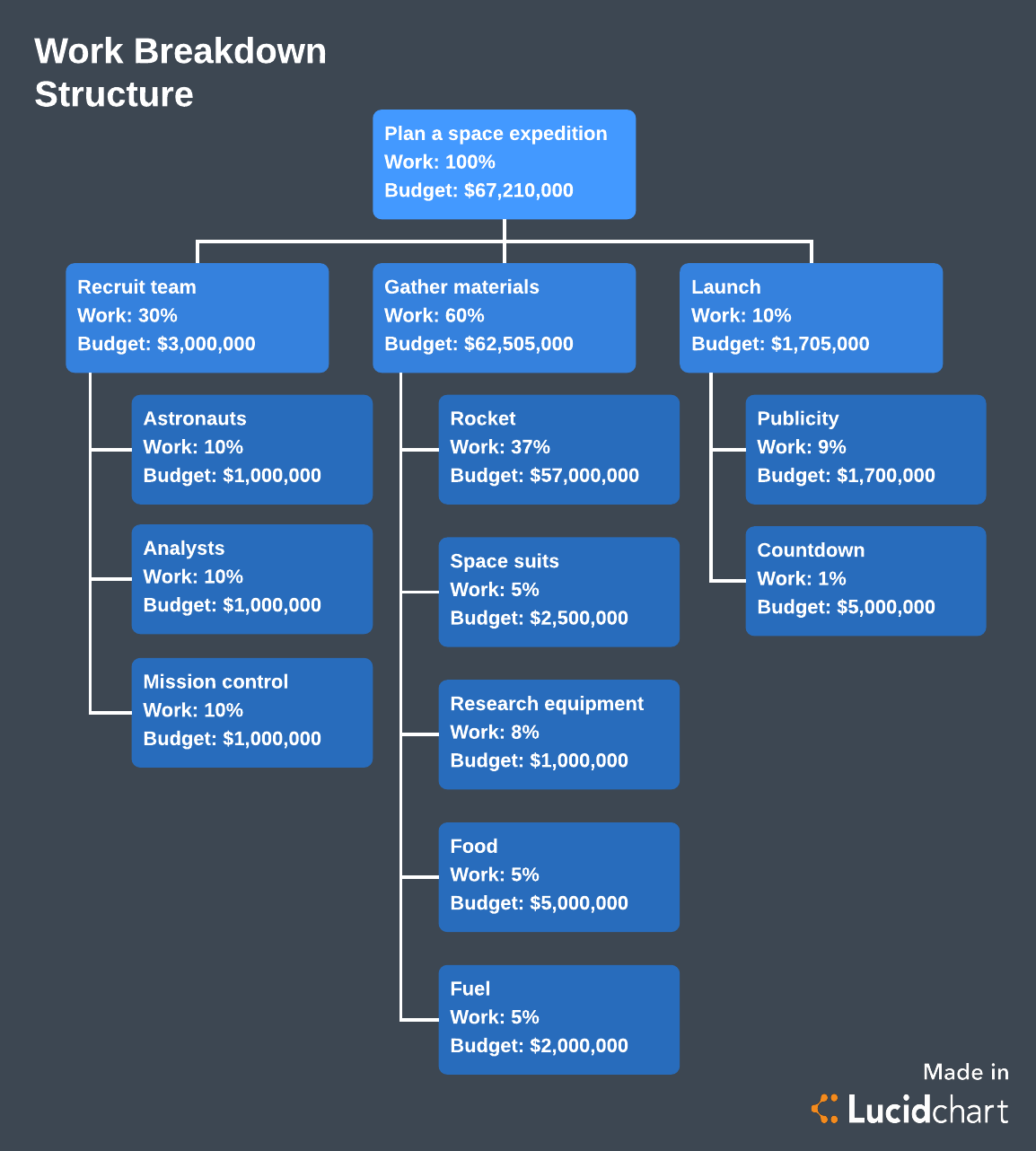
- Work breakdown structures
- Graphs and tables
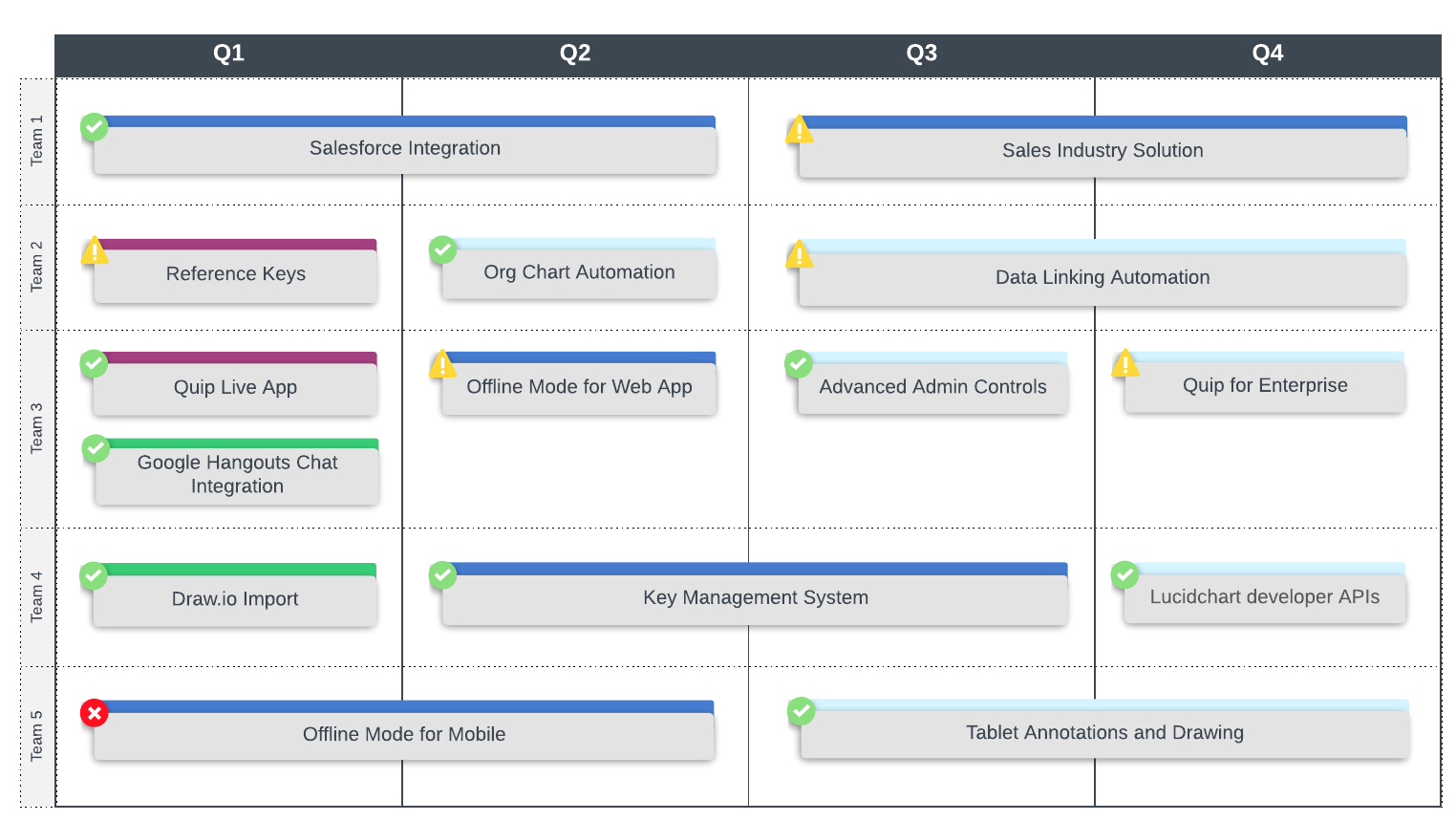
- High-level project roadmaps
Visuals like these will help clarify the scope, project responsibilities, and deliverables and milestones for the project.