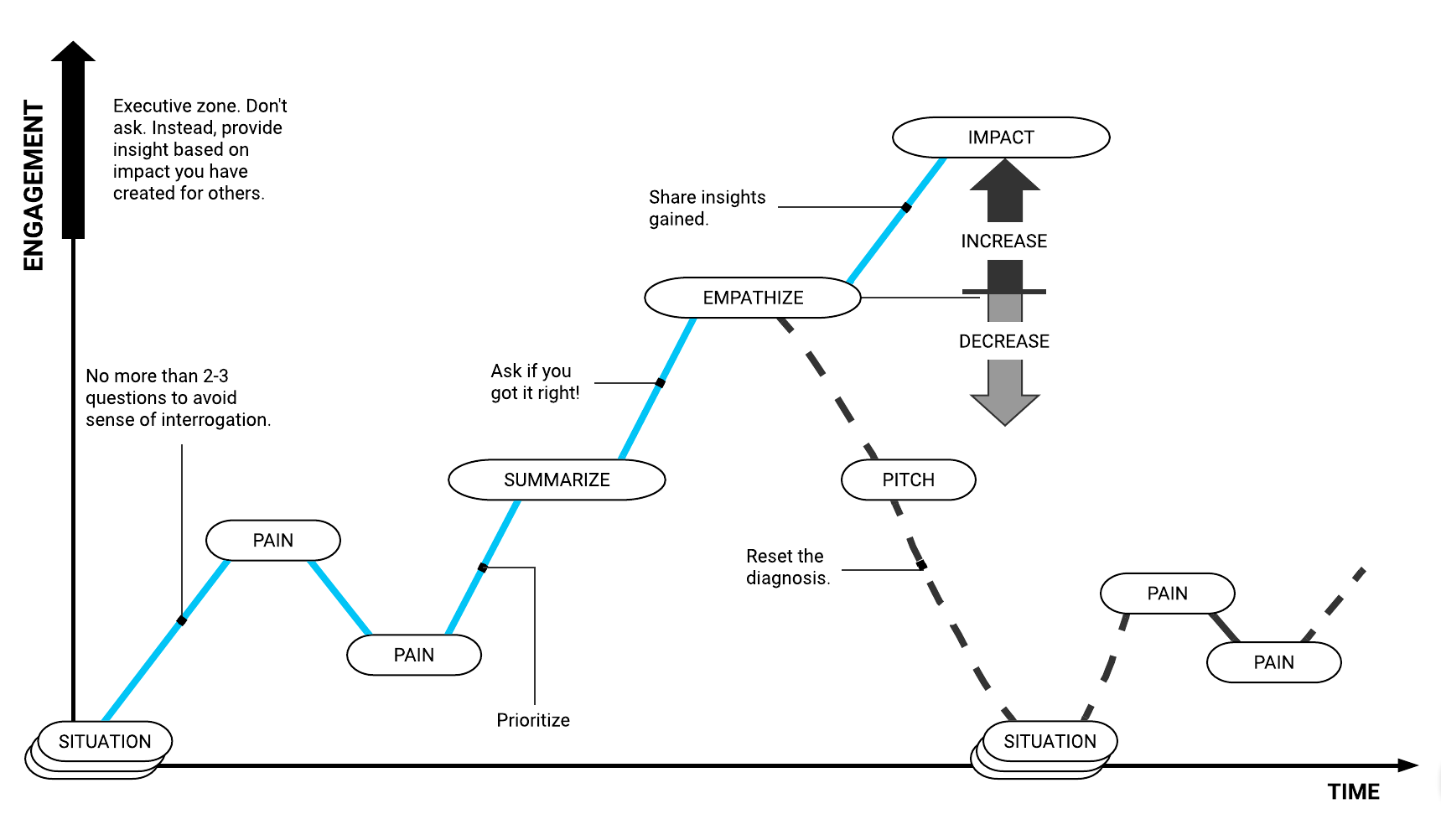
For more guidance on sales conversations, make sure to check out our blueprints from Winning by Design.
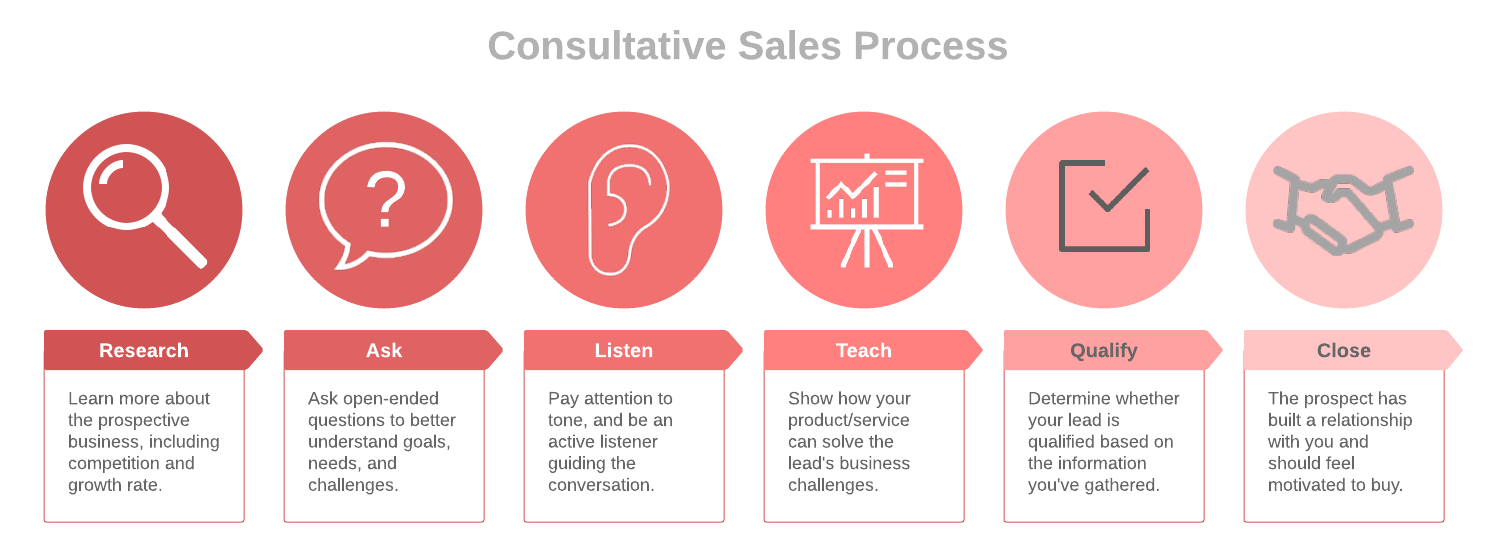
What to avoid: Don’t let your prospect lead the entire conversation. Listen strategically to determine how you’ll move the conversation to the next steps in the process. Remember, you're acting in an advisory role here, so the customer is trusting you as the expert to guide them through the nuances of their problem and the possibilities of your solutions.
Teach
Of course you’re trying to close deals, but the best salespeople also solve problems. By teaching prospects how to establish a plan of attack to address their challenges, you’ll become not only a teacher—but a business savior, too. Presenting solutions will build further trust in your relationship and drive a sense of loyalty when it comes time to sign on the dotted line.
As you explain your solution and demonstrate ROI, consider using current vs. future state diagrams to show how the prospect's processes or systems would be improved with your product or service.
What to avoid: Don’t show your full cards. Weigh the advice and guidance you give against the insights you still need to gain from your customer.
Qualify
Consider this: Maybe you’ve had productive conversations with your lead. But at some point, your prospect revealed that their budget is non-existent. Or, you discover that their company is preparing for a strategic shift that will render your product or service obsolete. In short, you realize the lead is not qualified.
Yes, the goal of the consultative sales process is about relationship-building. But it’s also about selling. Once you determine a lead is unqualified, move on.
What to avoid: Don’t keep trying to sell deals just because you’ve already made a hefty time investment. Perhaps the trust you’ve built will help close a deal if and when they become a qualified prospect down the road.
Close
If you’ve done your research, you’ve listened, you’ve taught, and you’ve qualified that this is indeed a good lead, then closing your sale should be fairly easy at this point. Your stakeholders have built a relationship with you, they have the budget to make a decision, and they have incentive to solve their problem easily and positively.
What to avoid: If you still face opposition at this point, don’t give up too easily and don’t discount your work. Instead, ask your customer or stakeholder how else they intend to hit their business goals without your help. Maintain a position of serving their needs, and view everything with the same long-term lens.
A deeper way of trading
The consultative sales process isn’t just savvy business or a lesson in charm school—it’s proven cognitive science. Research has shown that active listening actually increases well-being due to our inherent need for connection; when we are able to drop our agenda for ourselves and forget about what we’re preparing to say next, we invite a priceless opportunity for connection.
Throughout the whole solutions-based process, by beginning with a product or service that you understand and truly believe will solve problems positively, you can be ensured that your authentic connection with a customer can result in a closed deal.
Explore Lucidchart for sales
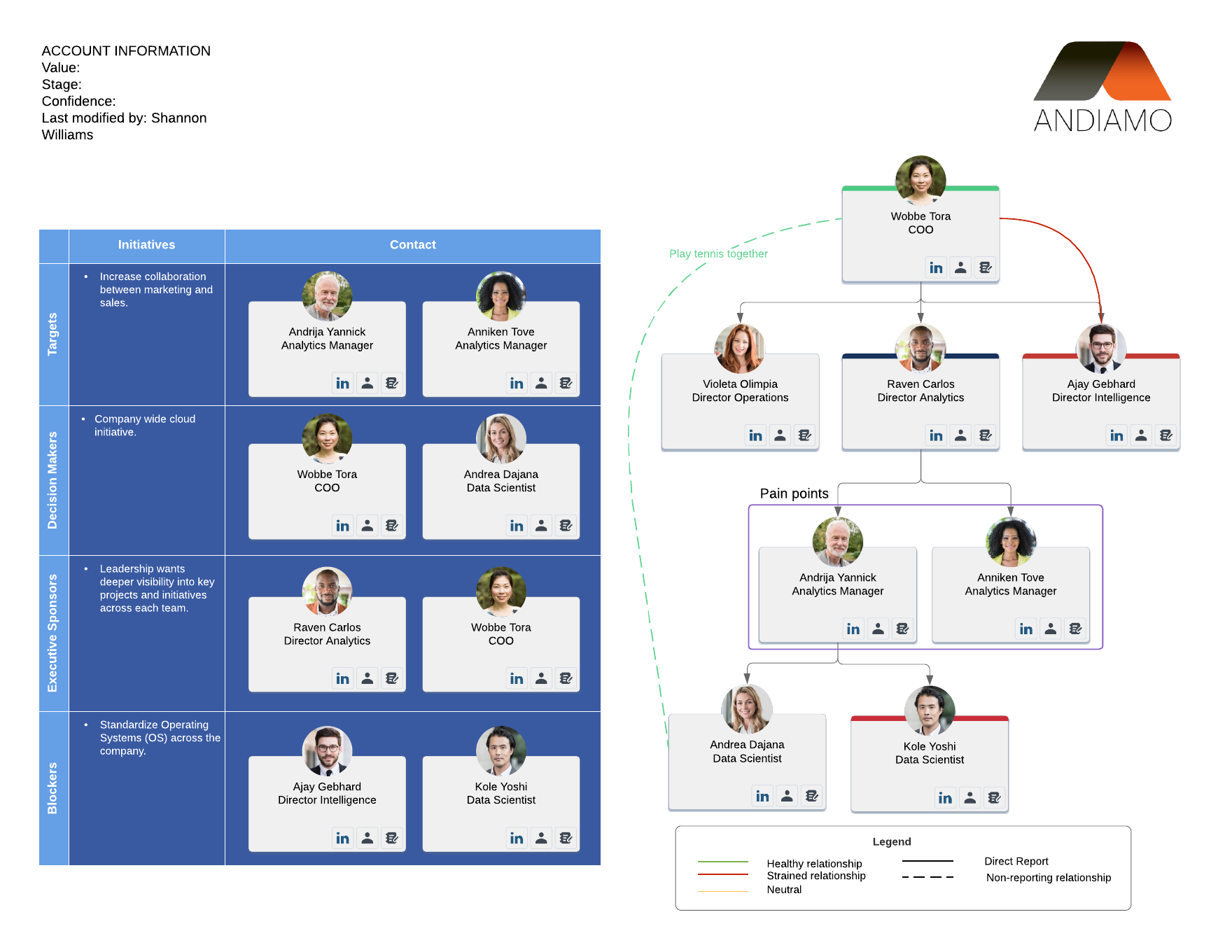
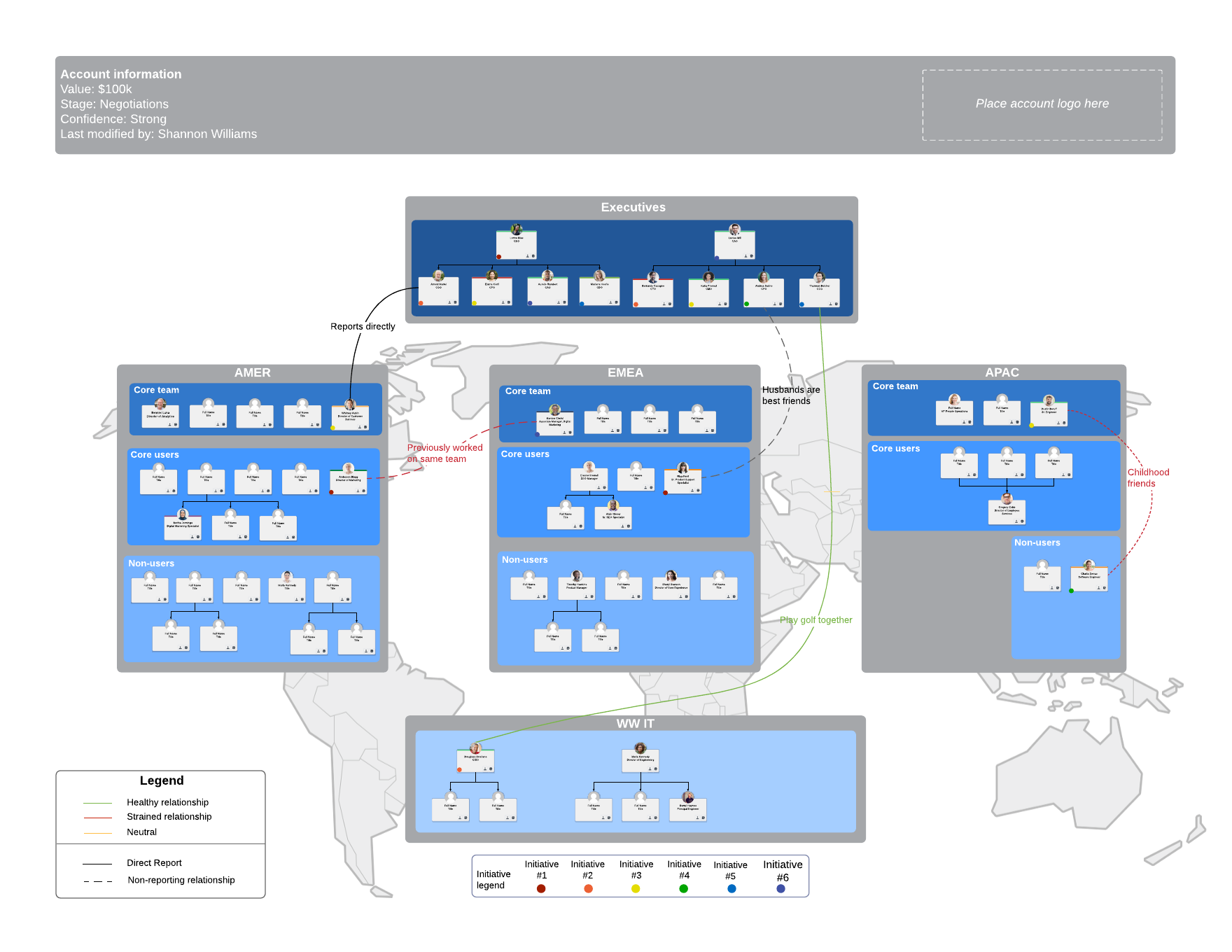
When building a leads list, any rep can use Lucidchart to seamlessly create shareable account maps of qualified leads and decision-makers. These account maps can be centrally stored and managed in Salesforce, allowing your employees and teammates to have immediate access.
But the real power of Lucidchart is in diagramming: Sales reps and engineers can use Lucidchart to illustrate important business metrics like ROI and workflow systems. If it can be diagrammed, it can be benefitted by Lucidchart.