How do I measure process cycle efficiency?
To measure efficiency, you can use this process cycle efficiency formula:
value-added time/total lead time
Value-added time refers to the time spent actually creating your product. Total lead time refers to the time it takes to complete the entire process cycle, which includes both value-added time and wasted time (such as waiting for the next step). According to Lean manufacturing standards, value-added time should make up more than 25% of your process.
Businesses have also used this formula to determine overall process efficiency:
(value of outputs/value of inputs) x 100
Typically, the value will be a dollar amount. For example, say your company spends $500,000 a day to pay for the labor and materials required to manufacture chewing gum, and your company produces $750,000 worth of gum daily. Your company would be operating at 150% efficiency.
A process that is over 100% is considered to add value. The higher the percentage, the most efficient your processes are.
Other process efficiency metrics
These calculations are not the only measures of success that may be relevant to your business. For instance, you may be producing a lot of bubblegum, but one out of every 10 pieces is not the appropriate size. That’s when you need to look at other types of process efficiency metrics, such as:
- Resource efficiency
- Capacity (i.e., the amount that can be produced within a specific timeframe)
- Labor productivity
- Throughput (i.e., the output of a process or machine for a unit of time)
- Resource efficiency
- Turnaround time
- Profitability (i.e., the relationship between total sales and profit)
- Quality (i.e., the number of outputs that are acceptable for use or free of defects)
- Return on investment
Your business has dozens of processes, both complex and simple. By examining all the processes in your company to determine where efficiency could be optimized (or analyzing other process efficiency metrics, depending on your goals), you can save you money while saving your employees’ sanity.
How to streamline processes
Now armed with a process efficiency definition and different formulas and metrics you can use, it’s time to examine each step in every process and eliminate (or significantly lessen) waste, redundancy, errors, and delays to maximize the work you and your employees do.
As you try to improve process efficiency, make sure to follow these steps.
1. Map out your existing processes
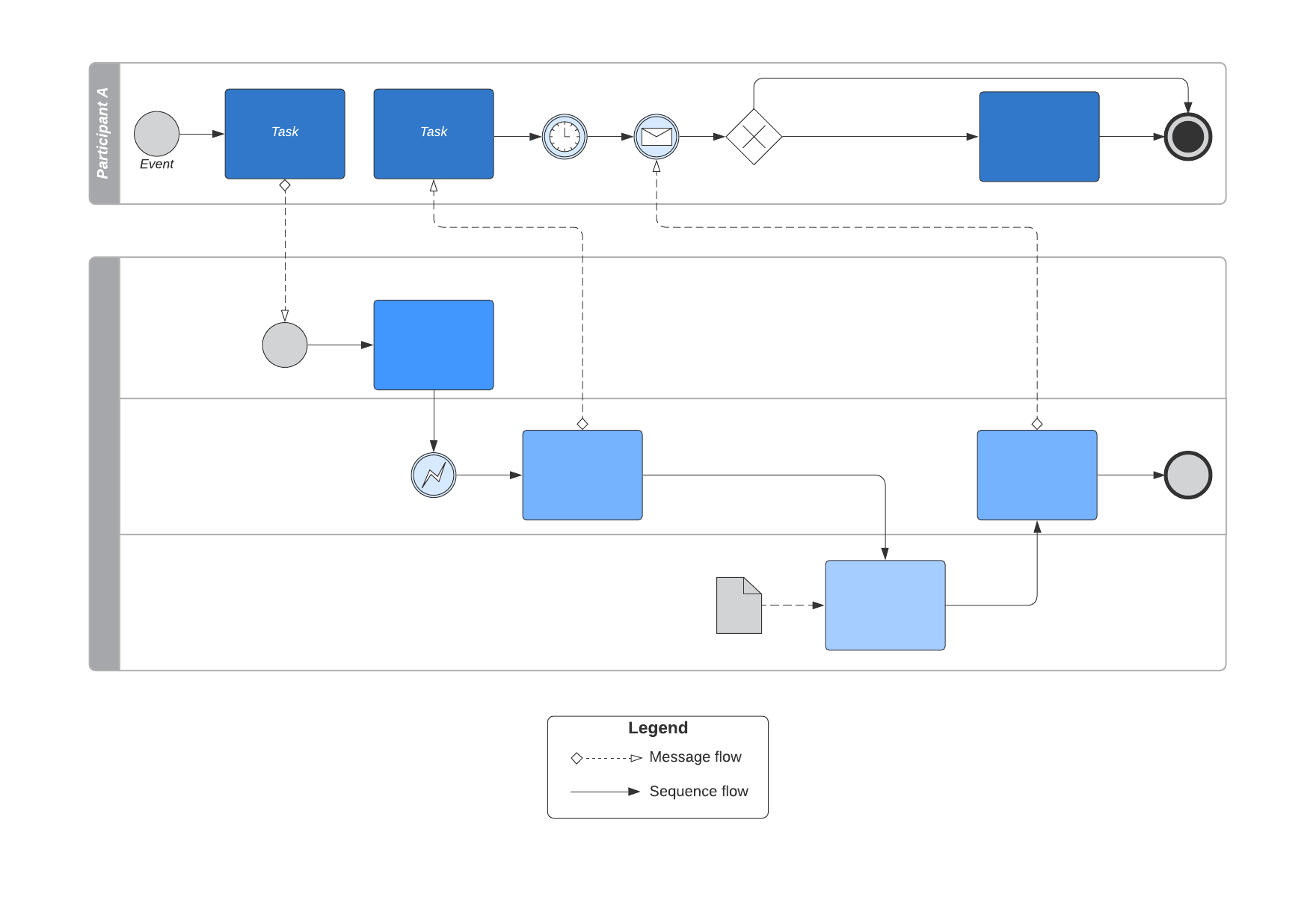
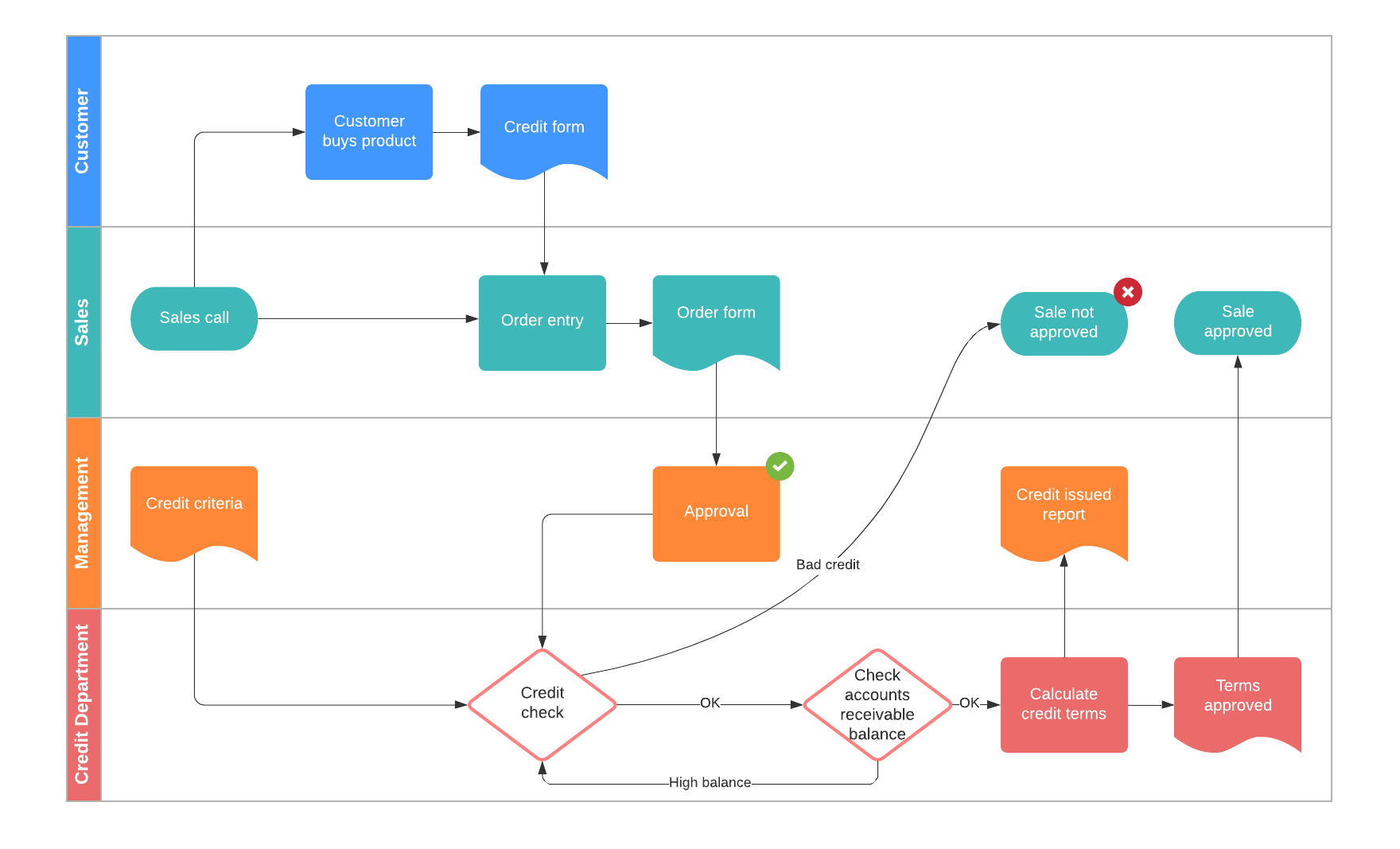
When examining your processes, first translate the obscure into the concrete. In other words, write it down and map them out. You can use a BPMN diagram, flowchart, swimlane diagram, value stream map, or whatever makes the most sense for your business processes.
For a more sophisticated and easily shareable approach, use Lucidchart. This platform will help you define processes and orchestrate them in an easy-to-understand, completely transparent flowchart.