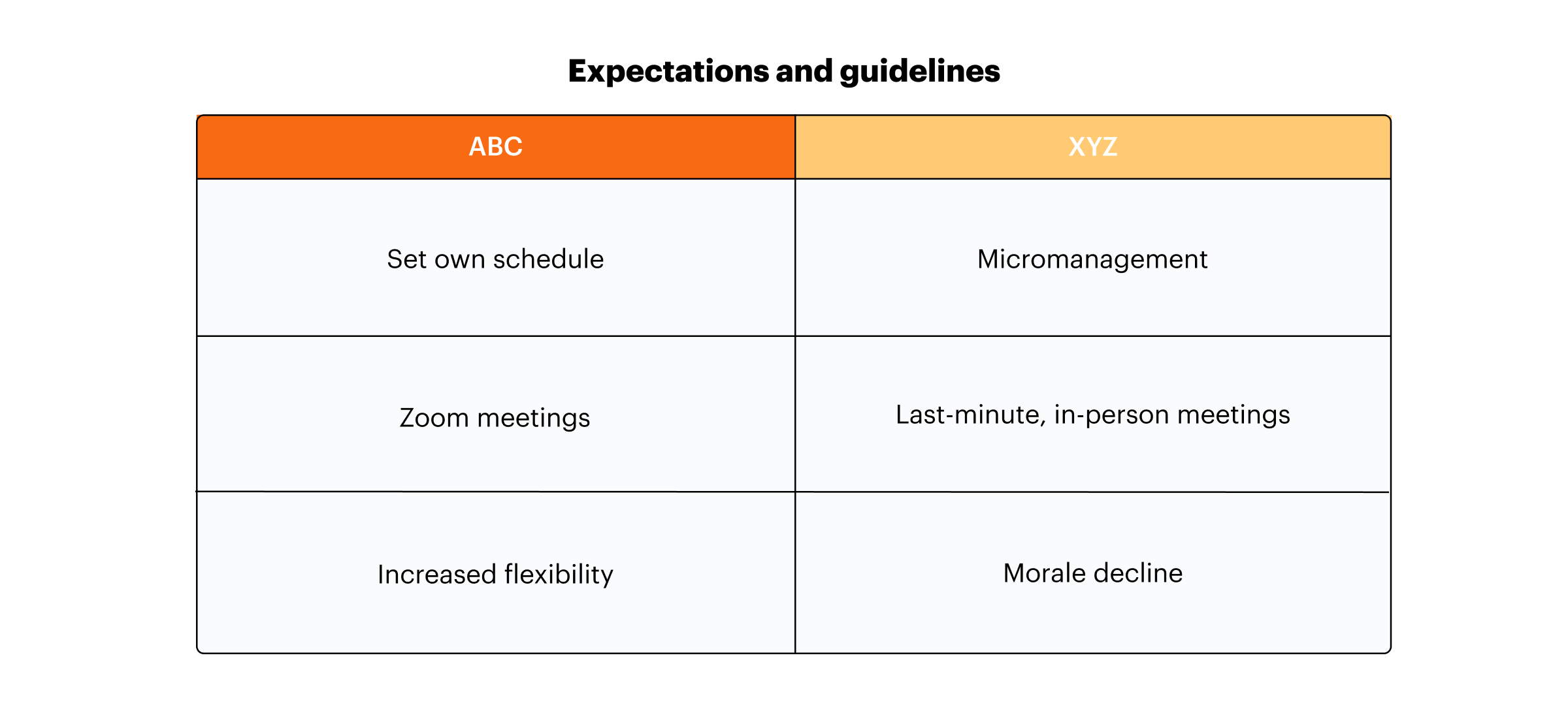
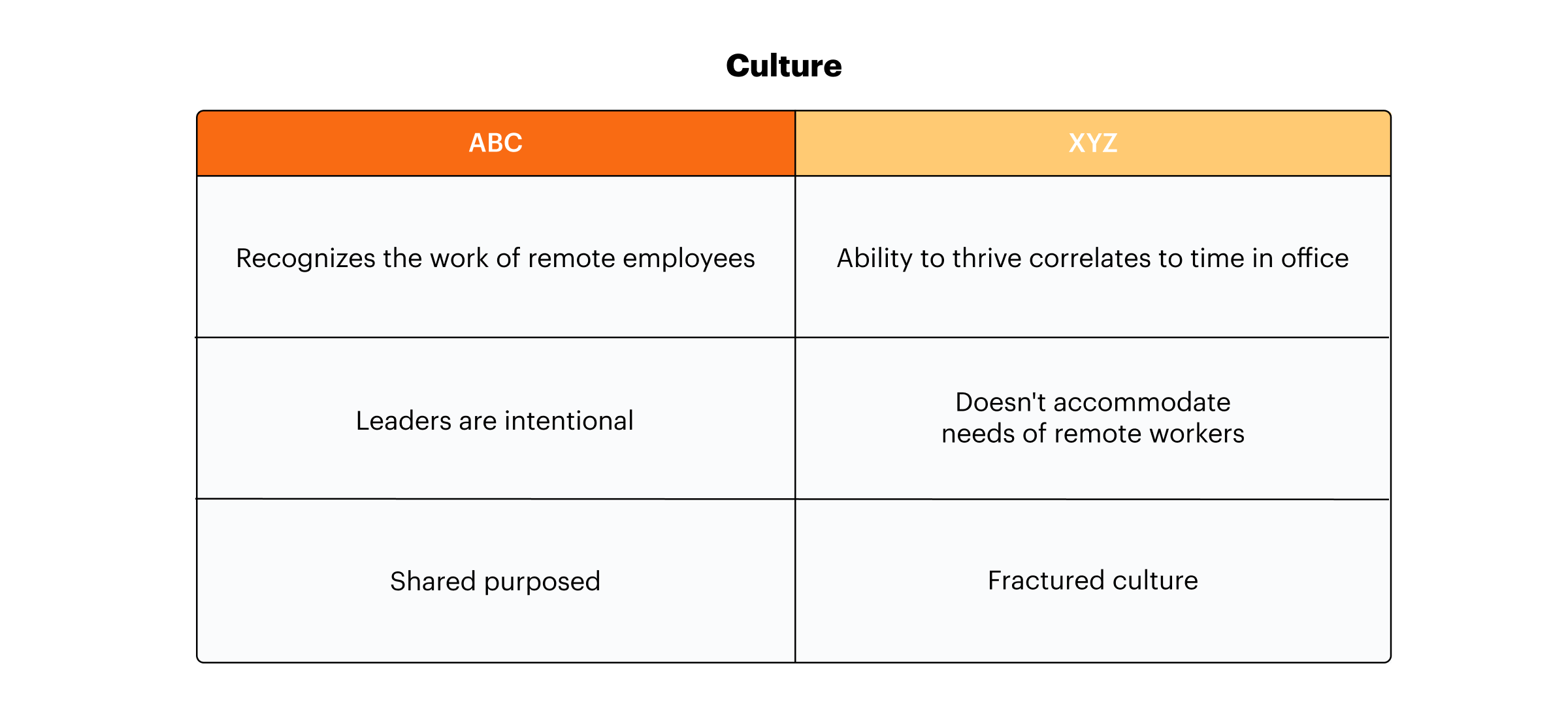
In contrast, the hybrid culture at XYZ Industries is much less defined. Initially, the policy for its hybrid workplace was for everyone to choose “whatever schedule felt most comfortable.” Yet, XYZ managers began to routinely check up on remote workers not online by 8 am or after 6 pm.
This informal policy was puzzling for its remote workforce. Projects were still being completed on time. However, workers who returned to the office were held to less scrutiny, even favored by management. Many meetings seem to be held at the last minute, without a Zoom component.
What was expected in XYZ’s hybrid workplace? If it was crucial to maintain an office presence, why wasn’t that policy formalized by management? Employees who preferred to work from home suddenly felt reluctant to do so. But what days made the most sense to work in the office and at what times?
Not surprisingly, XYZ’s workforce felt frustrated, betrayed, and even angry. Many decided to pursue opportunities elsewhere, and productivity and morale soon declined.
Collaborative software and tools
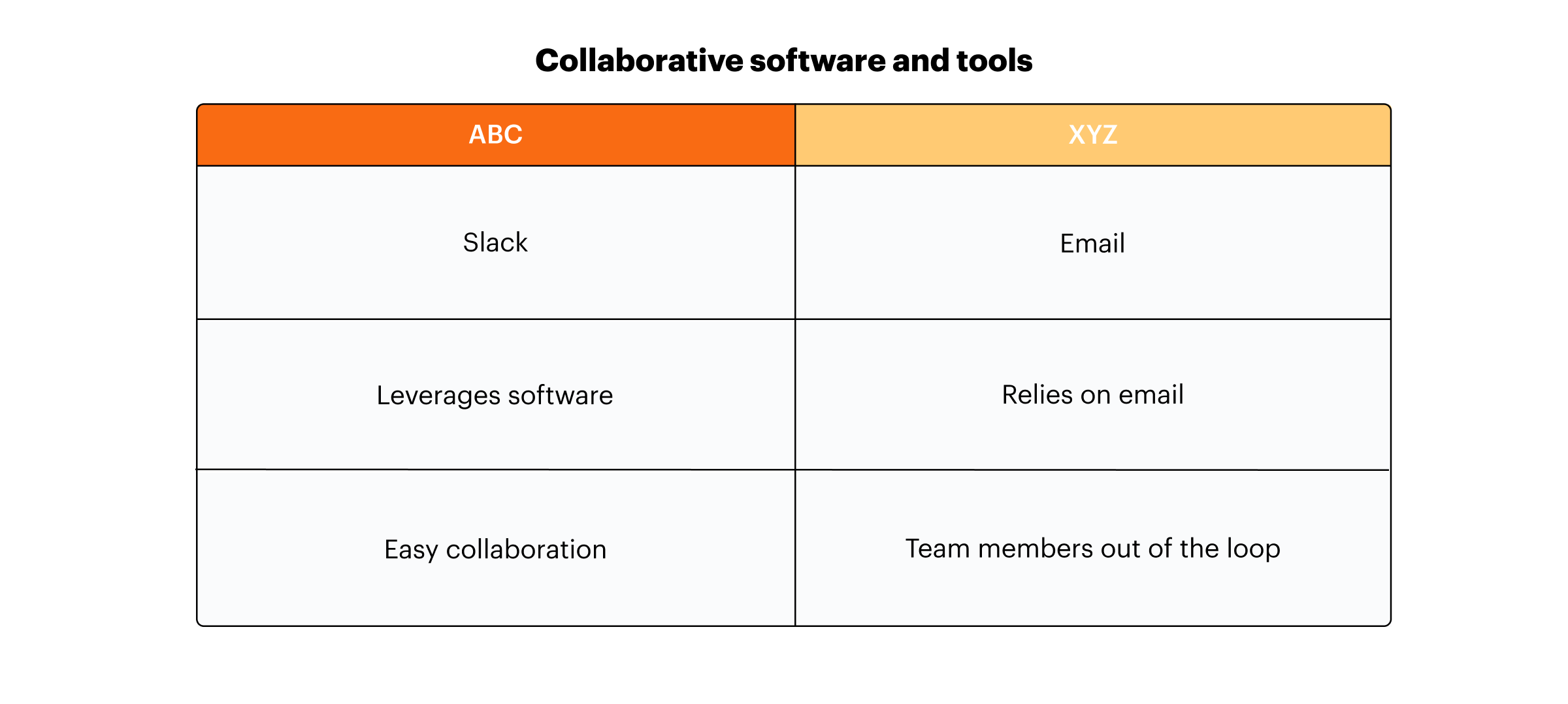
Given the nature of the projects at ABC Software, communication is a top priority. Teams are interdependent, collaborate often, and in need of real-time updates on project status, scope changes, and more. Fortunately, this is a hybrid office with the tools it needs to stay productive.
Using Slack, ABC’s employees get the benefits of email, text, and instant messaging in one app. Teams discuss specific projects in dedicated channels, even from their phones if they happen to step away from their desks. Some channels are dedicated to fun topics to keep things light.
With Asana at their disposal, everyone gets the help they need to stay on target, keep projects organized, and meet deadlines. For ABC’s hybrid workplace, this tool’s ability to track individual tasks, plan sprints, and visualize progress with its boards allows its teams to not miss a beat.
By leveraging the Lucid Visual Collaboration Suite, employees can diagram, whiteboard, and brainstorm virtually to take plans from sketches all the way to successful delivery. It also makes participation a breeze, regardless of whether teams are working in the office or not.
Giving people access to collaborative tools is the hallmark of any effective hybrid workplace.