Re-host
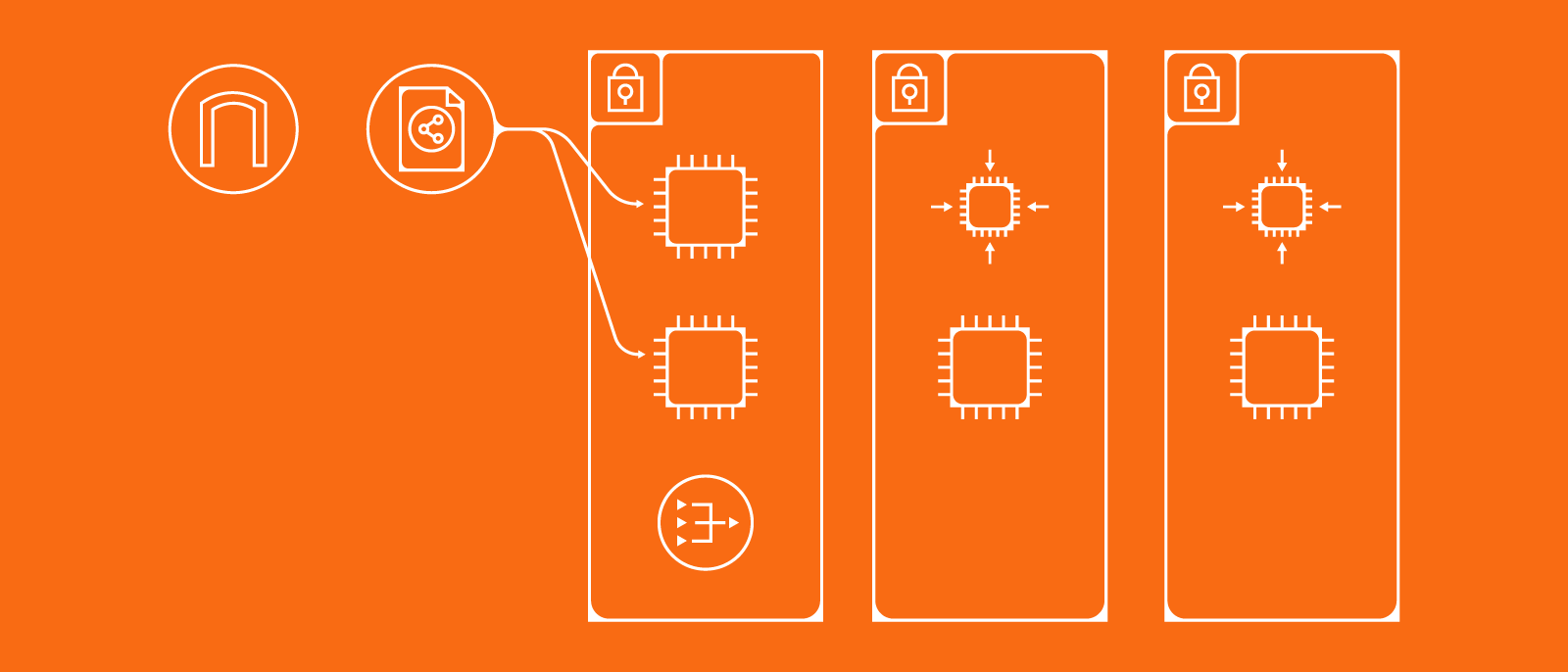
Also sometimes called “lift and shift,” this is a basic strategy that involves lifting the stuff you currently host on-premise and shifting it to the cloud. You move an exact copy of your current environment to the same type of environment on the cloud. This strategy usually does not require extensive reconfigurations or changes to architecture. Everything that worked in the on-premise environment should work the same way when hosted on the cloud.
This strategy is good for companies that are new to cloud migration and are building trust in the cloud. Because there are not a lot of differences between their current environment and the cloud environment, there’s not a huge investment with the re-hosting strategy.
Re-platform
This one is similar to a lift and shift strategy. The difference is that you will make some more changes and adjustments to applications so they are optimized and will work better and faster when hosted on the cloud. Re-platforming requires programming knowledge so that your current environment integrates seamlessly with the cloud environment.
This strategy is also good for companies that are still testing the cloud migration waters and want to build trust in the cloud while seeing benefits like faster system performance and lower costs.
Repurchase
With repurchasing, you are moving your environment to a new, cloud-based product. One way to do this is to abandon your current applications and replace them with software as a service (SaaS) options. This can be a challenge because team members lose the familiarity with your existing apps and will need to be trained on the new platform.
Another way to go with the repurchase strategy is to move licenses from local servers to cloud-based servers. For example, you might move a customer relationship management system (CRM) to Salesforce.
The repurchasing strategy might be a good, cost-effective way to go if you are moving applications from customized legacy environments.
Retain
If migrating to the cloud doesn’t make sense for your company at this time, you can retain your current environment and revisit a move to the cloud later. For example, to be in compliance, you can’t move data at this time. Or, some of your applications might be too difficult to migrate and you want to keep them until you can come up with a viable and cost-effective alternative.
In this case, you might want to look at a hybrid option with some of your stuff retained on-premise while others are moved to the cloud.
Retire
Some of your applications and services might not be useful anymore. There’s no reason to migrate them to the cloud if they are not going to be of value to your customers. If this is the case, all you need to do is turn them off.
Re-factor
This strategy can be labor-intensive because it involves redesigning and building your existing applications from scratch so they can work in the cloud environment. Re-factoring can be time-consuming and expensive. But by taking the time to re-factor your applications, they will be more compatible with future versions, and it can make them more accessible to accommodate future growth.
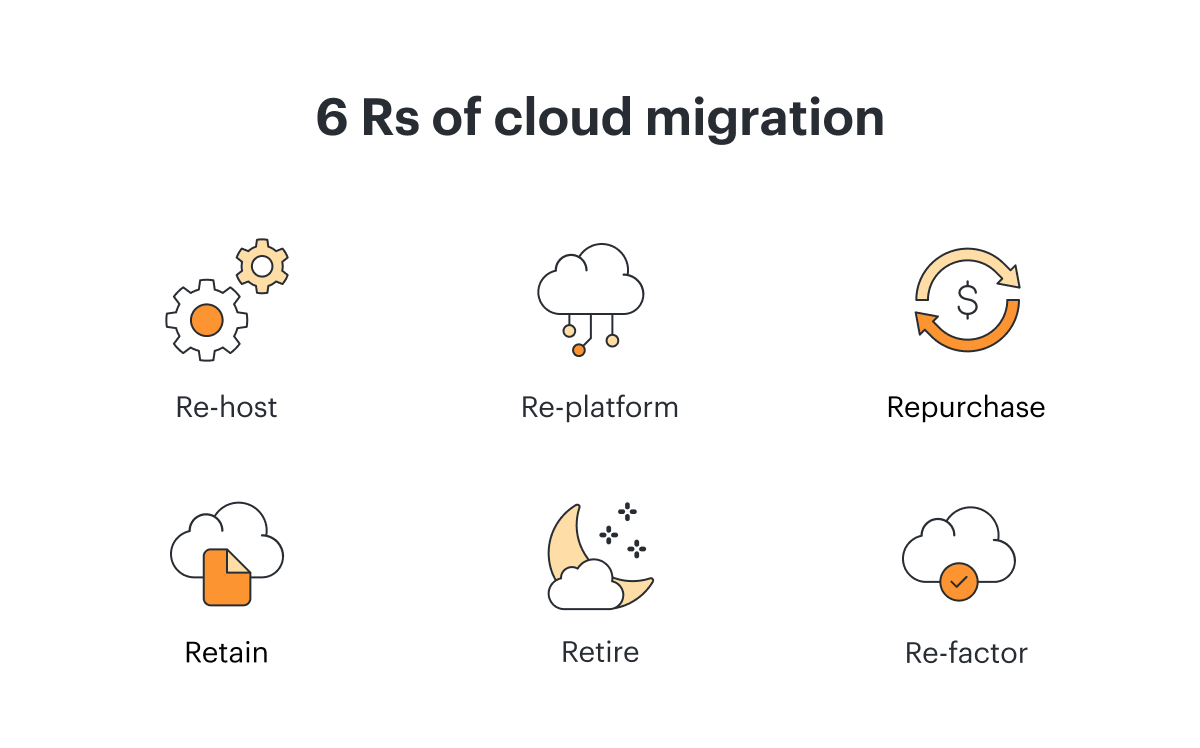
It’s likely that your company won’t use all of these strategies. The 6 Rs of cloud migration are meant to be used as a guide to help you determine which path is best for your company’s cloud migration needs.