- Choosing technology to address a specific, isolated problem: For example, say your company would like to switch to fiber internet service. Changing your internet service may reduce costs and improve speed and efficiency, but before and after, your procedures and workflows stay consistent.
- Migrating to the cloud: By moving your data and applications from legacy infrastructure to a cloud provider, you could save on infrastructure and computational resources. Keep in mind that the size of your company, the industry you’re in, and the product you offer can impact the complexity of your migration—cloud migration could be considered a full digital transformation rather than modernization.
- Upgrading and updating to better applications: For example, your company may adopt an ERP that uses real-time analytics to perform work more efficiently and better connect important tools.
In each of these examples, newer technologies replace legacy systems and infrastructure. Workplace culture, workflows, and habits probably stay about the same, but your business gains added value.
Examples of digital transformation
If your organization’s processes and culture needs more of an overhaul, digital transformation is necessary. Transformative adjustments prepare your company for future growth and changes in your business environment. Examples include:
- Implementing breakthrough technologies: Some technological advances bring about transformation on their own. Using biometric devices in security screening instead of visually checking identification, for instance, means creating processes and a new culture around their use.
- Making your workforce fully remote: Transitioning to remote work has major implications for how businesses operate. It requires changes in workplace culture and workflows if your organization was previously working onsite.
The scale is much greater with digital transformation, and the stakes are generally higher. You don’t want to embark on digital transformation unless it’s absolutely necessary, because you’ll also be substantially changing culture and processes.
It’s possible you’re taking on a digital transformation strategy when a technological modernization strategy is what your organization is actually looking for.
How to know which is right for you
When you evaluate your company’s needs and goals, you’ll see which approach is best right now. And remember—digital modernization and transformation can both be great experiences for your business. Not every challenge requires massive action. Full-scale transformation does not always deliver enough additional value.
Look at your workflows
Digital modernization renews existing processes but doesn’t always replace them completely. That said, sometimes processes are holding you back, according to Torgerson. “I’ve also seen people take a sub-par process, decide they want to implement it and buy an automation tool to implement the said subpar process, when in reality, it’s the process that needs to change, and there will only need to be minor adjustments.”
Consider competitiveness
Think about your motivation. Why are you undergoing the transformation or modernization? Technological change is necessary to stay competitive, but transformation often goes beyond boosting competitiveness.
Review the data
“Be results-driven! Data-driven decisions with a focus on results are going to clearly identify when those triggers make sense,” Torgerson notes.
“For example, continuous deployment/continuous integration (CI/CD) and digital transformation/digital improvement are buzzwords, and it's important to identify them as methods to a result.”
Keep UX in focus
If you’re always thinking about user experience and how to deliver the best results for your customers and your team members, you’ll find the right technological balance. Torgerson adds:
“At Lucid, we want to be able to get features to end users faster, but that’s not our only primary goal. If our only goal was to deliver stuff as fast as we could, we could deliver really crappy software all day long and really fast. Our actual goal is to get high-quality code to our end-users faster.”
Prepare for the appropriate level of digital improvement or transformation in your organization, and you’ll be in a better position to get the most value out of your technological investment.
How to prepare for digital improvement
To start, find where your organization needs change. For instance, if you’re at a point where you can’t go on in your existing processes without adopting new technologies or making serious adaptations.
“Some software is not going to meet the bar,” Torgerson adds. But that’s okay. “After you’ve identified the pain points in the process and after you have the result-driven goal, at that point, it will probably become very clear where you need to start ripping and replacing.”
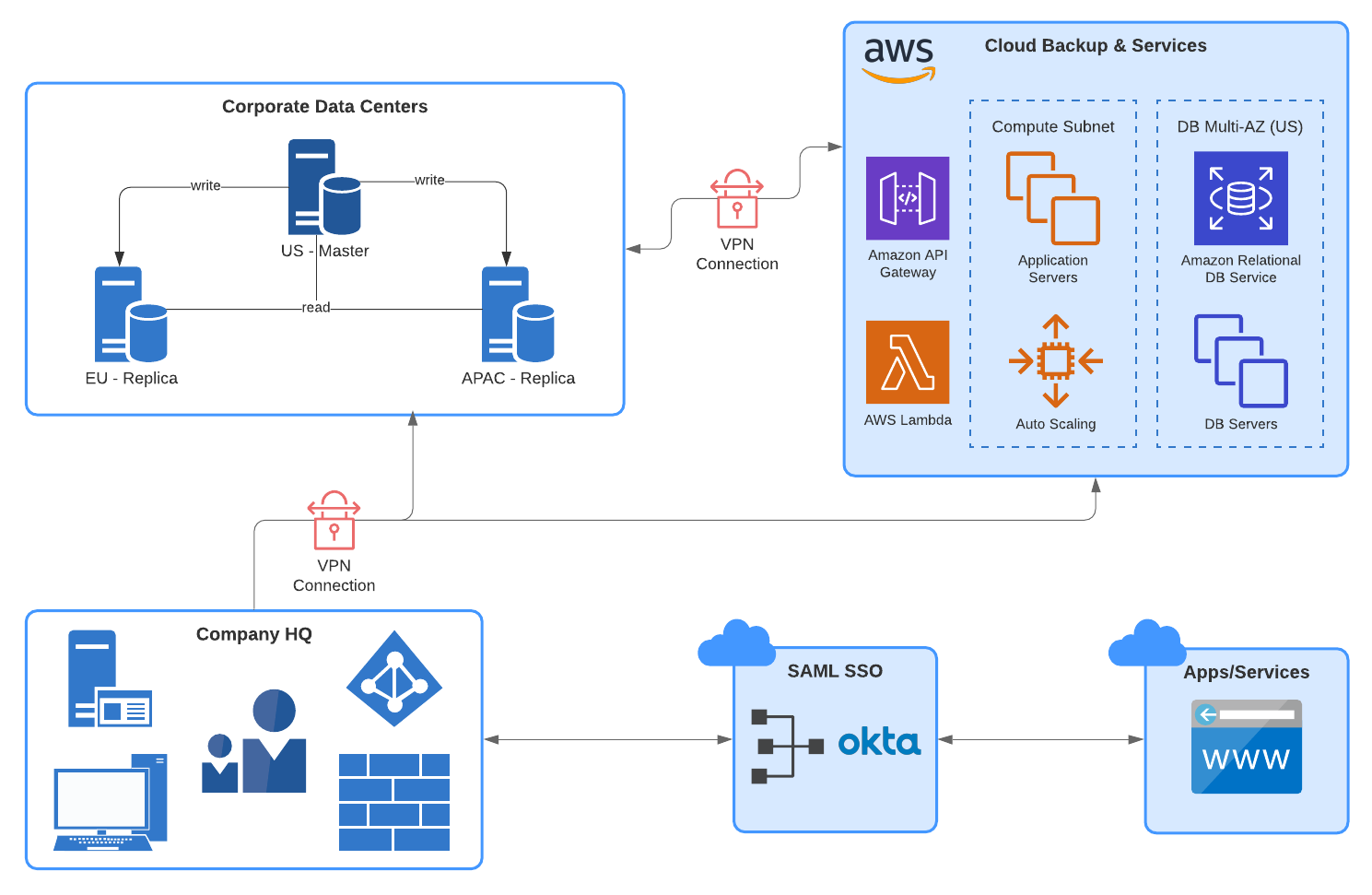
In formulating your plan to transform or modernize your cloud use, you’ll need an accurate picture of your organization’s cloud infrastructure. Lucidchart Cloud Insights allows you to visualize your entire cloud infrastructure and drill down into up-to-date information to inform your IT modernization strategy.
Pacing digital change in your organization
Although your organization may ultimately need significant technological change, don’t undertake massive changes for the sake of making changes. Many companies make the mistake of embarking on digital transformation when digital modernization would be more than enough to achieve organizational goals.
While you certainly can embark on digital change first and course-correct later, Torgerson notes that successfully transforming or modernizing your organization requires a careful review of your end goals. Understanding what level of change is necessary enables you to find the right technology for your vision.
“What really helps decide or determine if a software you already have will still work throughout digital transformation is by having an end-goal in mind, having a vision, having a flag on a hill you’re marching toward.”