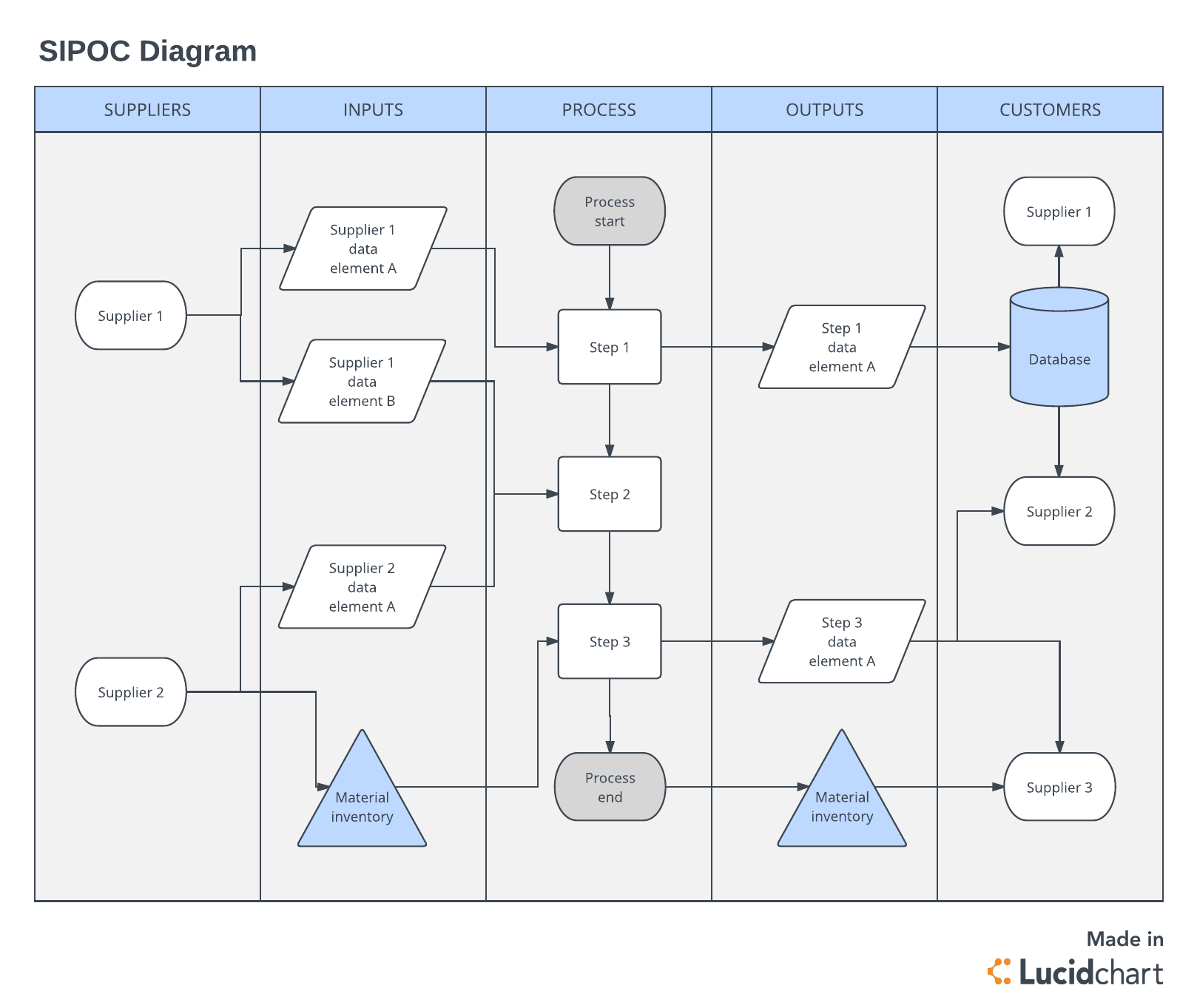
In the example, the customers were the hospital administrators and employees. The process should be creating a safe environment for them. The hospital administration gave Jogee regulations about where and how many times a day they could collect clinical waste, and he would need to build those regulations into the process.
4. Train employees
Training goes beyond sitting employees down in a room and asking them to listen to you for an hour. Employees should be fully engaged and understand that they are part of the change process. Along with role-appropriate and on-the-job training, the trainer should encourage reporting so you gather the appropriate metrics in the process.
Just as you monitor the effectiveness of your process, you should also monitor the effectiveness of your training and make adjustments as necessary.
5. Monitor progress
Closely monitor the process during the early stages of implementation. Using your data analysis from earlier, you should perform targeted monitoring on the organizations that were most impacted by the business problem.
In the example, Jogee would call twice daily for the first two weeks and once daily for the second two weeks to see if the process made any difference. Jogee and his team would also do “spot checks” and monitor progress through site visits.
The results speak for themselves: the institution brought needlestick injuries down from three to five a month to one or two annually.
Approaching process at an organizational level
The previous example showed one specific process that needed to be fixed, but often, businesses won’t be able to achieve perfect quality by fixing a single process. Quality is not a destination—it’s a journey. Jogee moved on to a second example about a large organization with 5,000+ employees that wasn’t hitting its numbers. The company needed to switch its culture from a function-led organization to a more cross-functional, process-led organization.
Again, the following steps can help you as you try to create a culture of processes and continuous improvement throughout your company.
1. Design
First, design your continuous improvement program. You need to set up:
- An industry-specific process framework or hierarchy (you can choose from many options or contact a consultant to help you get started)
- A support structure for process improvement (localized support for each team)
- Process owners within the hierarchy
- A reporting cadence
- A process council where leadership can come together, discuss the challenges they face, and make decisions
When you start this journey, you will absolutely need support from leadership. If you have trouble getting support, explain how leadership will be involved in the process and how this program will impact ROI and bottom-line results.
2. Ownership
Once you have defined process owners in the previous steps, train these individuals so they understand the role and responsibilities of a process owner and the resources required. Part of these responsibilities should involve a process walkaround—the process owner should walk through the program once a month to learn the problems each individual faces to deliver the work they’re supposed to.
3. Performance measure
Set up leading and lagging measures for each level of process. This next bit of advice is essential: Your lagging measures must be aligned to business and customer requirements—don’t set up lagging measures just to set up lagging measures.
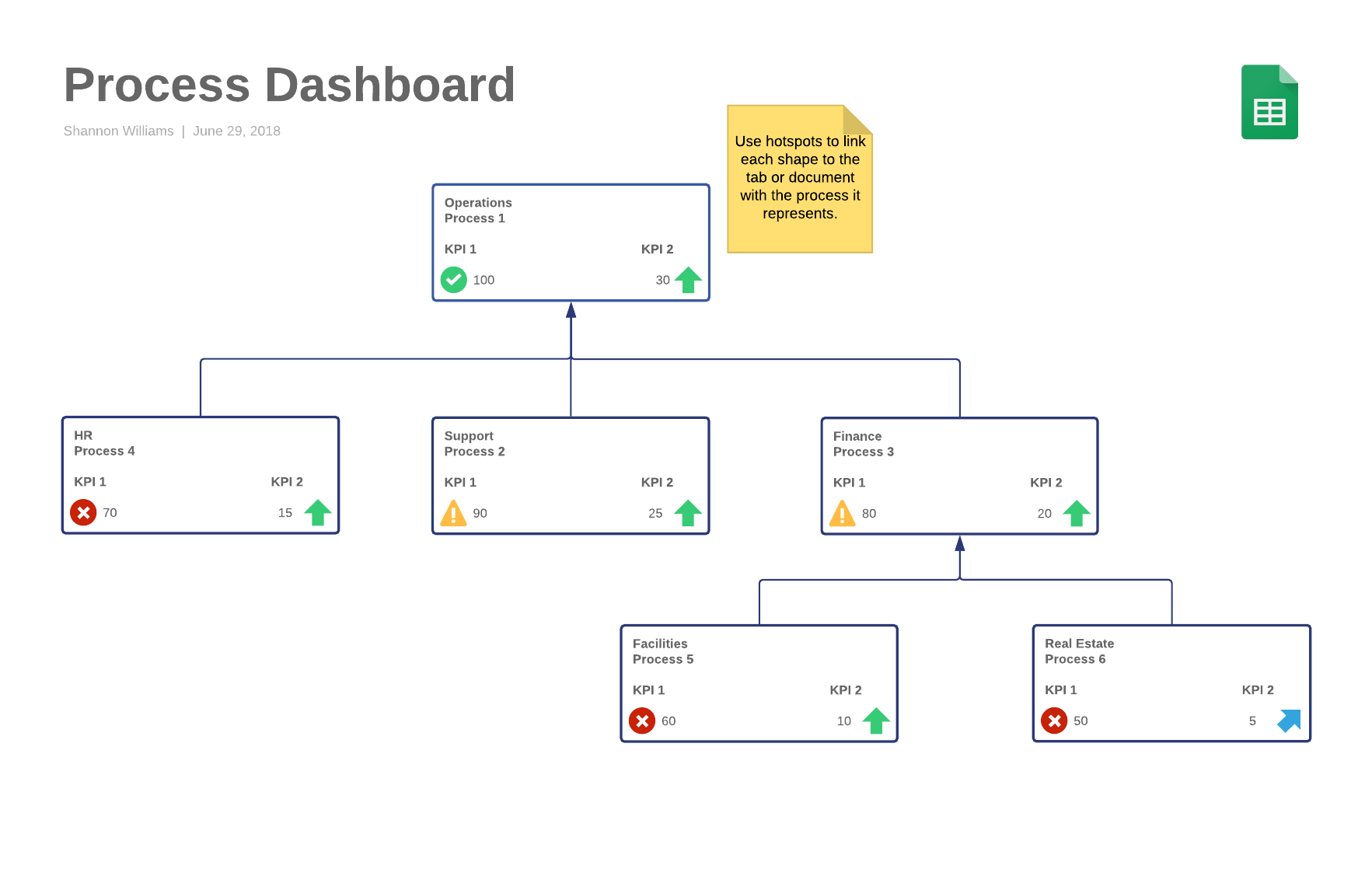
In Lucidchart, you can create visual dashboards that help you track your process performance. The template below shows the relationship of different processes along with KPIs for each process. You can link this document to a spreadsheet to pull in data, and conditional formatting will indicate any issues you should address. Click the template to try it out for yourself!