What makes a good job description?
There’s an art to writing a good job description. Well-written job descriptions need to be specific, but not too specific, and make the company seem appealing. In fact, the entire job description is a reflection of your company as a whole. If it’s too silly, candidates won’t take you seriously. If it’s too dull, candidates are likely to see the company as rigid and boring. Follow these guidelines on what to include as part of your job description.
Give it a specific title. Don’t rely on internal lingo or ridiculous-sounding titles. Instead, make the job title clear, concise, and industry standard. Ambiguity here is just a waste of everyone’s time, so be sure you’re specific.
Start with a summary. This summary should be an elevator pitch giving a concise, compelling overview of the job as a whole. This is your first step to weeding out candidates that are definitely not a good fit while inspiring other candidates to keep reading.
Show off your company. You’re not just hiring someone: You’re also convincing the right person why they should come work for you. This is your chance to tell what your company’s vision is and what working at your company is like. You want your job candidate to have a feel for your company before stepping foot in the building.
Outline core responsibilities. This doesn’t need to be an exhaustive list of every single thing your candidate will do on a daily basis (obviously checking email is going to be a part of the job), but it will need to be detailed enough for your candidate to know if he or she can adequately fulfill the job requirements. This is your chance to add in responsibilities that may be unique to the company. For instance, the definition of a “content manager” or an “editor” varies greatly company to company; detail what the job entails in your company.
Show where the position fits. Your candidates need to know how junior or senior a role is and if it matches their experience level. But aside from that, knowing where the job fits into the organization as a whole helps your candidates picture a career path and know how this job will impact the company as a whole.
List skills. Basic descriptions include experience, education, certifications, and technical skills. But you may also want to include “soft skills” (like “creative mindset” or “great at multitasking”) into the description. It’s important not to go overboard here because—aside from non-negotiable skills—hitting every single requirement in a list truly doesn’t matter as much as finding a candidate who fits your company culture, is talented and eager to learn, and is a true asset to the company.
Avoid gender-specific language. In an effort to be quirky, many job descriptions rely on adjectives like “rockstar” or “ninja” or “wizard.” Please don’t. Not only are these descriptions tired, they also send a subtle message that the company is skewed toward hiring gender-specific candidates. Even words like “active” and “headstrong” attract more male candidates. For a list of gender-biased vocabulary, please refer to this list.
Should a job description include a specific salary?
Listing a salary on the job description is a quick way to weed out candidates. If this is an entry-level job that only pays a modest wage, it may be worthwhile to note that in the description to avoid candidates with more experience and greater wage requirements.
However, be careful when listing salaries on job descriptions: Current employees will know approximately how much money the new employee makes, and that could lead to resentment. Plus, if you find the perfect candidate but he currently makes a higher salary than is advertised in your job description, you may be able to negotiate with upper management to give the candidate a wage that is greater than or equal to what the candidate currently makes.
What happens after the job description is posted?
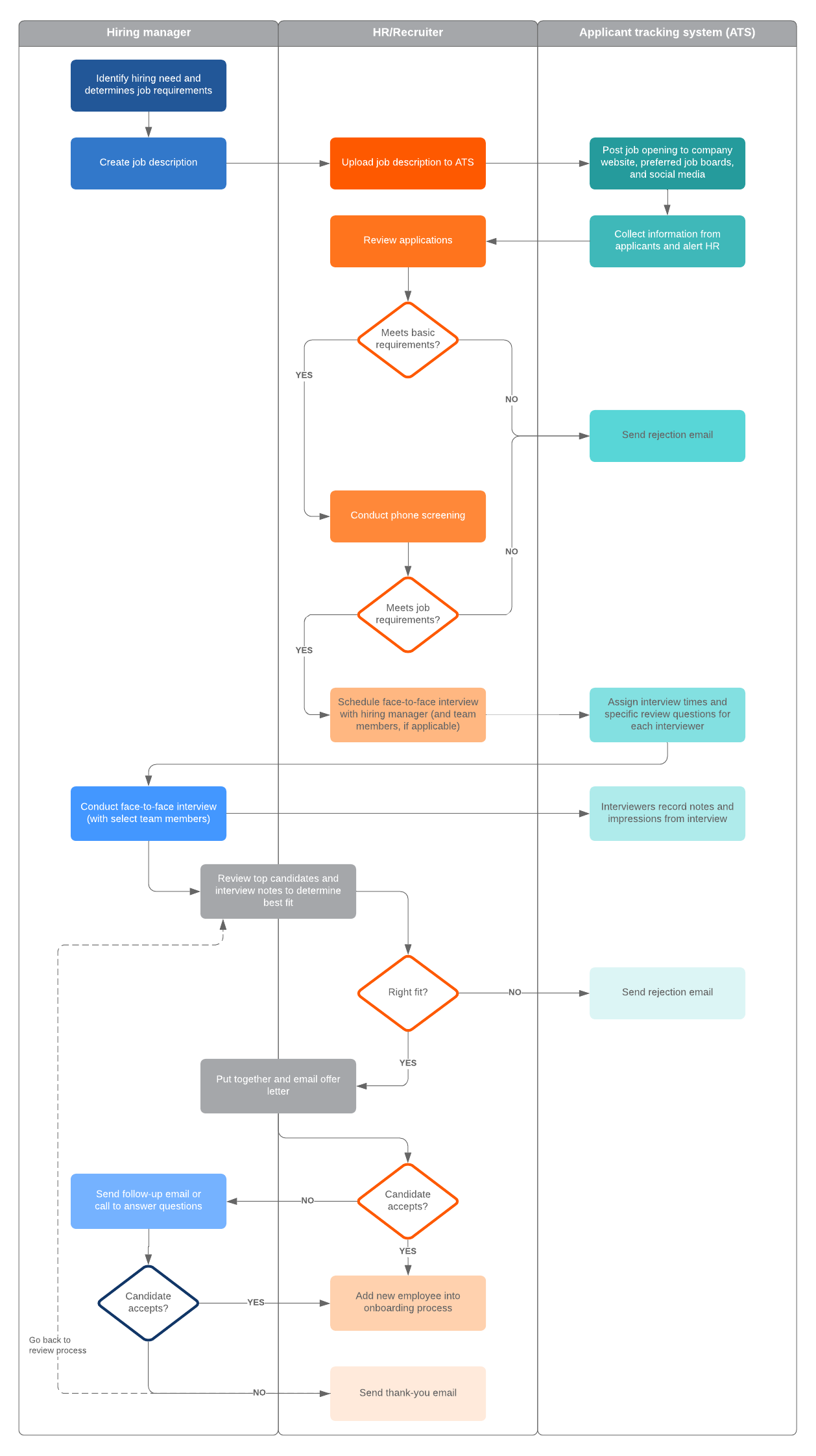
Congratulations! Now you know how to develop a job description and you can start looking at candidates. The recruitment process is quite involved, but we have blogs to help with every step. If you’re new to the recruitment process, we recommend developing a recruitment process flowchart (see our step-by-step directions).