Did you know that 22% of companies have no formal onboarding process?
Building a strategic onboarding process for new hires improves employee retention beyond their first year and boosts employee performance. Creating an onboarding process flow not only properly introduces your new employees to the company culture, their responsibilities, and their co-workers but also helps new hires feel more welcome—which also helps your bottom line.
Randy Holley SHRM-SCP, a subject matter expert on HR management, describes best practices for onboarding new hires by:
"Telling employees the expectations, delivering impeccable training and support to meet those expectations and then create opportunities for easy but meaningful wins in the first few months."
Organizations with a standard onboarding process experience 50% greater new hire productivity and are 69% more likely to retain their employees up to three years. And with the cost of replacing an employee falling between 16% and 20% of that employee’s salary, holding on to those well-trained employees longer is better for you and your company.
What is the onboarding process?
An onboarding process is used to help new employees adjust to the social and performance aspects of their jobs as quickly as possible. Parts of the employee onboarding process can be as simple as introducing new hires to their coworkers and as complex as providing in-depth training on company software and procedures.
For a successful onboarding process consider the Four C’s of your organization:
- Compliance: Teaching new hires the basic rules, regulations, and policies that define your company.
- Clarification: Educating new hires on their job functions and performance expectations.
- Culture: Advising new hires on formal and informal organizational norms, such as the company dress code.
- Connection: Helping new hires to build interpersonal and interdepartmental relationships in your organization.
Benefits of using an onboarding process flow
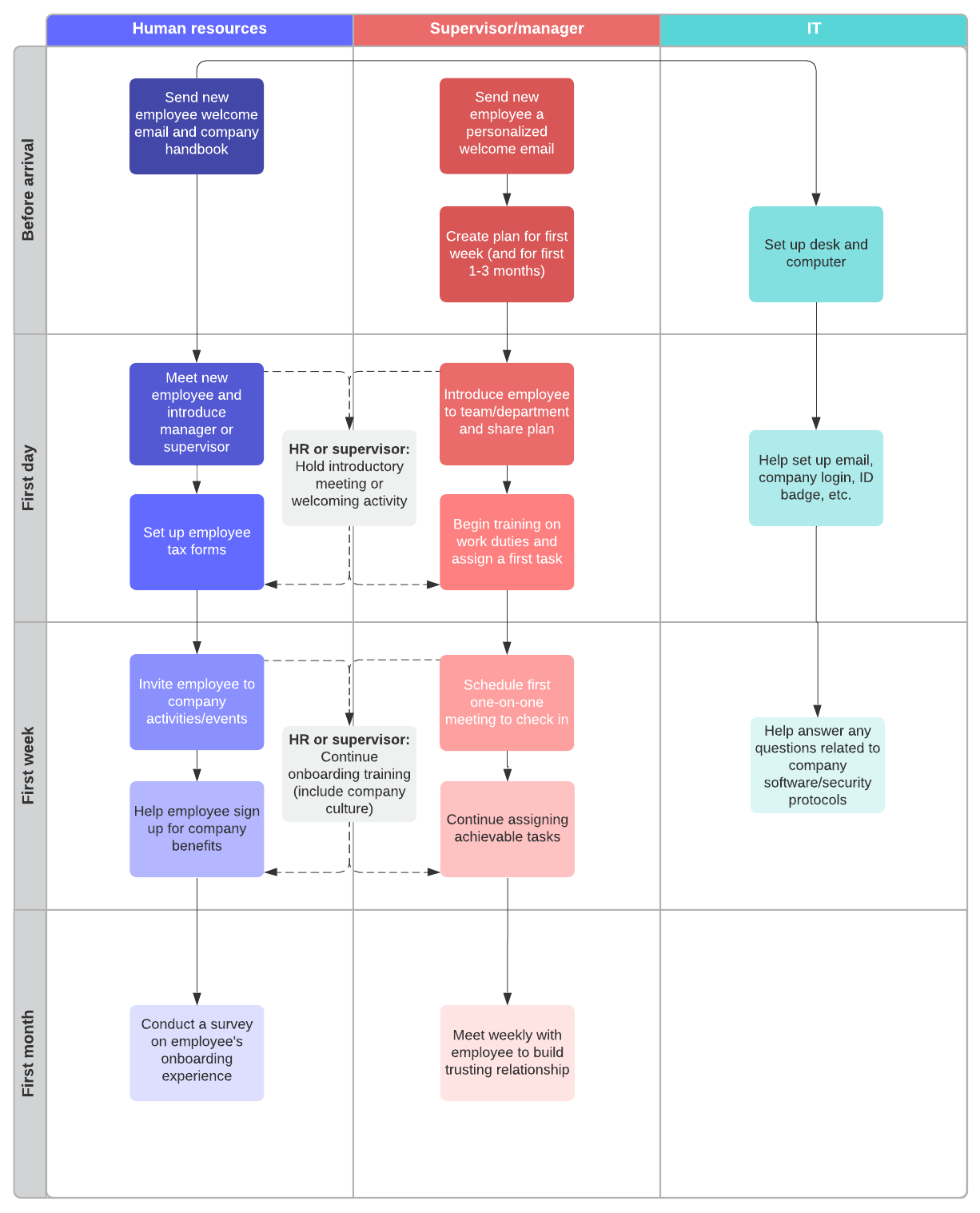
Bringing new employees into an existing company structure can be difficult. That’s why we recommend building an onboarding process, with clearly defined roles for Human Resources, mentors, managers, and new hires.
When you document your onboarding process flow beforehand, your organization will be able to increase each new hire’s ability to contribute in their role quickly, increase their comfort level, and reinforce their decision to join your organization, leading to higher retention and better long-term performance for both the employee and the company.
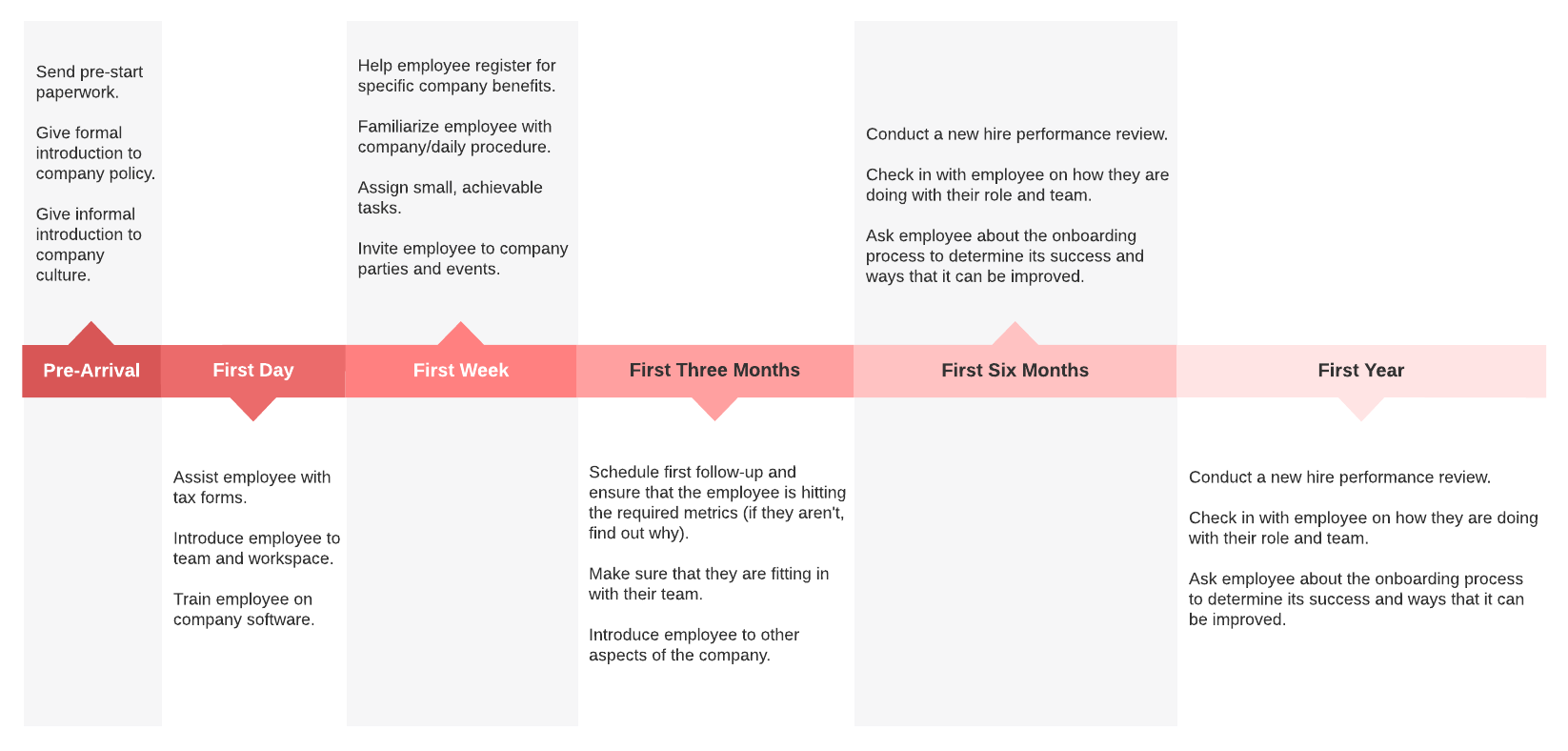
Visualizing your onboarding process with a flowchart or a timeline will give new employees an easy-to-understand picture of their first year at your company, improve their ramp time, boost their performance, and lay out their feedback and review process.
There are two common approaches for building an onboarding process flow—by its five major stages and by its timeline. Read on below to learn about both in detail and see which is right for you and your organization.
Use the 5-stage process flow for onboarding
The first major approach divides the onboarding process into stages. Usually, Human Resources and training staff are highly involved in the beginning stages, with job function mentors and direct managers more involved in the later phases.
Preparation
Generally, the preparation stage of onboarding spans from the pre-arrival stage through about the first month or so of the new hire’s employment. This phase of the employee onboarding process includes pre-arrival paperwork, a formal introduction to the company’s policies and procedures, and an informal introduction to company culture through the employee’s environment.
Orientation
The orientation stage of the onboarding process usually takes place on the employee’s first day or week of work. This phase includes much of the Human Resources onboarding process:
- Filling out tax forms
- Introducing company values and culture
- Learning about and signing up for company benefits
- Introducing the employee to their workstation
- Reviewing safety, health, and other company policies
- Training the employee on specific software or procedural needs related to their job function
Integration
The integration phase of the new hire onboarding process doesn’t have a set time frame, but it generally goes on for the first six to 12 months of the employee’s journey with your organization. This phase has the employee slowly building up their work through mentorship from other employees with similar job functions.
Engagement
The engagement phase also lasts through the first year or so of the employee’s time on the job. This phase is all about personal relationships within the employee’s team, their manager and/or direct reports, and members of cross-functional teams. For example, our People Ops team at Lucid sets up “new hire lunches” so new employees have the chance to meet people from different teams. True engagement makes the new employee feel welcome and comfortable with the company culture.
Follow-up
The follow-up stage of the onboarding process for new employees is where you should evaluate the employee’s performance and integration into the team. Some companies do this at 90 days, some at six months, some at a year, some at all those milestones. Human Resources or the new hire’s manager meets with the employee to discuss if they are hitting specific performance metrics and also to evaluate how the employee “fits.” This employee onboarding phase also allows your organization to measure the efficacy of the onboarding program itself.