When working on a new product or initiative, it can be hard to know where to start and how to prioritize the tasks ahead. This can be even more challenging when you bring multiple people together to weigh in. While it can take some time and team wrangling upfront, setting those priorities from the start establishes a strong foundation for your project going forward.
Effectively prioritizing project tasks from the start not only streamlines project communication but can help prevent costly delays and miscommunication down the road.
So how can you all align on what is most important and when things need to get done? That’s where MoSCoW prioritization comes in.
What is the MoSCoW method?
MoSCoW analysis was invented by Dai Clegg of Oracle UK consulting, who developed the technique to determine prioritization within projects that had severe time constraints.
This is an especially important technique to use in Agile methodology, which places the most value on items that carry the highest business value. The software features that you identify to be more valuable have the highest probability of being developed and implemented.
What are the requirements for MoSCoW prioritization?
The MoSCoW prioritization method has a straightforward set of requirements used to determine the importance of initiatives. The MoSCoW requirements help teams take a strategic, orderly approach to prioritization. This system cuts down on wasted time, arguments, and misdirection. It also omits as much bias as possible from the process so that everyone involved can take an objective view of the requirements at hand.
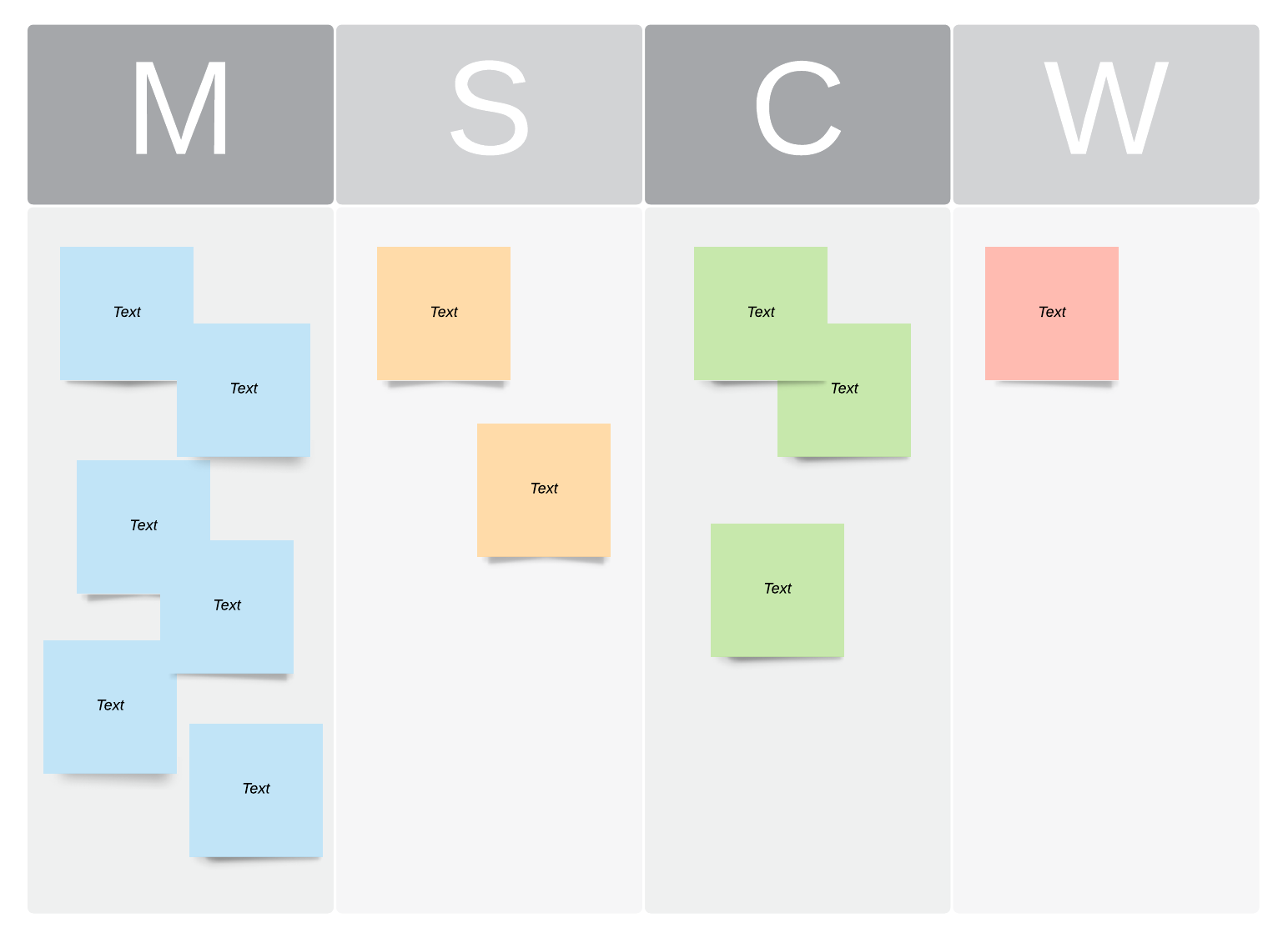
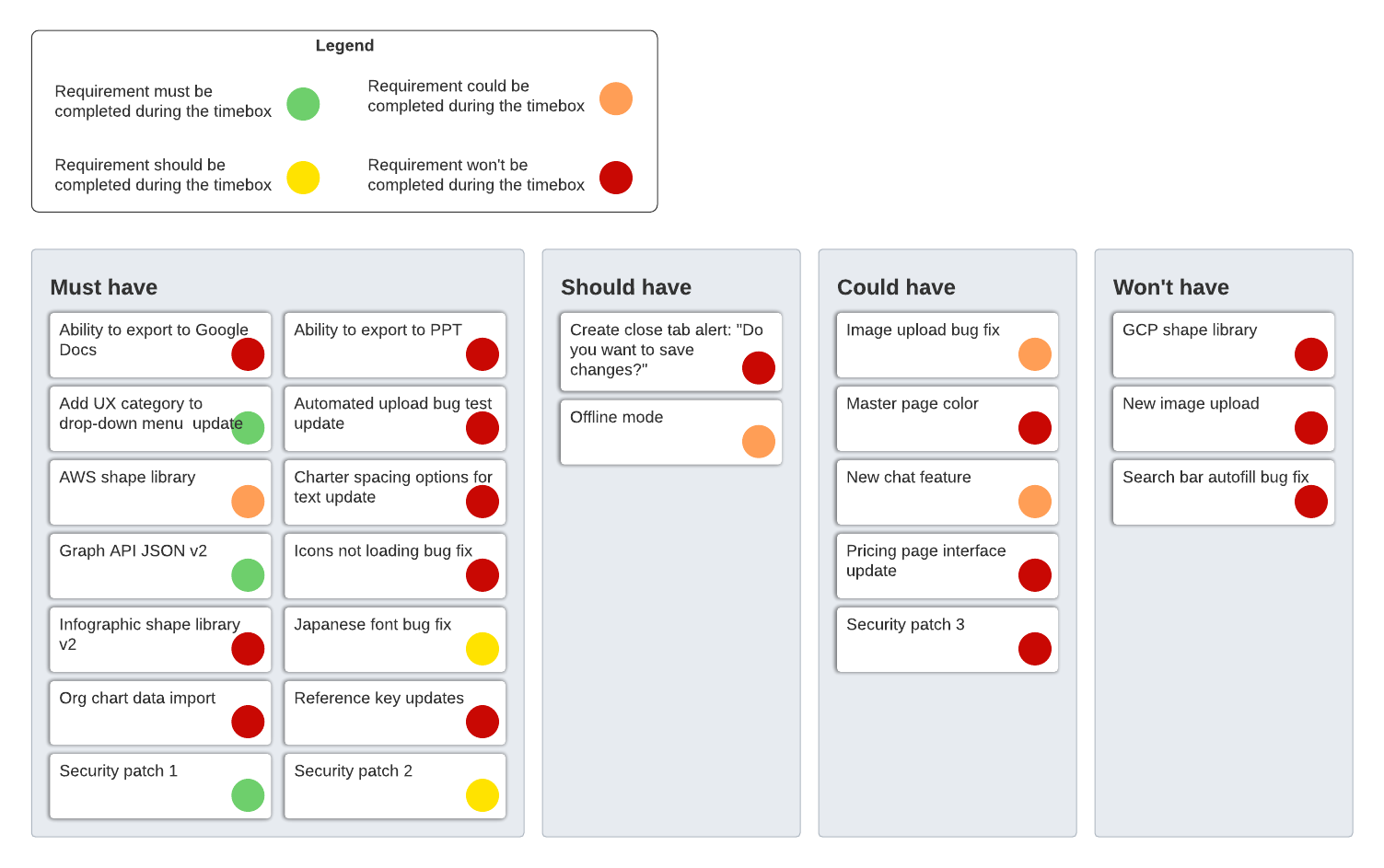
The MoSCoW requirements for prioritization fit into the four following categories.
Must have
These initiatives or features are absolutely critical to the project. Without them, the delivery will be a failure.
Should have
These aspects of the project are also critical, but may not be as time-sensitive as the “must have” bucket.
Could have
These features are nice to have and would make a great addition to the project, but are not critical. If there’s time, consider adding these in.
Won’t have
These features really aren’t worth the investment of time, energy, or budget. They could be considered at a later time, but aren’t beneficial at this point.
How to run a MoSCoW analysis
Now that you know the basics of MoSCoW prioritization, it’s time to try your hand at the MoSCoW technique with your own team using the following steps.
1. Identify and gather your key stakeholders
Imagine how messy things would get if everyone in your organization had a say in every aspect of a project. That’s why the first step of the MoSCoW prioritization method is to identify and gather both key stakeholders and the team who is directly responsible for developing the project at hand. You may wish to have representatives from teams across the organization or keep it lean.
2. Determine arbitration
Disagreements on prioritization may arise. It’s important to determine how to settle disputes before MoSCoW prioritization begins.
You may choose to have participants vote or determine the business value of each feature or initiative and then proceed with the feature with the highest value.
3. Divide resources
Obviously, the majority of resources should be devoted to the most critical initiative. But how the resources are divided should be up to your team.
Deciding the number of resources allocated to each category can help determine which “bucket” each initiative should go in. The “will not have” category will obviously not have any resources allocated to it. It’s up to your team and other key stakeholders to determine how the budget will be divided among the three other buckets.
4. Solidify timeframe
The tighter the timeframe, the fewer initiatives can fit into the “must have” category. Identifying the timeframe ahead of time helps bring a bit of reality to the process. Refer to the team actually developing the product for the most realistic view of development.
5. List it out
If you have a list of features or initiatives listed in your backlog, this is the time to bring it out. Otherwise, you may need to refer to the scope of the project and list out the requirements for the project at hand.
Either way, it’s important to have a complete list of the initiatives you’ll be prioritizing so that the process is complete and organized. Such a list will give anyone across the organization access to your prioritization, encourage transparency, and keep a cloud-based copy available.