The science behind why the priority matrix works
No matter how engaged, invested, and detail-oriented you may be, it’s impossible to execute every task with the same level of attention—it’s also not necessary.
Setting a priority list or mapping out a priority chart takes advantage of your brain’s hard wiring ability to focus on the most important tasks at hand. Psychologists call this selective attention—the brain’s natural tendency of filtering out unnecessary information, as it is constantly taking in and working through information.
Cognitive scientists categorize selective attention into two forms: bottom-up and top-down. Bottom-up focus is reactionary: It happens when something disrupts your thought process and steals your focus. A barking dog, a loud bang, a frantic thought, a phone notification—instances when you can’t help but pay attention are labeled as bottom-up.
The selective attention that leads to top-rate execution, however, is labeled as top-down: When you’re able to see the broader picture and choose one task to focus on at a time, it’s considered top-down or “voluntary” focus. This type of focus is goal-oriented and creates brain functioning that is based on prior experience current conditions.
Research suggests that multitasking is a myth, and what we call multitasking is rather our brains oscillating from one thing to another very quickly. The switching back and forth uses extra energy that experts say should be dedicated to the most important tasks in your work and life. Further, the less important you consider a task to be, the less focus your brain attributes to it, making distraction easy and accidental.
Think about a scenario that you consider to be low effort and low impact, like doing five extra cold calls for a low-selling product or service offering, versus pitching a project that you’ve been working on for a year to your company’s CEO. Which task is more likely to be accompanied by distractions?
It’s important to monitor the work you do, the type of focus you attribute to it, how often and for how long you become distracted, and also how important the task is. Having a well-defined priority map will capitalize on your brain’s natural cognitive processes and add a turbo boost to your brain power by giving you a more efficient ROI on your limited attention.
How to make a priority matrix
Once you understand how and why the priority matrix works, you’ll be able to effectively put it into action. With any new strategy or tool, it’s important to know exactly how to use it to maximize its effectiveness and impact.
To get started using a priority matrix, follow these key steps:
-
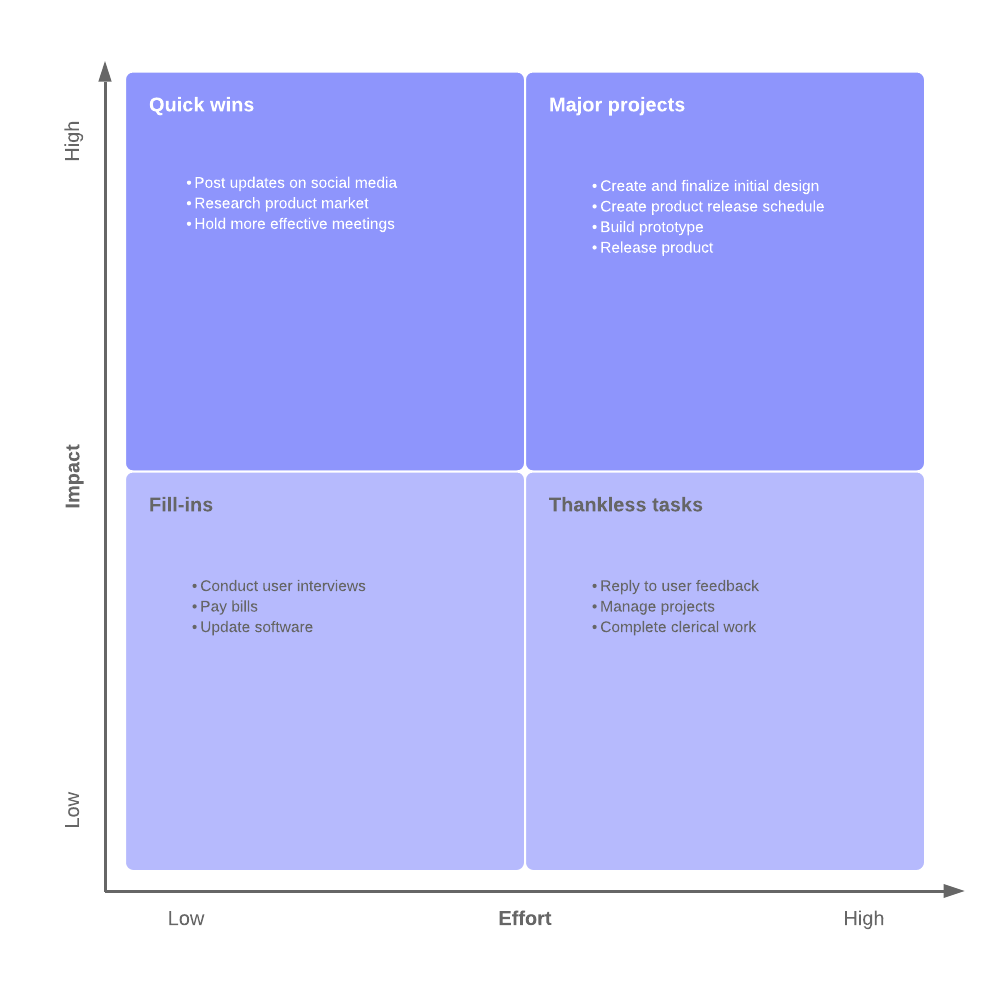
Make a list: Log all of your current projects, goals, and priorities—whether they are daily tasks, ongoing projects, or larger strategic initiatives.
-
Rank each item: On a scale of 1-10, rank each task by its impact on the business. Use the same scale to measure each item on your list by level of effort required.
-
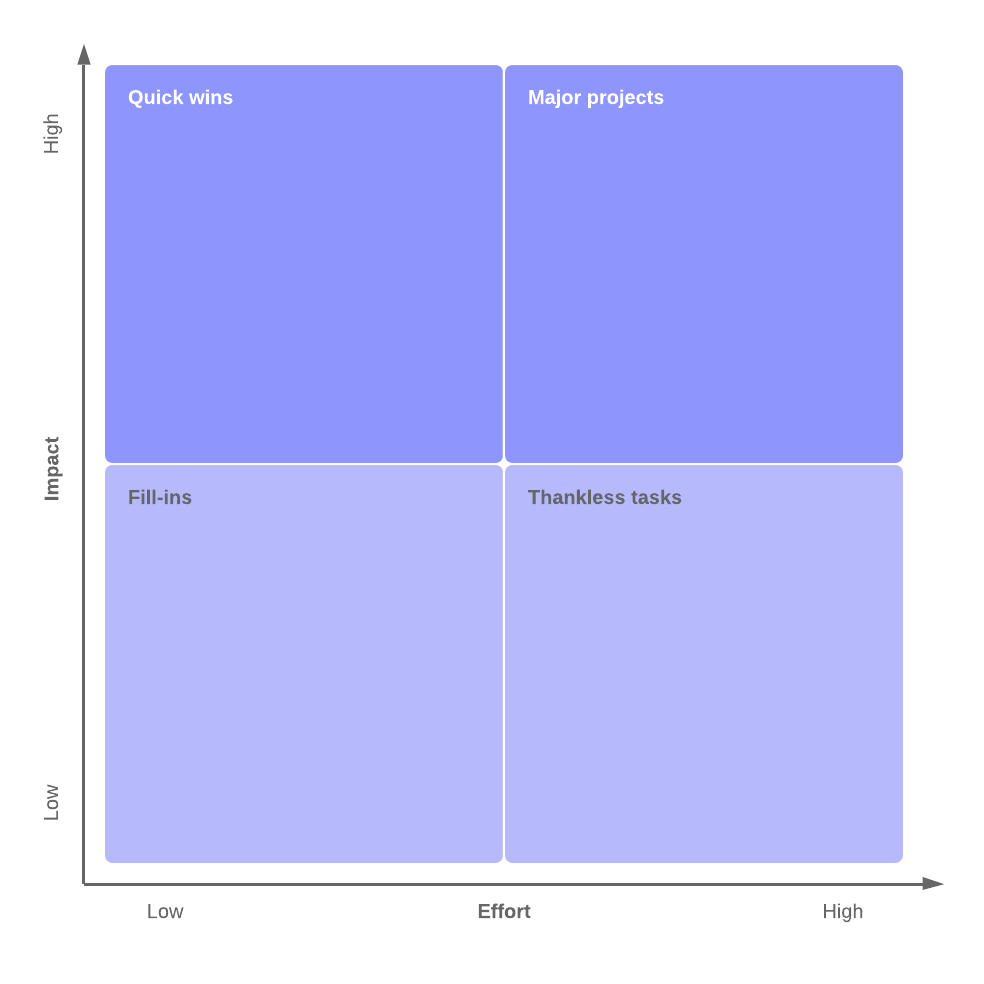
Map it out: With this weighting in place, you’ll be able to strategically plot your activities into appropriate quadrants on the matrix and prioritize, delegate, or deprioritize accordingly.