What are Monroe's motivated sequence steps?
Persuasion is pervasive in daily life—suggesting a new restaurant, getting a child to clean their room, asking permission to attend a party, and so on. Knowing your audience can give you the upper hand in getting the outcome that you want.
The word “persuasion” might bring to mind a pushy car salesperson or a politician making promises that likely won’t be kept. But persuasion can also be a positive force used to improve people’s lives.
Using the psychology of persuasion, Monroe developed an outline for making persuasive and motivational speeches that includes these five steps:
- Attention: Use a relatable story, cite shocking statistics, or call somebody by name. Use something that will get your audience interested in listening to what you have to say.
- Need: Convince your audience that there is a problem that needs to be fixed.
- Satisfaction: Present your solution that will take care of the need.
- Visualization: Explain what will happen if your solution is implemented or what will happen if your solution is not implemented.
- Action: Call your audience to action. Give clear and specific assignments that will help you achieve your visualized goals.
Monroe’s motivated sequence may be over 80 years old, but it is still a proven and widely used method for organizing powerful and persuasive presentations and speeches. The steps may seem simple and straightforward, but you may still need to overcome resistance to new ideas, preconceived bias against your solution, disbelief at facts presented to establish a need, or any number of unpredictable human traits that may arise before, during, and after your presentation.
The following sections explore Monroe’s motivated sequence steps in more detail with examples to help you adapt them to meet your needs.
Step 1: Grab attention
There are many ways to grab attention. You could start with a bang or a shock—something unexpected that will make your audience sit up and take notice. Consider using these strategies:
Humor
Be careful when using humor. You don’t want to do or say something that can be considered offensive or that may be put in a meme on social media.
Shocking facts
Stating facts can give you that “wow” factor that makes your audience say, “I didn’t know that.”
History
Make your audience want to learn more and ask themselves, “Where are they going with this?”
Media
Start with a short video or intriguing images related to the topic. People generally like to watch and look at interesting, colorful visuals.
Step 2: Define the need
To persuade people to make a change or to incorporate new procedures in a business setting, you have to convince them that there is a current need for these changes. Help your audience understand that what is happening right now is not working and explain the consequences if things are not changed.
Don't suggest any solutions in this step. Use this step to help people understand that there is a problem and that problem needs to be addressed. You can:
- Use statistics where possible to support what you are saying. For example, suppose your current development cycles take too long and your competitors are much faster at addressing customer needs. In that case, you can cite sales statistics to help your developers understand the problem.
- Explain what the consequences will be if changes are not made. Help your developers understand that if you continue to lose market share, the company may go out of business.
- Explain how the consequences will affect each of them. If the company goes out of business, they all lose their jobs.
Step 3: Satisfy the need
This step of Monroe’s motivated sequence outline is the main purpose of your presentation. You want people to feel motivated to do something to fix the scary or shocking information you previously presented, and you want them to know that you have a solution.
Introduce a solution that addresses the need and will solve your problem. When presenting your solution, you should:
- Discuss the facts. Maybe your child’s public school needs more money for books and other supplies. As the PTA president, you present a fundraising idea that has worked well at other schools. Support your statements with facts, including the costs of organizing the event and the amount you can expect to get.
- Provide specific details so your audience understands the solution. Tell the audience how much money other schools have brought in using this same fundraising activity. Explain how many volunteers will be needed to organize and run the activity.
- Tell the audience what you expect. The fundraiser will only work if the audience buys into the solution and is willing to jump in and help out with the activity.
- Prepare for resistance and possible objections. Use testimonials from people who have successfully participated in a similar activity. Share examples that support your solution. Restate the facts and statistics to illustrate that your solution will work and will be beneficial to the school and the children.
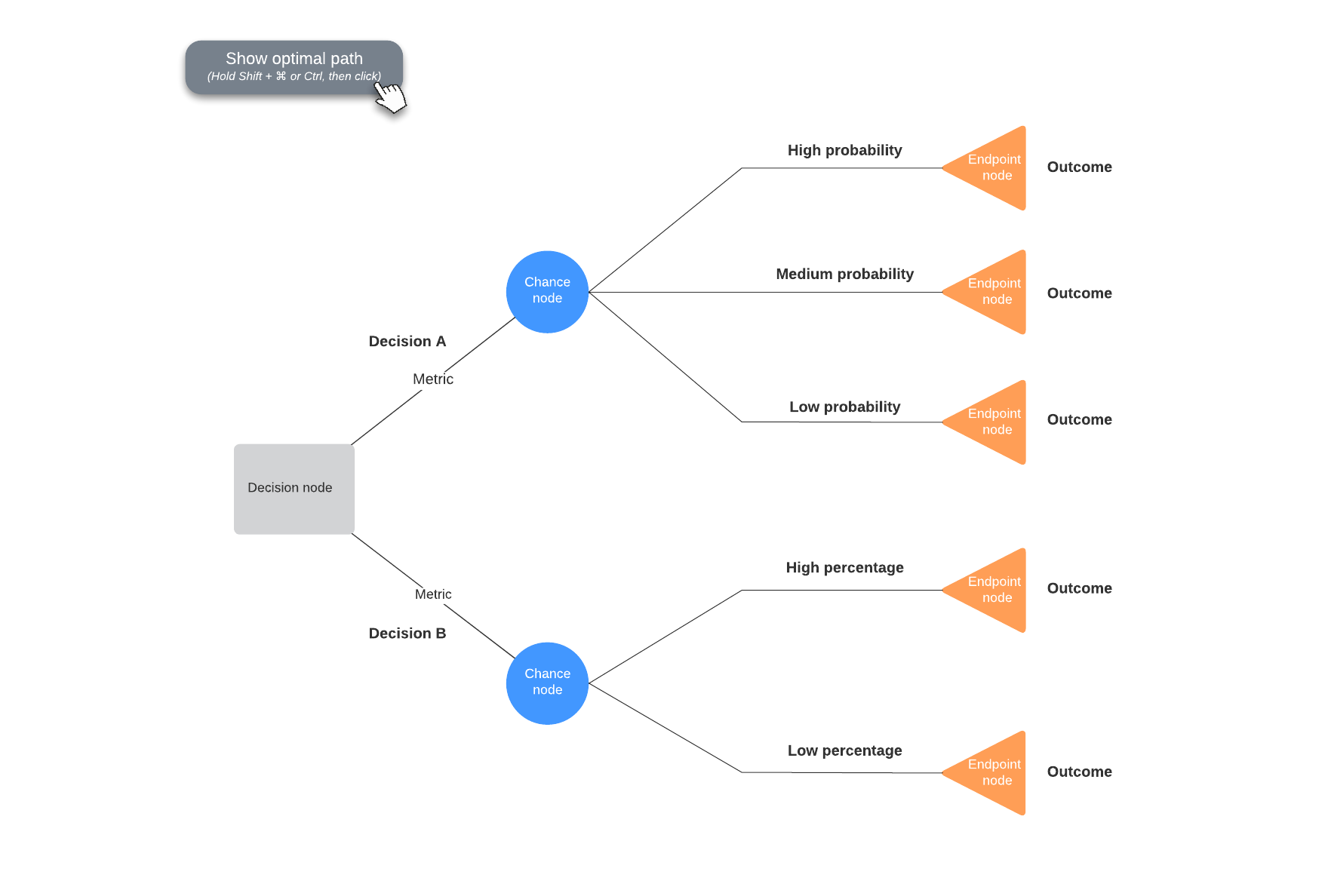
Use Lucidchart to create a simple flowchart or decision tree that can show the steps and the potential results for your plan going forward. You can also create a mind map centered around your solution to illustrate benefits and costs, plus what is needed to be successful.