How N.E.A.T. Selling™ evolved
Customers change with the times, so it’s no wonder that sales techniques that may have worked just fine before now feel obsolete. N.E.A.T. evolved from a realization that the sales process is no longer linear. Right around the time when marketers were starting to realize that customers didn’t follow a linear path to purchase, sales reps began to realize that a linear sales approach didn’t address the nuances and variables of customer needs.
Here’s a short look at processes that have come before to help you understand why they fell short and how N.E.A.T. was developed to address those shortcomings.
BANT
BANT stands for Budget, Authority, Need, and Timeframe. Sales reps used to ask each prospect about their budget, the person who would be signing off on the deal, the date the deal would potentially close, and a brief understanding of what the prospect’s needs were.
But those questions—especially when used as a checklist—weren’t enough to encourage a meaningful dialogue, nor would they develop a relationship between prospect and sales rep. In short, BANT sales qualification can be a one-way interrogation that left both parties feeling unfulfilled.
ANUM
ANUM’s acronym stands for Authority, Need, Urgency, Money. ANUM prioritizes authority because it all comes down to the right person signing the check. ANUM acknowledges that most prospects are at least somewhat familiar with your product (thanks to the Internet), so it doesn’t waste much time going into the details of the offer. Rather, it prioritizes those who have the authority to close the deal.
The problem is that, by focusing on reaching those with the authority to make a purchasing decision, sales reps miss out on valuable contacts who may lead them to the person in authority. In other words, it’s unlikely you’ll be given access to a C-level right off the bat. And this selling methodology still doesn’t foster a relationship with a prospect, nor does it attempt to understand deeper needs.
ANUM was eventually reduced to just Authority and Need, which cuts out any discussion of timeline and money. As you may imagine, it does an even weaker job of understanding a prospect’s needs and current situation.
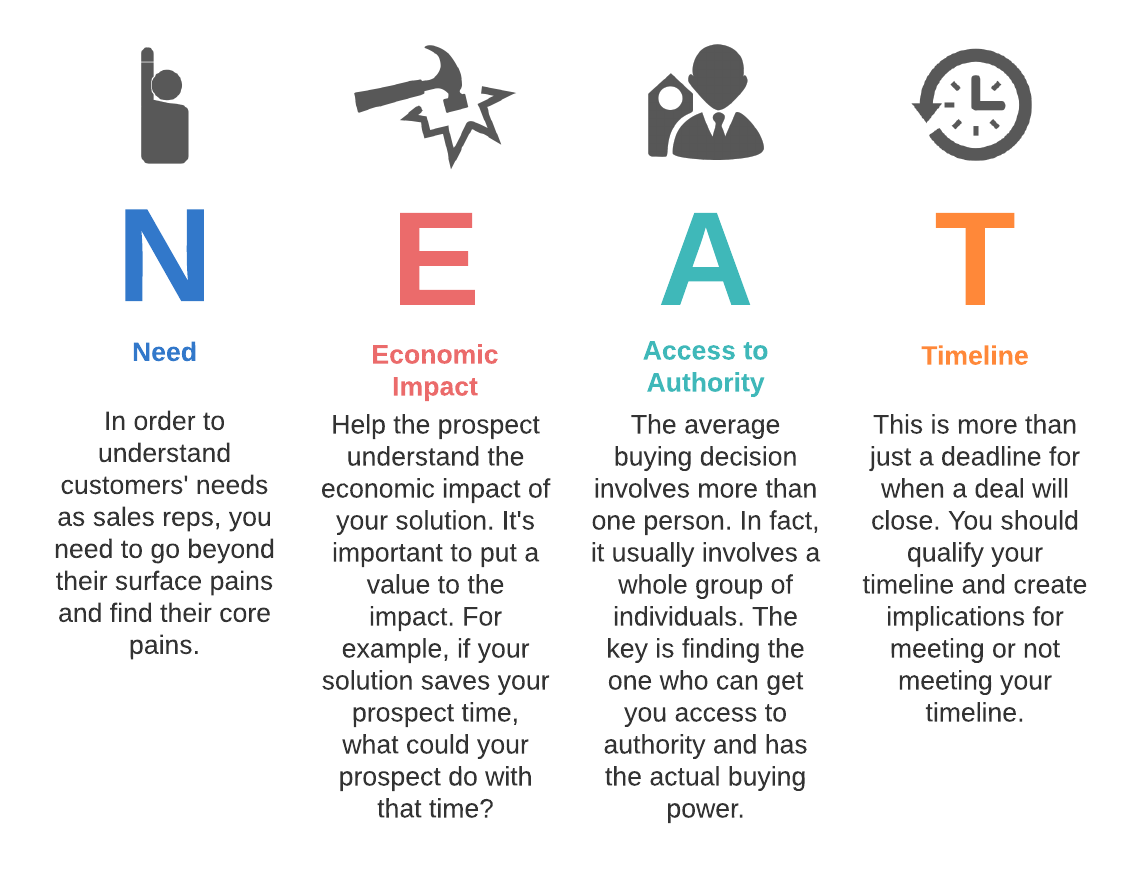
N.E.A.T. Selling™ was developed to solve for the unpredictability of sales while also really getting to the root of how prospects will benefit from your particular solution.
How to perform the N.E.A.T. Selling™ process
It’s worth reiterating how detrimental it is to approach prospects by treating them like interviewees. Each section of the N.E.A.T. methodology has recommended questions, yes, but they should be part of a larger, more organic discussion. You might even change the order of these questions depending on what the buyer reveals.
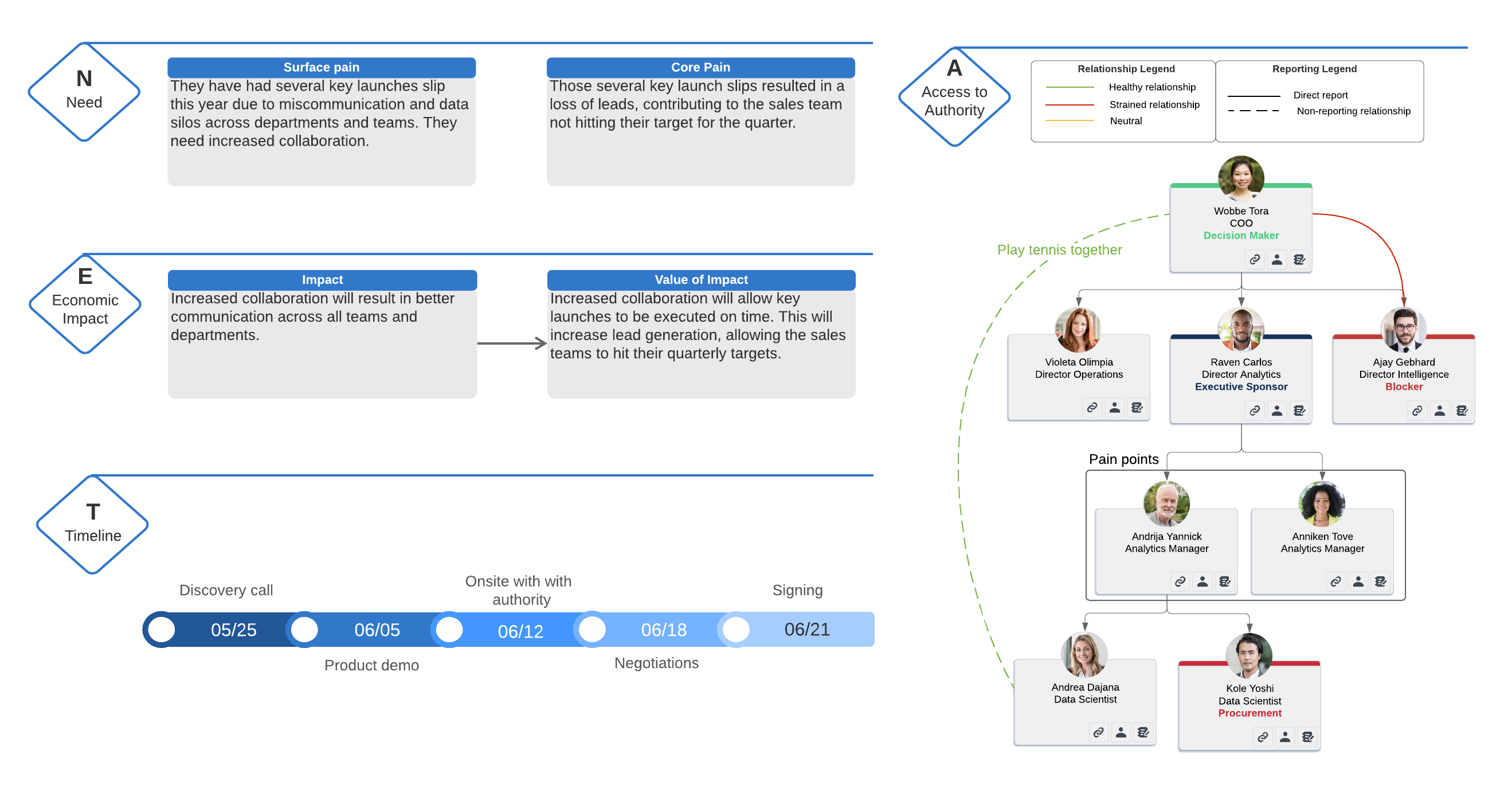
As a starting point, consider these stages and questions of the N.E.A.T. Selling™ process.
Need
What does your prospect really need?
In this stage, you’re looking for the root pain. We’re not talking about things like Mike from marketing stealing all the Reese’s peanut butter cups from the break room and hoarding them at his desk (even though that’s egregious). Instead, put yourself in the shoes of the prospect to understand not only the surface pains, but the core issues that are causing deeper issues. Use empathy here, and listen more than you speak.