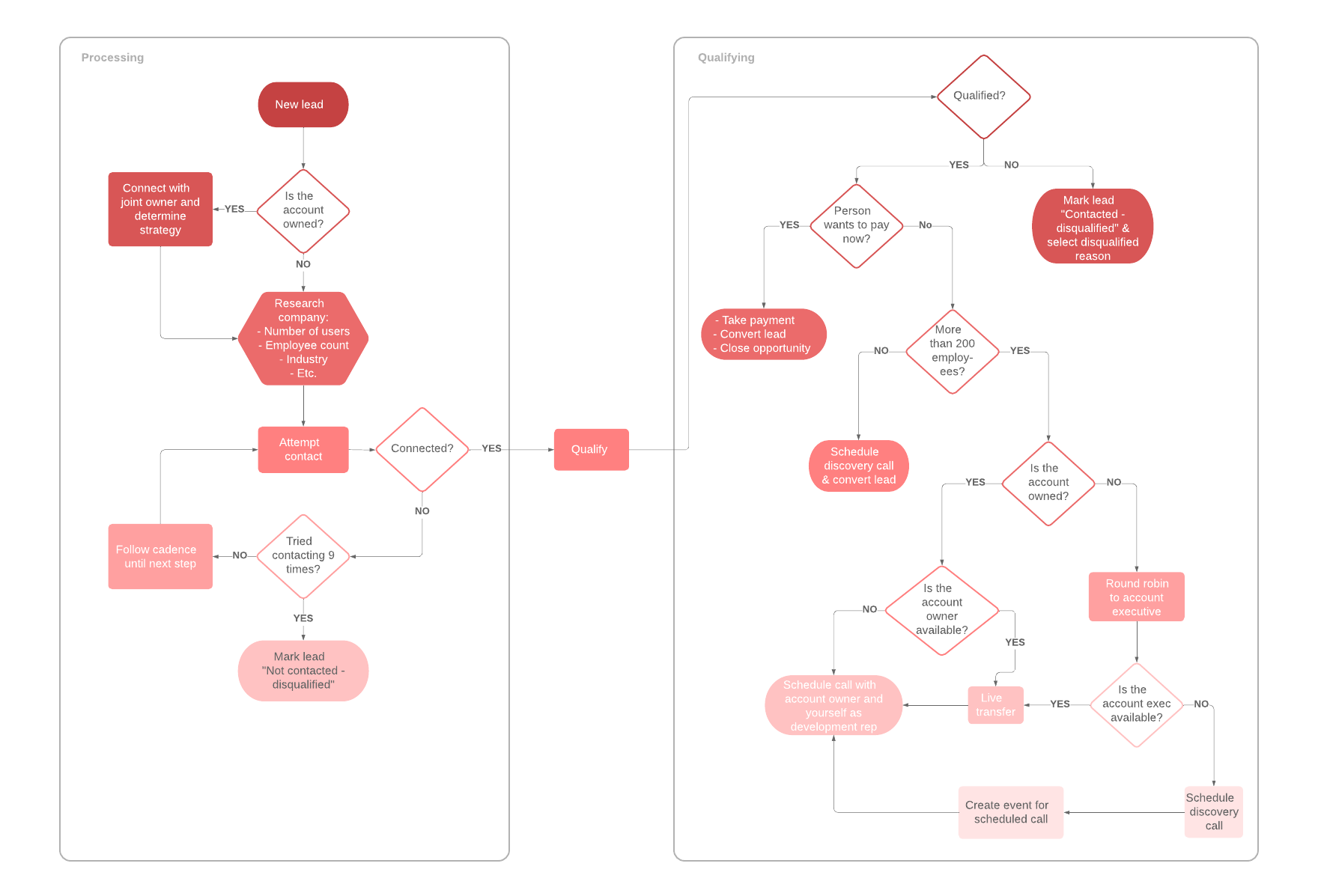
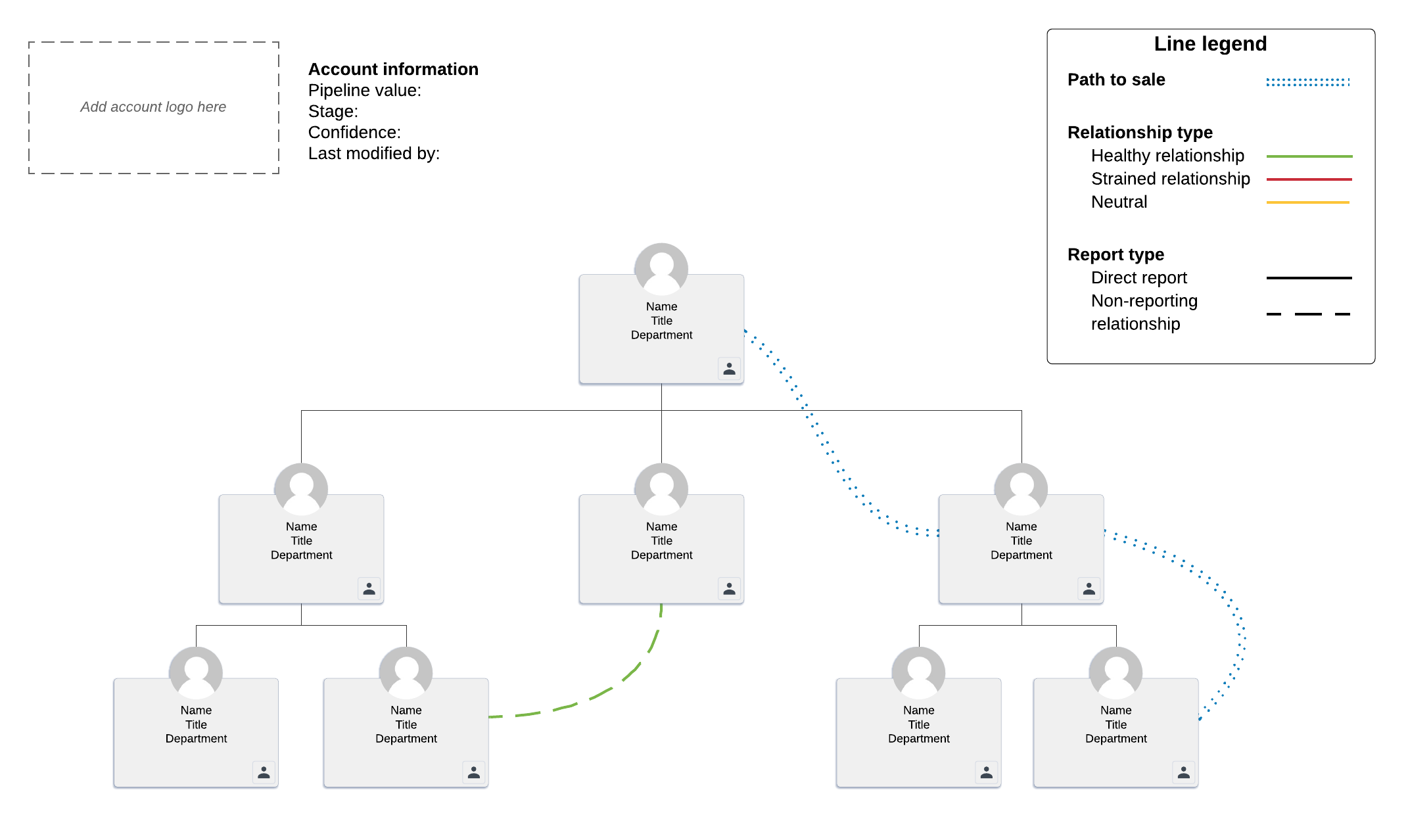
Although perhaps not as acronym-friendly, you can also approach lead qualification using BANT in any order. If prospect’s timeline seems the most urgent, talk to that pain point first ( TBAN). When a need for a solution supersedes budget, adopt that sense of urgency and offer your product as a solution (NBAT). You can prioritize the acronym in any way you need to best fit your potential customer’s needs. Asking questions and actually pausing to wait for responses will help you get a better read on your contact and nurture the lead generation.
Get started on organizing your pitch with tips on effective selling from a single diagram from Lucidchart.
Additional process options
Lead generation and qualification take time. As your sales team continues to grow, consider these other types of lead qualifying strategies, each with their own opportunity focus:
FAINT
Funds, Authority, Interest, Need, Timing
This lead qualification method looks for leads who may not always plan for a purchase but still have the ability to make a purchase, if the right product comes along. Companies that convert well with a FAINT approach tend to have known purchasing power, which is why funding leads the discussion.
ANUM
Authority, Need, Urgency, Money
Begin by identifying the decision maker, and then look to solve an existing problem. Ask the prospect how soon can they decide on a solution and if they have the money to make the purchase.
CHAMP
Changes, Authority, Money, Prioritization
CHAMP is about selling to overcome a problem. The seller is capitalizing on the lead’s urgent need to overcome a challenge.
Metrics, Economic Buyer, Decision Criteria, Decision Process, Identify Pain, Champion
The MEDDIC approach was developed to help increase the accuracy of forecasting.
Whichever methodology your team decides on, a Lucidchart qualifying leads flowchart is a fast and easy way to track the progress of your lead nurturing.
How do you know if lead qualification is working?
Even with all of your hard work, planning, and effort, it can be hard to tell if your time will be rewarded. Does this lead actually have an intent to buy? While nothing is ever a sure thing, here are a few positive signs that your lead is warming up:
- The prospect continues the conversation by asking questions. Ask some of your own questions to keep the information flowing.
- The lead has been thinking about a specific business challenge for a while and is citing specific examples. Well-worded answers could indicate the lead has been dwelling on this issue for some time and is ready to make a change.
- The lead has an idea of the solution they’re looking for. Those in a position of authority tend to have a pulse on what their business is struggling with, what’s going right, and what solutions might fit best.
As you continue to refine and determine a customer profile of what a successful customer looks like, your lead qualification will become more refined. Along the way, lead qualification can also help your employees become experts on the product as they interact with various leads and work to overcome objections.
Lead qualification helps to eliminate the element of surprise as your sales team becomes more and more seasoned at spotting viable leads in a sea of potential opportunities. If you find your leads aren’t going anywhere, perhaps it’s time to reexamine your strategy and look for opportunities in a different audience.