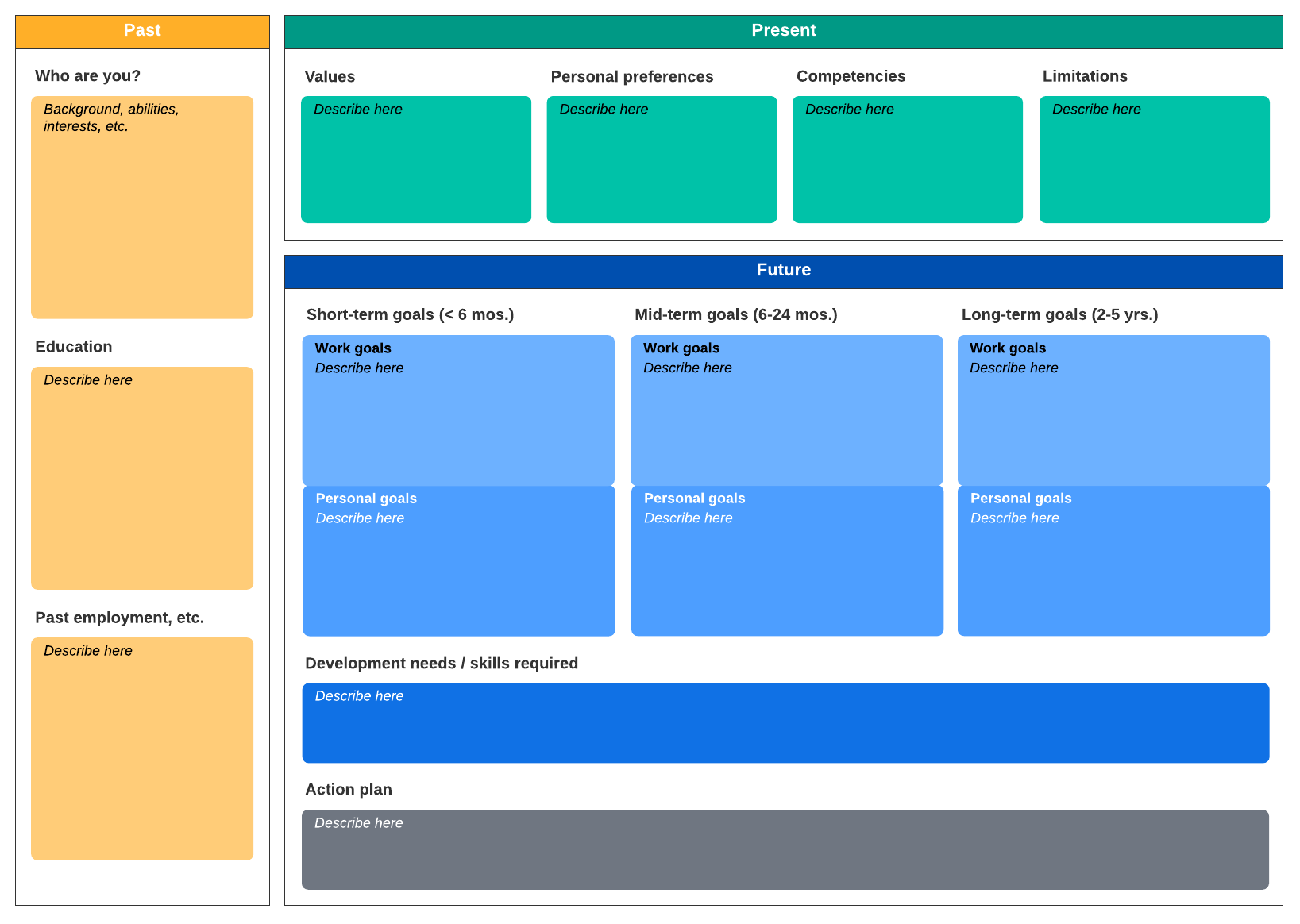
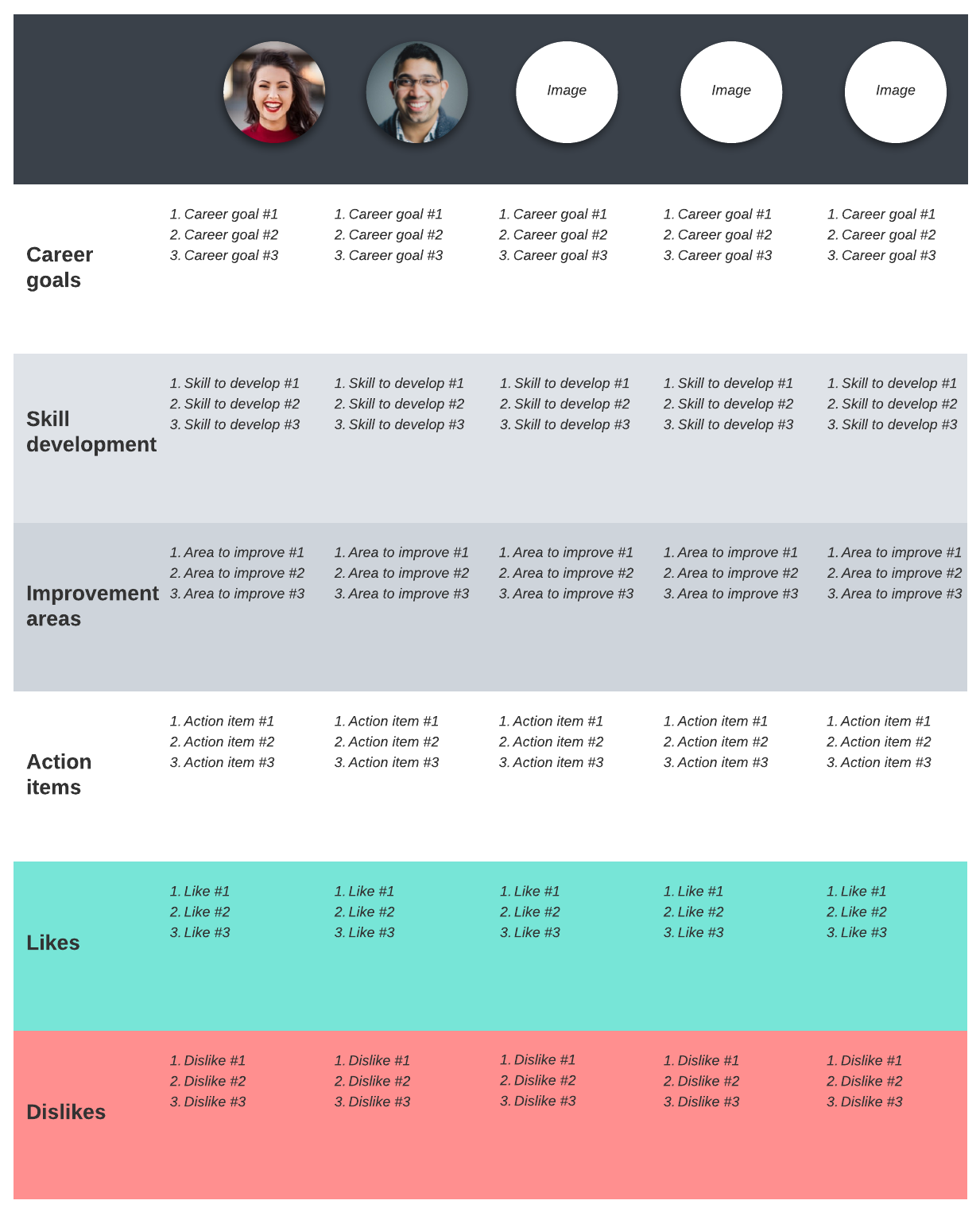
Benefits of work development plans
Performance development plans are a great way to improve and measure performance across an organization. The many benefits to PDPs include:
- Better alignment with team and organizational objectives
- Measurable progress and results
- Accountability
- Strategic employee development
- A clear roadmap for reaching goals
The development planning process empowers employees to direct their personal and professional development within the organization. It is a valuable tool for both managing and correcting performance as well as stretching your team and inspiring growth.
It provides an opportunity for employees (and managers) to evaluate their own careers and professional goals so they can make more meaningful and effective contributions.
Who is involved in the development planning process?
Typically, managers and other business leaders spearhead the PDP process with their staff.
You will review your employees’ previous performance plans to identify opportunities for improvement and outline recommendations before meeting with them. Then, together you will review their performance and map out a development plan going forward.
Types of development opportunities
There are many ways to develop skills and improve performance outcomes.
As you and your employees identify key goals to work on in the coming year, consider incorporating the following activities into your performance development plan:
- New projects or responsibilities
- Workshops
- Seminars
- Professional conferences
- Certification
- Mentorship
- Volunteer work
Each activity provides opportunities for developing expertise, learning new skills, and sharing talents within or outside of the organization.
Steps to the PDP process
As a manager, you will take the lead in this process, reviewing performance and making recommendations to help your employees customize their personal performance plans.
Let your team know when you will be conducting performance reviews well in advance (at least two weeks), and have them prepare their own performance development plan drafts for your review.
Have your team follow these steps so your PDP meetings are most effective:
1. Review performance
Employees should first review their performance over the last quarter (or whatever period you’re tracking) and evaluate what went well and what didn’t, and what they would like to focus on in the coming quarter.
Tip for managers: Provide a brief performance review summary for employees beforehand to give them direction as they prep their reports. (This document should outline opportunities you’ve identified for improvement or growth). That way, you’ll be on the same page when you meet together.
2. Identify goals for improvement
Next, employees should make goals based on the areas they want to improve (or performance issues noted by their manager). Usually, one to three goals for each “improvement category” is sufficient.
Keep in mind that goals should be specific, aligned with the organization’s goals, and realistic. It’s good to have goals that stretch your employees, but they must also be attainable within the given timeframe and based on available resources. Consider using the SMART goals framework to help your team members set goals they can reasonably achieve.
Managers can help their team hone their objectives so that they make sense for both the individual and the team or organization as a whole.