Let’s face it: Things don’t always go according to plan. Systems fail, wires get crossed, and projects fall apart.
Problems are an inevitable part of life and work. They’re also an opportunity to think critically and find solutions. But knowing how to get to the root of unexpected situations or challenges can mean the difference between moving forward and spinning your wheels.
Here, we’ll break down the key elements of problem-solving, effective problem-solving approaches, and a few effective tools to help you arrive at solutions more quickly.
So, what is problem-solving?
Broadly, problem-solving is defined as the process of finding solutions to difficult or complex issues. But you already knew that. Understanding problem solving frameworks, however, requires a deeper dive.
Think about a recent problem you faced. Maybe it was an interpersonal issue. Or it could have been a major creative challenge you needed to solve for a client at work. How did you feel as you approached the issue? Stressed? Confused? Optimistic? Most importantly, which problem-solving techniques did you use to tackle the situation head-on? How did you organize thoughts to arrive at the best possible solution?
The answers to these questions say a lot about your problem-solving approach skills. But if you want to improve your problem-solving skills you’re not alone. According to NACE, nearly 90% of surveyed employers hiring college graduates are looking for evidence of problem-solving skills. If you want to advance your career, this is an area that is worth strengthening
Solve your problem-solving problem
Here’s the good news: Good problem-solving skills can be learned. By its nature, problem-solving doesn’t adhere to a clear set of do’s and don’ts—it requires flexibility, communication, and adaptation. However, most problems you face, at work or in life, can be tackled using four basic steps.
1. Define the problem. This step sounds obvious, but often, you can notice that something is amiss in a project or process without really knowing where the core problem lies. The most challenging part of the problem-solving process is uncovering where the problem originated.
2. Work to generate alternatives to address the problem directly. This should be a collaborative process to ensure you’re considering every angle of the issue.
3. Evaluate and test potential solutions to your problem. This step helps you fully understand the complexity of the issue and arrive at the best possible solution.
4. Select and implement the solution that best addresses the problem.
Following this basic four-step process will help you approach every problem you encounter with the same rigorous critical thinking process, recognize commonalities in new problems, and avoid repeating past mistakes.
In addition to these basic problem-solving skills, there are several best practices that you should incorporate. These problem-solving approaches can help you think more critically and creatively about any problem:
Dig deep
You may not feel like you have the right expertise to resolve a specific problem. Don’t let that stop you from tackling it. The best problem solvers become students of the problem at hand. Even if you don’t have particular expertise on a topic, your unique experience and perspective can lend itself to creative solutions.
Challenge the status quo
Standard problem-solving methodologies and frameworks are a good starting point. But don’t be afraid to challenge assumptions and push boundaries. Good problem-solvers find ways to apply existing best practices into innovative approaches.
Think broadly about and visualize the issue
Sometimes it’s hard to see a problem, even if it’s right in front of you. Clear answers could be buried in rows of spreadsheet data or lost in miscommunication. Use visualization as a problem-solving tool to break down problems into their core elements. Visuals can help you see bottlenecks in the context of the whole process and more clearly organize your thoughts as you define the problem.
Hypothesize, test, and try again
It might be cliche now, but there’s truth in Edison's old adage that genius is 1% inspiration and 99% perspiration. The best problem solvers ask why, test, fail, and ask why again. Whether it takes one or 1,000 iterations to solve a problem, the important part—and the part that everyone remembers—is the solution.
Consider other viewpoints
Today’s problems are more complex and difficult to solve, and they often involve multiple disciplines. They require group expertise and knowledge. Being open to others’ expertise increases your ability to be a great problem-solver. Great solutions come from integrating your ideas with those of others to find a better solution. Excellent problem solvers build networks and know how to collaborate with other people and teams. They are skilled in bringing people together and sharing knowledge and information.
4 effective problem-solving tools
As you work through the problem-solving steps, try these tools to better define the issue and find the appropriate solution.
Root cause analysis
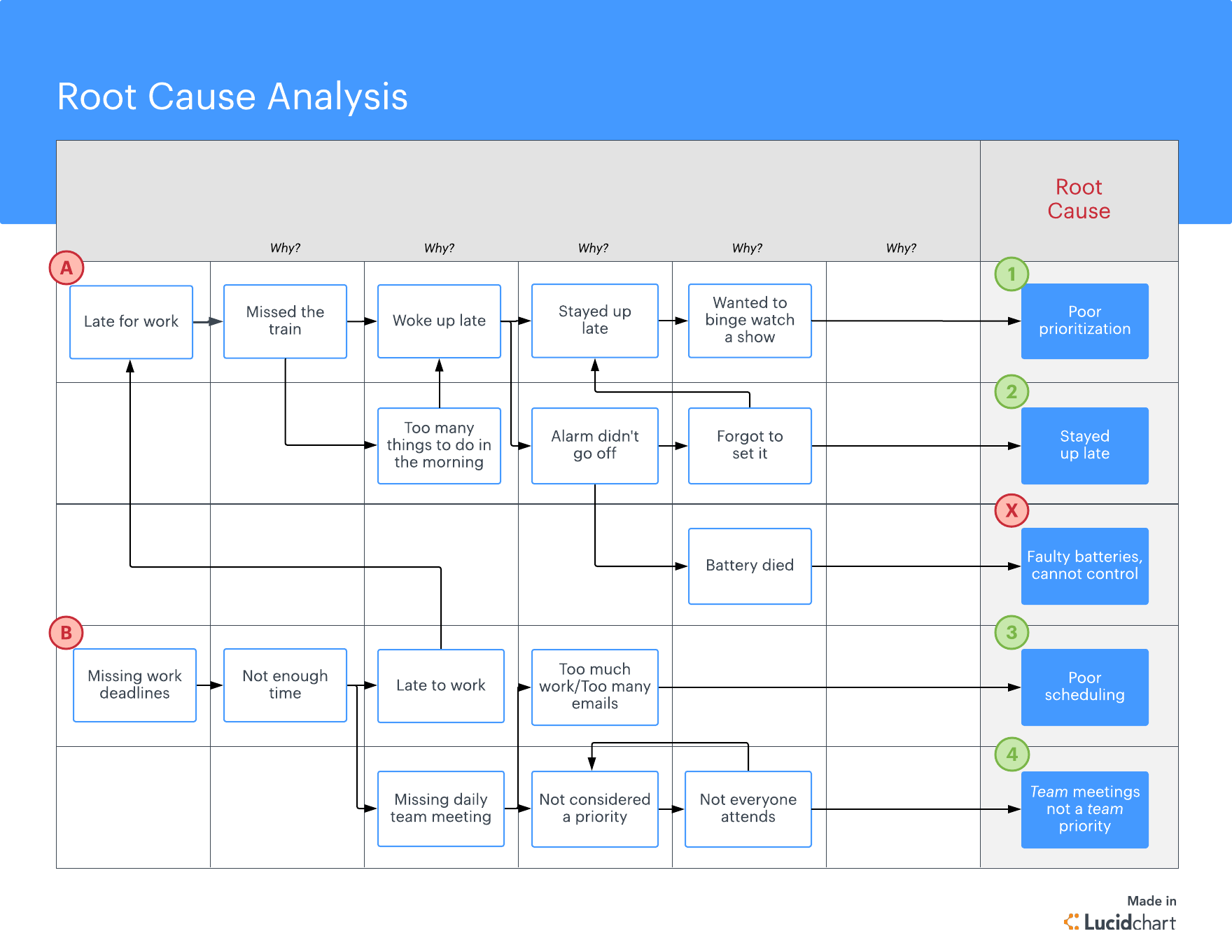
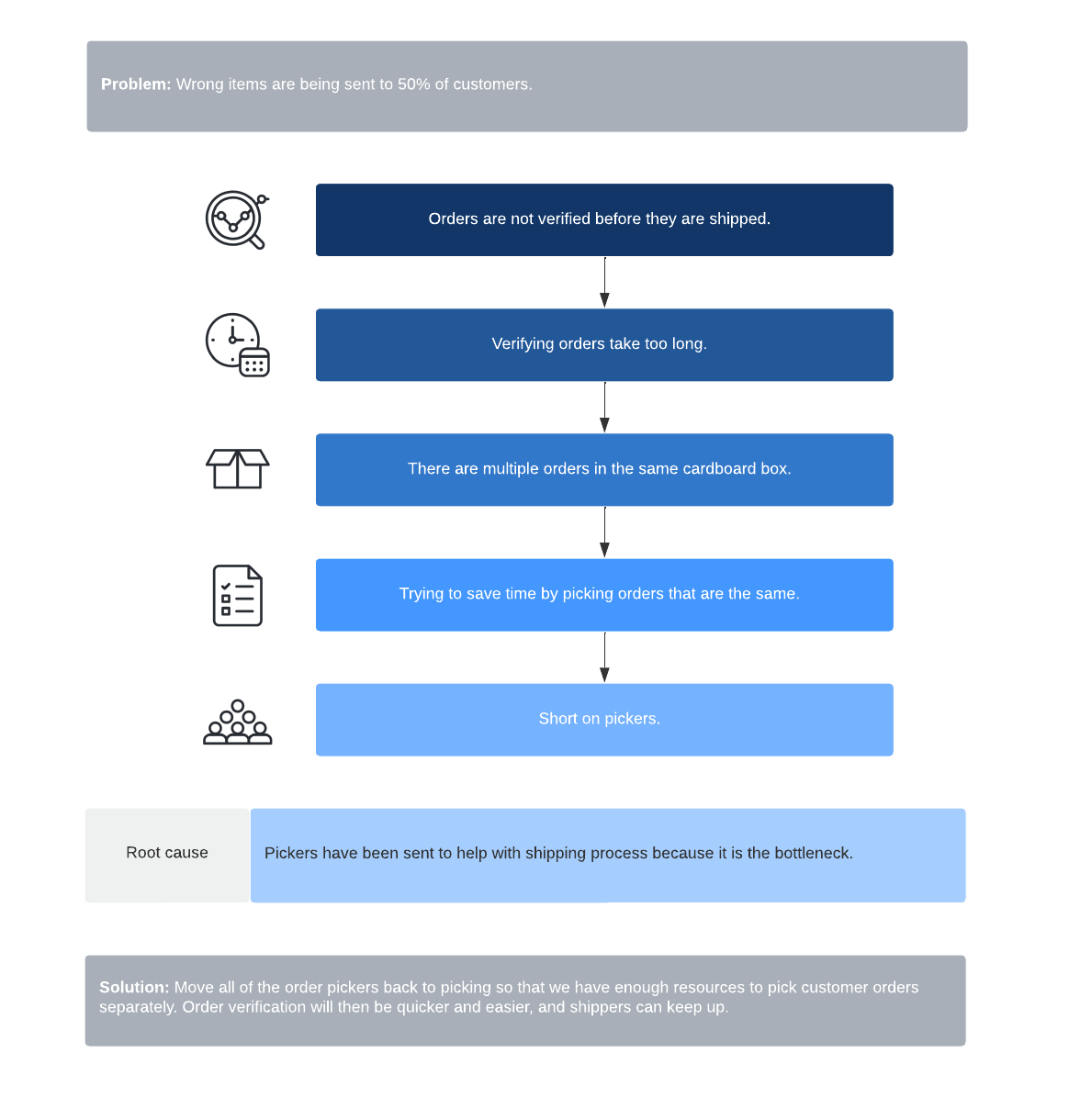
Similar to pulling weeds from your garden, if you don’t get to the root of the problem, it’s bound to come back. A root cause analysis helps you figure out the root cause behind any disruption or problem, so you can take steps to correct the problem from recurring. The root cause analysis process involves defining the problem, collecting data, and identifying causal factors to pinpoint root causes and arrive at a solution.