2. Identify the ideal future state
Once you have the big picture figured out and understand how your team or organization currently functions, you need to become idealistic. Where would you like to be? What’s not happening that should be? Don’t worry yet about how you’ll get there; that’s the next step. Right now, the sky’s the limit, and you should dream big.
Maybe you have an exceptional marketing team that outsources all its content, but after performing a content audit, you realize that your brand is no longer cohesive because it’s handled by a disparate group of freelancers. Your dream could be to regain control of the content creation process in order to reclaim your brand identity.
Another example might be of a warehouse needing to meet certain safety regulations, but the production and human resource managers decide that they want to do more than meet them. Their ideal would be to exceed what’s mandated so they can attract and retain more talented and dedicated workers.
In both scenarios, current performance clearly falls short or needs to be changed. But instead of charging blindly ahead or slapping a Band-Aid on the situation, picturing the ideal helps you reach a higher potential. A good gap analysis tool here would be a brainstorming board or a mind map to really capitalize on your team’s creativity.
But how do you really get to the ideal? That’s where the hard work comes in.
3. Find the gap and evaluate solutions
Completing the first two steps in isolation won’t get you great results––the status quo can seem inescapable, and goals can feel lofty and unattainable. Putting them together, however, exposes what’s missing between your performance and your potential. You also need to decide which solutions will most effectively bridge the gap.
Returning to our example in step 2 involving a marketing team, a gap analysis would bring up the following question: How do we go from a muddled brand voice to one that’s unified and under our control?
Several solutions for bridging this gap present themselves, though not all are created equal:
- You could bring content creation back in-house by hiring more full-time writers, which would be more expensive than using freelancers.
- You could reevaluate all of your freelancers to determine which ones are worth keeping and which are falling short of your standards. This option would require some time and might result in not having enough freelancers to handle your needs.
- You could tighten your brand creation guidelines and retrain your freelancers. This option would also require time and doesn’t necessarily guarantee an improvement in the content created by your freelancers.
If guaranteed control matters most, then the first solution is best. On the other hand, if cost tops the list, then the first solution will be out, and your team might choose the second or third solution. A helpful gap analysis tool would be a decision tree as it calculates costs and benefits based on conditional probability.
In the end, how you bridge the gap will depend on your organizational and team priorities. Work together to find what works best.
4. Create and implement a plan to bridge the gap
After you’ve charted out the possible ways to bridge the gap and decided which would be best, you likely still need to convince others in your organization of that as well. The changes that you’ll implement may also affect other teams and departments, so it’s important to come up with a plan.
Establish a clear strategy and actionable objectives to help you get everyone on board.
For example, when presenting to management or executives, have a timeline or schedule for rolling out the planned changes. You could also create a more comprehensive action plan that assigns specific tasks to teams or individuals.
Keep reading about organizational change management, or use the tools described below to help you during this gap analysis process.
Gap analysis tools
Many tools exist to help you bridge the gap. Whichever tool you choose, visualize and document each step of your gap analysis to keep your organization moving forward.
SWOT analysis
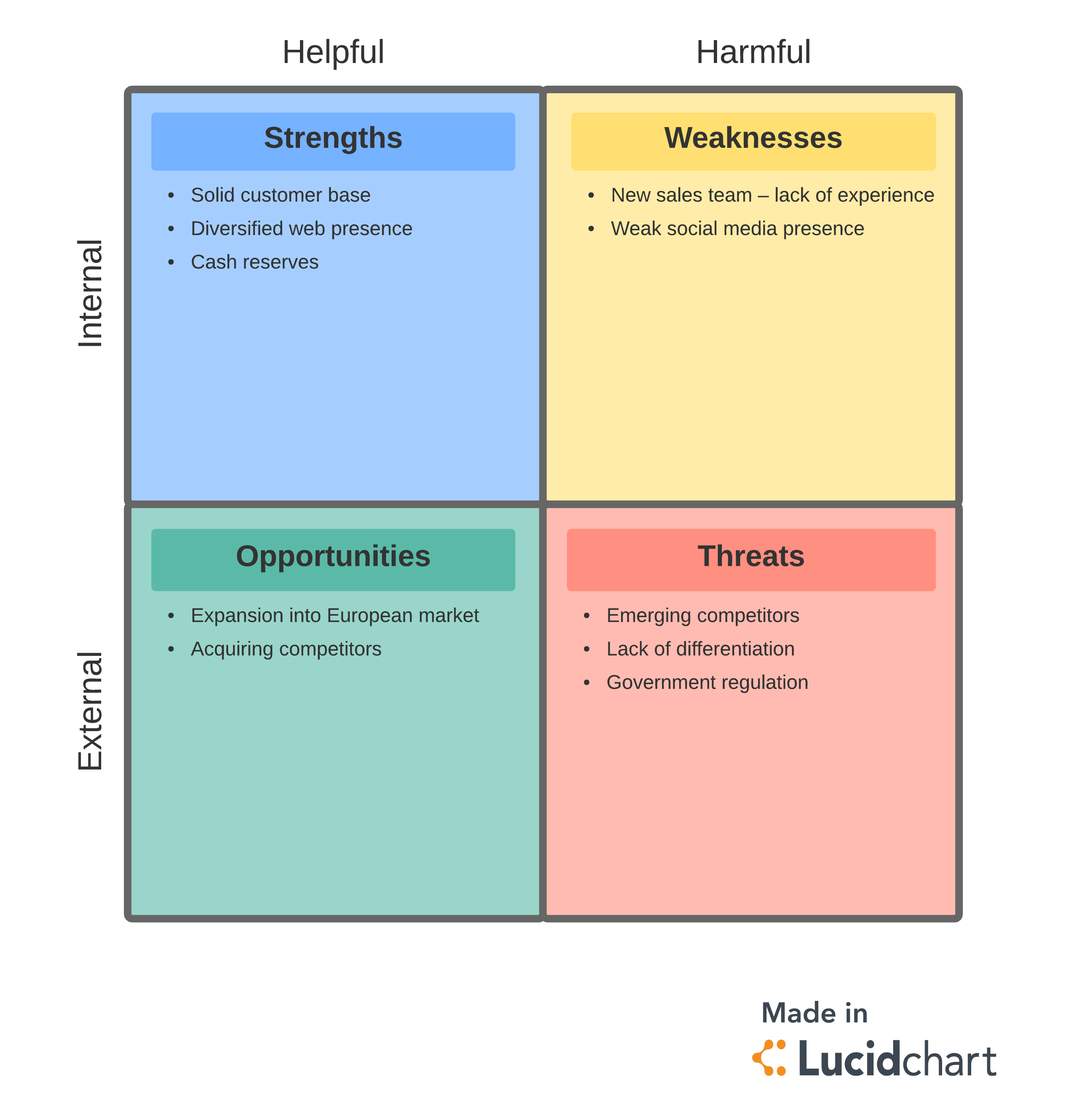
SWOT analysis is perhaps one of the oldest textbook-marketing assets. SWOT stands for strengths, weaknesses, opportunities, and threats. You can perform a SWOT analysis both quantitatively and qualitatively. This process will help you determine internal and external threats to your organization and see where and how you stand out against the competition. Try our SWOT analysis template or competive analysis template to help you organize your research.