4. Termination
If you have followed the steps above, and if the employee still hasn’t show progress or continues to repeat unacceptable behavior, this final step in the employee discipline process should not be a surprise to any of the involved parties. The preceding three steps require detailed documentation which, in and of itself, should make the case for a successful termination. Additionally, after an employee is terminated, take steps to make sure that you and your co-workers don’t face similar issues in the future.
Learn more about the termination process.
How to write up an employee
Figuring out when and how to write up an employee can be tricky. Different issues require different levels of discipline:
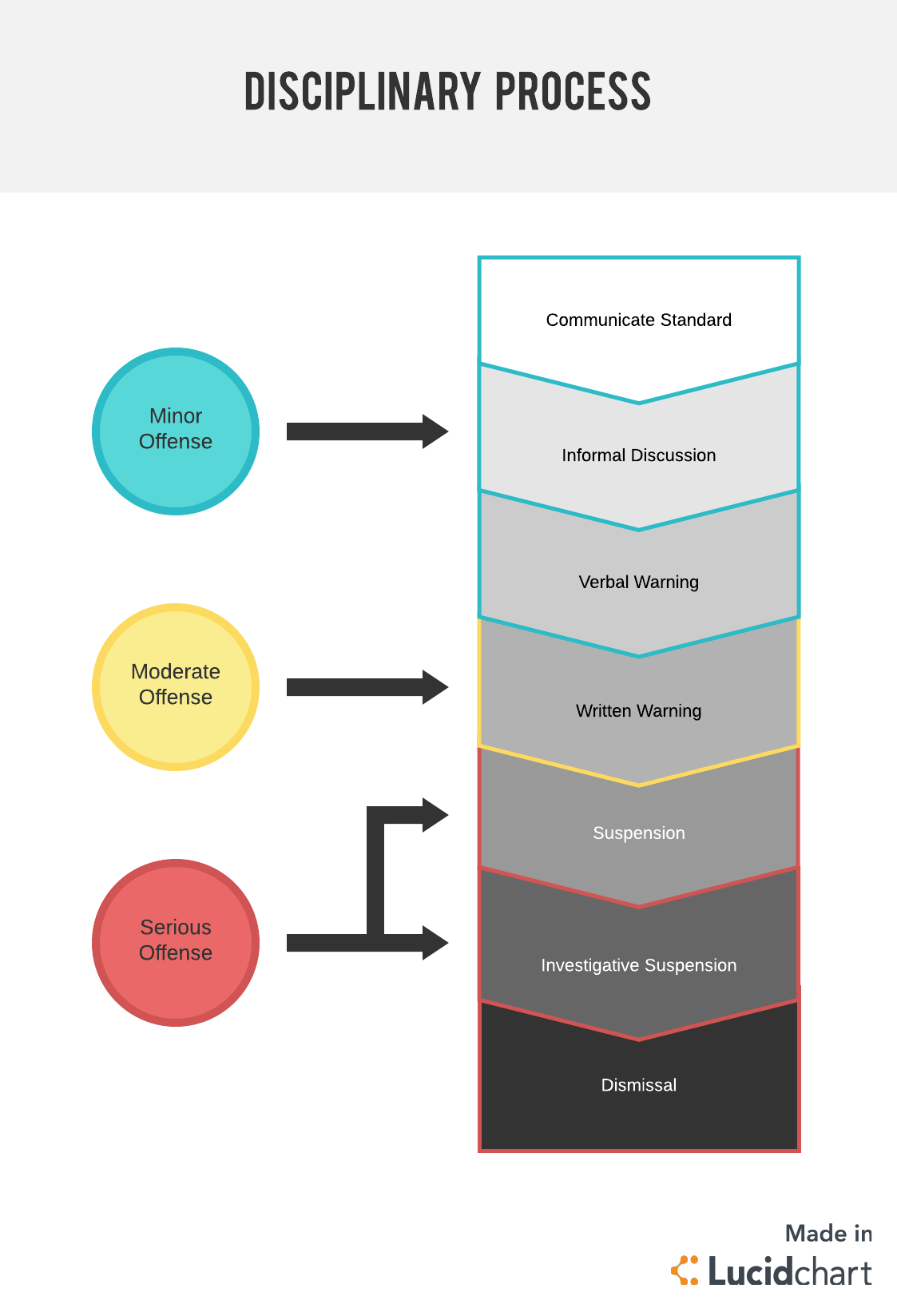
- Minor offenses warrant conversations, restating of expectations and standards, and informal discussions on how to work towards improvement.
- Moderate offenses should result in a verbal warning, followed up by a written warning if improvements have not been made.
- Serious transgressions can trigger a suspension, and the company’s HR department should conduct an investigation into the action (or actions) that caused the suspension. Depending on what’s uncovered during the investigation, the offending employee may be terminated.
Addressing behavior concerns and doling out discipline is never fun, but you can follow these guidelines to keep things as cordial as possible:
Keep consistent
No one is exempt from the rules. Behavior that isn’t tolerated from one employee should not be tolerated from another. Apply the same process to every situation, regardless of the position of the employee in question.
Be specific
Back up complaints and issues with specific examples, such as “Marnie clocked out early on August 4, August 18, and August 20.” Without concrete examples of when the alleged behavior occurred, your organization may have a hard time defending their disciplinary decisions.
Document clearly
Note the specific policy or company procedure that was violated and include the date and time of the infraction.
Remain unemotional
Do not engage on a personal or emotional level with the employee involved and refrain from drawing conclusions or making assumptions.
Present consequences
Establish firm, fair consequences of what will happen going forward if the behavior or performance doesn’t change. “Without improvement in communication, employee will be put on an improvement plan.”
Get a signature
When possible or as needed, ask the employee to sign the write-up so there is evidence that they were involved in the process. If the employee refuses to sign, make a note of it and get HR involved.
Allow time for a response
Give your employee the opportunity to respond to the actions taken, whether in writing or in a verbal conversation. Document the response.
Documentation is key when it comes to disciplining an employee. Use a fact-based approach that focuses on the behavior, not the employee as a person, and record specific examples and instances of inappropriate conduct. The same standard and approach should be deployed across the company.
Reprimanding an employee is never an easy feat, but you can require improvement from employees without damaging your working relationships when you set clear expectations for appropriate behavior. Depend on Lucidchart as you develop a consistent process for disciplinary action and employee improvement.