Where a Theory X manager might threaten loss of employment in order to get employees to work on a Saturday, a Theory Y manager might appoint a temporary leadership title to anyone who chooses to show up to work on a Saturday. Where a typical Theory X manager might require strict work hours, a Theory Y manager might offer employees a firm deadline, trusting them with the choice of when and how they will meet a productivity deadline.
A thought comparison
Consider these assumptions from the different managerial styles:
|
Theory X
|
Theory Y
|
|---|
| Work is inherently distasteful to most people, and they will attempt to avoid work whenever possible. |
Most people find happiness in hard work under the right conditions.
|
| Most people avoid responsibility and need constant direction. |
People enjoy taking ownership of their work.
|
| People must be constantly directed, prompted, rewarded, or punished in order to complete their work. |
People are self-motivated and embrace responsibility.
|
| Lack of ambition and laziness is more common than ambition and creativity. |
Creativity and problem-solving thrive when employees are trusted.
|
| People are motivated by money and fears about their job security. |
People are motivated when they find value in their contributions and see an opportunity to realize their own potential.
|
Based on these factors, it is easy to see how Theory X differs from Theory Y and easy to imagine their potential outcomes in the workplace.
The mind behind modern work
While these contrasting management styles might be easily recognizable in today’s technology-driven world, they were novel thoughts at one point, developed through research and observation by a workplace thought leader. Known as an influential figure in management theory, organizational communication, and organizational studies, Douglas McGregor was a professor at Massachusetts Institute of Technology, where he was a vocal advocate of the human relations approach.
He was particularly interested in what motivates people to work hard, in particular on what belief systems motivate people to work hard. In short, he studied heavily how our beliefs shape our behavior and thus how that behavior shapes the behavior of those around us.
His ideas gained most of their momentum in the 1960s, when the American and Western workforce was at a crucial transition from factory work of the Industrial Revolution to more collaborative technology-centered teamwork, aided no doubt by the Women’s Labor Movement and the dawn of computing technology. It is to McGregor’s thorough research and curiosity in behavior and incentive that we owe our current understanding of Theory X and Theory Y.
How do Theory X and Theory Y affect work output?
What might be less immediately understandable are the differing effects of Theory X and Y on resulting behavior and productivity.
Think about a conveyor belt of automotive parts with workers and machines lined side by side, each tasked with applying a specific skill to the production process—tightening a bolt, applying a hinge, taping up a box to be shipped, etc.
A Theory X management style may be well-suited for this type of structured, process-driven workplace. Studies have shown that the Theory X style of management results in tight control, strict policies, and a punishment and rewards system that reinforces beliefs. Employees are initially obedient, but eventually dissatisfied and even rebellious, driving down productivity and achieving contradictory outcomes, further reinforcing the belief that workers are lazy and have to be externally motivated.
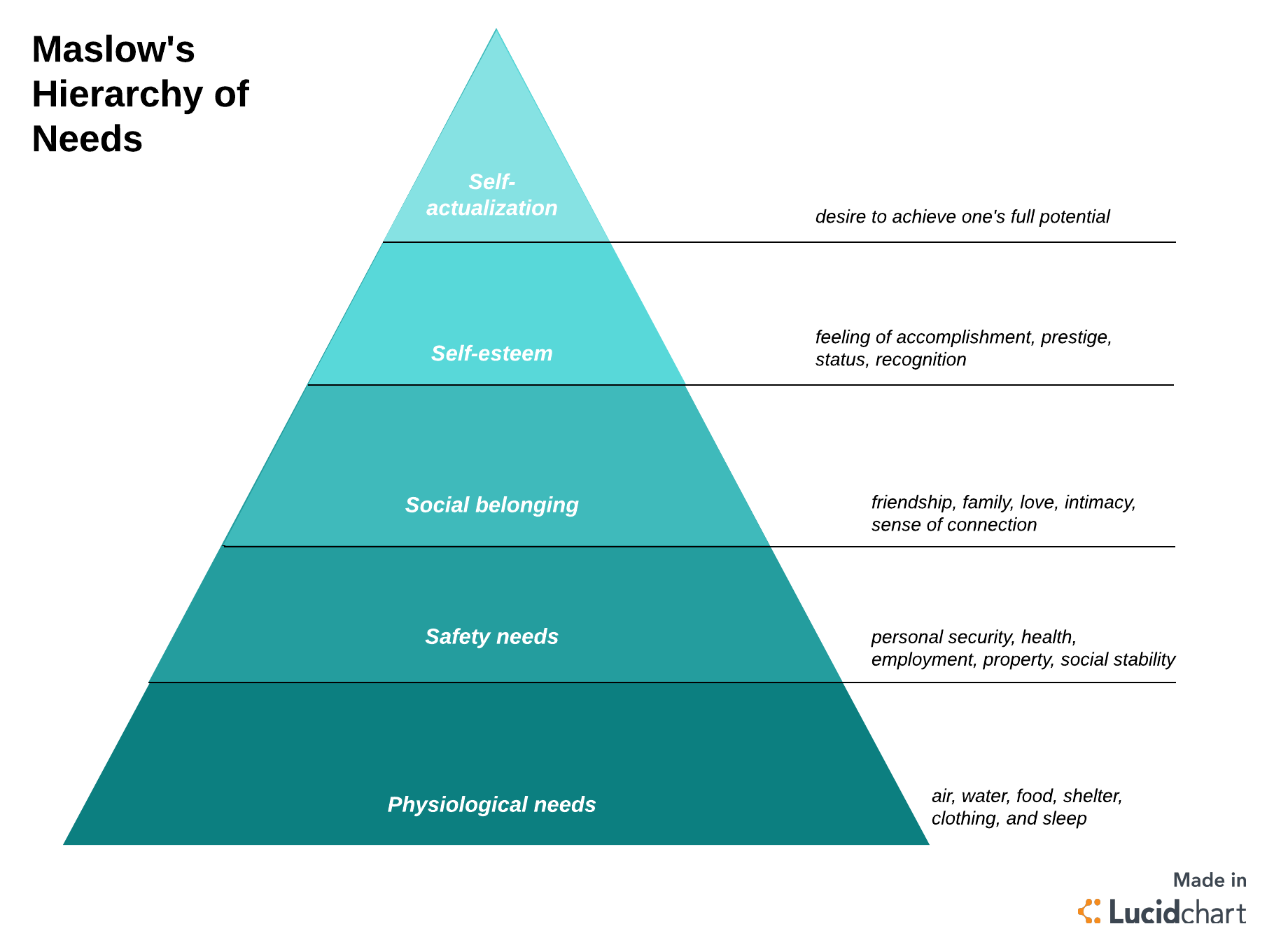
Theory Y results in an arrangement whereby individuals can achieve their own goals and happily accomplish the organization’s goals at the same time. Theory Y managers will make different choices about how to arrange team members and workflows, how to talk to people, how to reward and incentivize, etc. Theory Y managers appeal to a higher level of motivation on Maslow’s famous Hierarchy of Needs, capitalizing on the human need for esteem and self-actualization.