What is FMEA analysis?
FMEA stands for Failure Modes and Effects Analysis. It is a step-by-step method for identifying and analyzing all possible ways a process or product could fail and designing a strategy to prioritize and mitigate the biggest risks.
In other words, FMEA asks and answers:
- What could go wrong?
- Why would the failure happen?
- How likely is this failure?
- What could be the consequences of each failure?
FMEA analysis helps you prevent issues by identifying them upfront. (Compare that to root cause analysis, which helps you determine what went wrong after an issue occurs).
By evaluating your processes for risks, you can improve your systems and reduce the likelihood (and impact) of failure. This is important because discovering problems later on, especially in the middle of development or after implementation, can create costly delays and harm your client relationships.
FMEA is a proactive approach applied early in development to help designers create quality and reliable processes from the beginning.
When to use FMEA analysis
There are several cases when you should apply an FMEA analysis, including when:
- Analyzing new designs or processes
- Modifying an existing product design or process
- Using a design or process in a new environment or application
FMEA can help you understand how a new design or proposed change will impact the system and uncover potential bottlenecks or unintended consequences before implementation. It’s also good practice to periodically conduct an FMEA analysis throughout the life of a service, product or process to ensure everything continues to run smoothly.
How to conduct an FMEA analysis
An FMEA analysis has three criteria for analyzing a problem:
- The severity of the impact
- The likelihood of occurrence
- The probability the issue will be detected beforehand
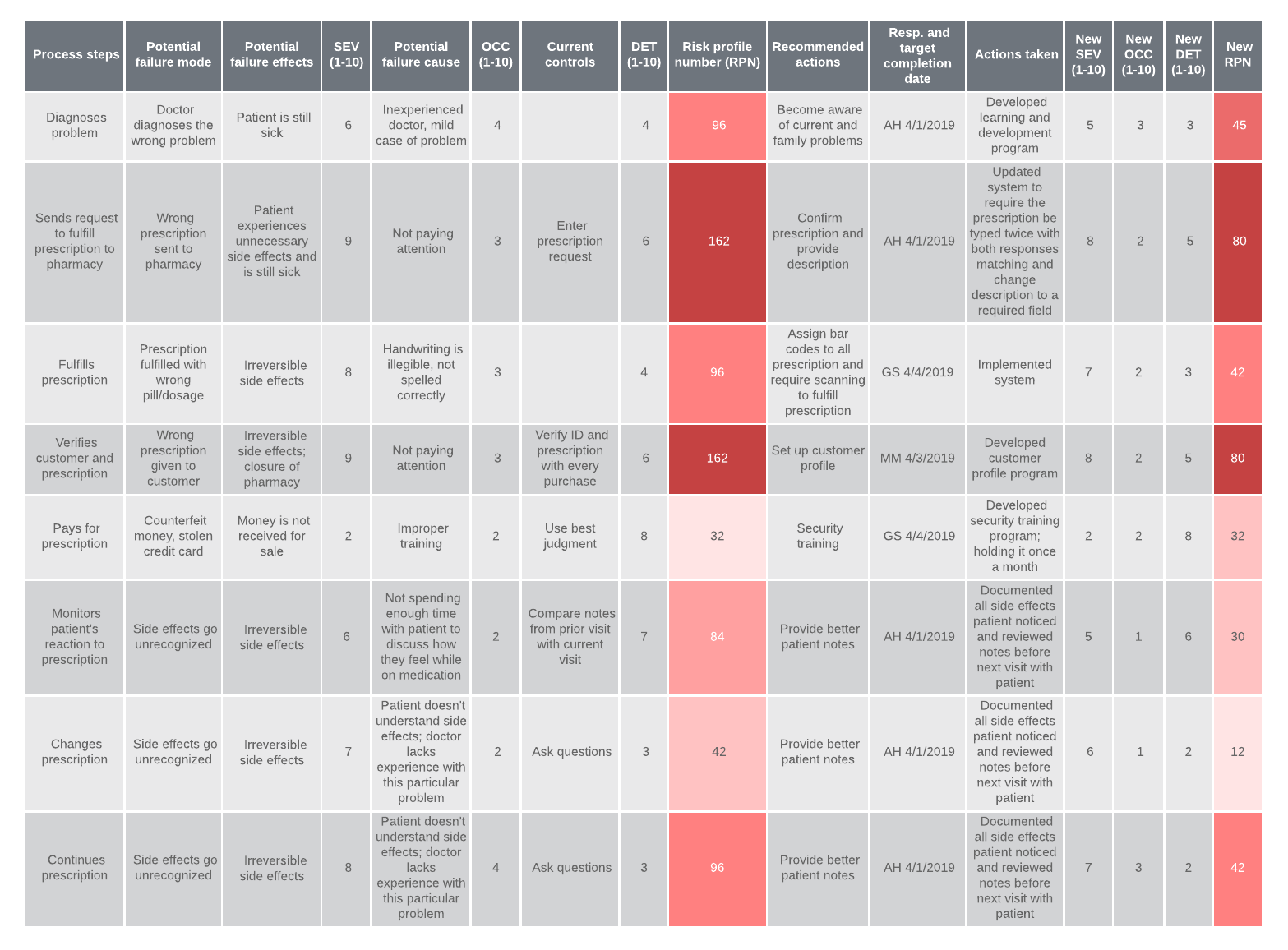
Each criterion is ranked between 1 and 10 and added together to calculate a risk priority number (RPN). The RPNs will help you identify and prioritize which issues to focus on first. The highest RPNs require immediate attention and a plan of action to mitigate their risks.
Here’s how to get started.
1. Choose a process you want to analyze
First, identify what product or process you want to assess. The FMEA analysis is comprehensive, so you want to focus on a specific process with a narrow scope. If you are already aware of an issue, that’s a good place to start.
Pro tip: For complex processes, consider breaking up the project into smaller parts and conducting multiple FMEA analyses.
2. Gather a team
Next, put together a cross-functional team to help conduct a thorough analysis.
Team members should be people who are directly involved in the process you’re analyzing. They could come from design, manufacturing, maintenance, sales, or customer service. Include people who are not in management roles to get a clear perspective of the process realities (and challenges) on the ground.
3. Review the process
Review your current process and identify each process component and function. Be specific. Consider what the purpose of the process is and what customers expect it to do.
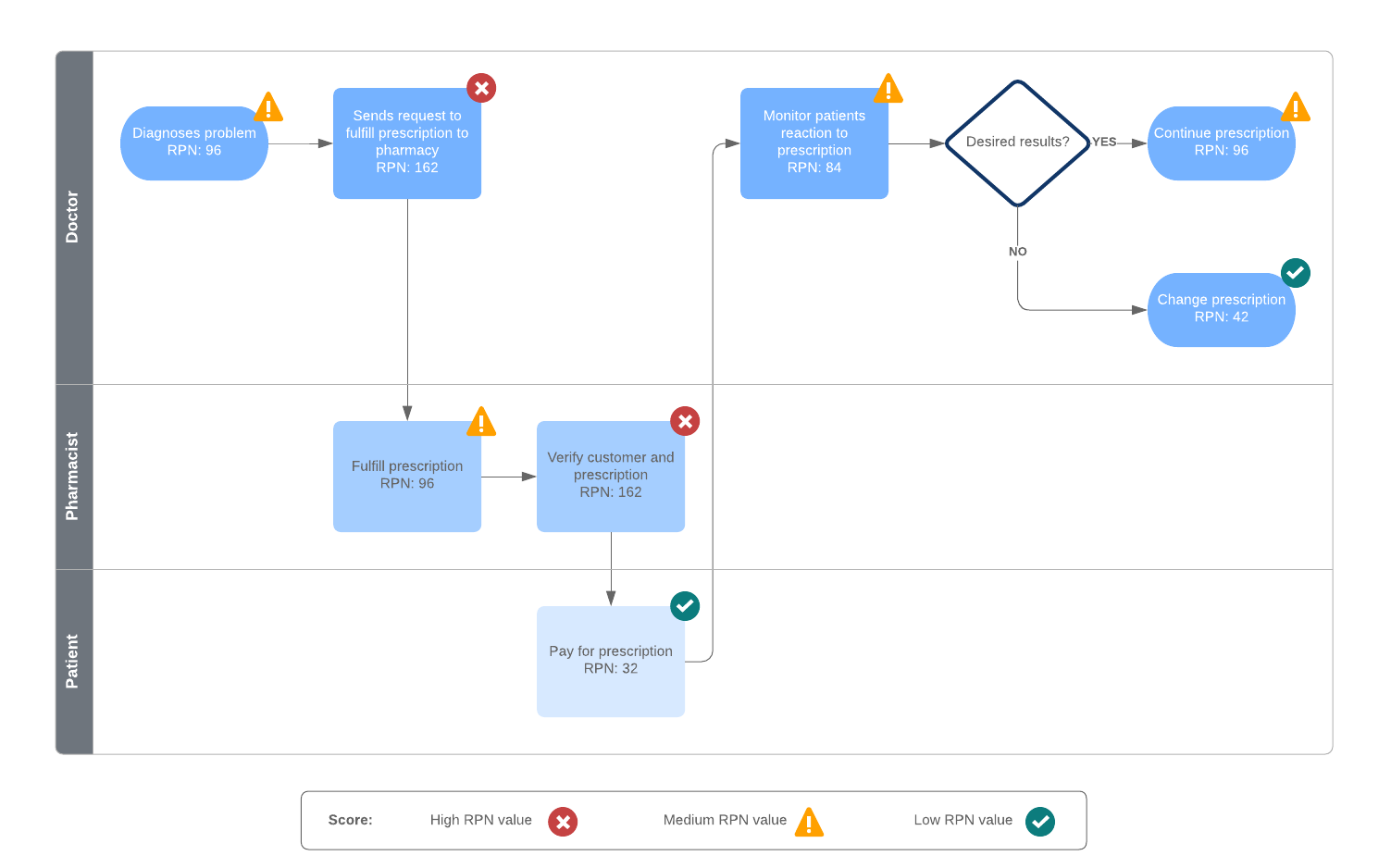
Map out your as-is process in Lucidchart to help you understand your current process flow and visualize areas with potential risks. Lucidchart operates in the cloud, which makes it easy to collaborate with your team members and make sure you haven’t missed any components.
Once you have your process components mapped out, you can document them in your FMEA diagram.
4. Identify failure modes
Brainstorm all the different ways the process could break down. These are called failure modes. What are the risks? How could each component fail or malfunction?
Keep in mind that failure in one component could cause another failure somewhere else.
Pro Tip: Use sticky notes to list failures underneath each process step to more easily brainstorm and visualize the potential risks.
5. Outline the effects of each potential failure
Once you’ve listed all the potential failure modes, go through each one and identify all the consequences on the system, process, customer, or organization.
In other words, for each failure mode, ask:
- What happens when this function fails?
- How does a failure here affect the customer?
Then consider what the root causes are for each failure (your team members are an invaluable resource here). List the causes on your FMEA diagram.