Mark Zuckerberg, founder of Facebook, once said, “The biggest risk is not taking any risk. In a world that's changing really quickly, the only strategy that is guaranteed to fail is not taking risks.”
While this advice isn’t new, we think you’ll agree that there are some risks your company doesn’t want to take. Specifically, risks that put the health and well-being of your employees in danger. These are risks that aren’t worth taking. But it’s not always clear what actions, policies, or procedures are high-risk.
That’s where the risk assessment process comes in.
With a risk assessment, companies can identify and prepare for potential risks in order to avoid catastrophic consequences down the road and keep their personnel safe.
What is risk assessment?
Risk assessment is the process employers take to identify processes and situations that may cause harm in their organization, especially to people. This is known as hazard identification. Once those hazards are identified, they must determine how likely each hazard is to occur and, if it does, how severe the consequences would be. From there, organizations should determine steps to mitigate hazards or control risks properly if they cannot be eliminated. This is known as risk control.
It’s important to note the difference between hazards and risks, because they’re often conflated. A hazard is anything that can cause harm, including work accidents, emergency situations, toxic chemicals, employee conflicts, stress, and more. A risk, on the other hand, is the chance that a hazard will cause harm. As part of your risk assessment plan, you will first identify potential hazards and then calculate the risk or likelihood of those hazards occurring.
The goal of a risk assessment process will vary across industries, but overall, the goal is to help organizations prepare for and combat risk. Other goals include preventing injury or illness, creating awareness about hazards and risks, and meeting legal requirements. Additionally, there’s the issue of budget. Risk assessment can help you make an accurate inventory of available assets, justify the costs of managing risks, determine the budget needed to remediate risk, and understand the return on investment of risk management as a whole.
Businesses should perform a risk assessment before introducing new processes or activities, before introducing changes to existing processes or activities (such as changing machinery), or when the company identifies a new hazard.
The steps used in risk assessment form an integral part of your organization’s health and safety management plan and ensure that your organization is prepared to handle any risk.
Preparing for your risk assessment
Before you start the risk management process, you should determine the scope of the assessment, necessary resources, stakeholders involved, and laws and regulations that you’ll need to follow.
Scope: Define the processes, activities, functions, and physical locations included within your risk assessment. The scope of your assessment impacts the time and resources you will need to complete it, so it’s important to clearly outline what is included (and what isn’t) to accurately plan and budget.
Resources: What resources will you need to conduct the risk assessment? This includes time, personnel, and financial resources required to develop, implement, and manage the risk assessment.
Stakeholders: Who is involved in the risk assessment? In addition to senior leaders who need to be kept in the loop, you’ll also need to organize an assessment team. Designate who will fill key roles such as risk manager, assessment team leader, risk assessors, and any subject matter experts.
Laws and regulations: Different industries will have specific regulations and legal requirements governing risk and work hazards. For instance, the Occupational Safety and Health Administration (OSHA) sets and enforces working condition standards for most private and public sectors. Plan your assessment with these regulations in mind so you can ensure your organization is compliant.
5 steps in the risk assessment process
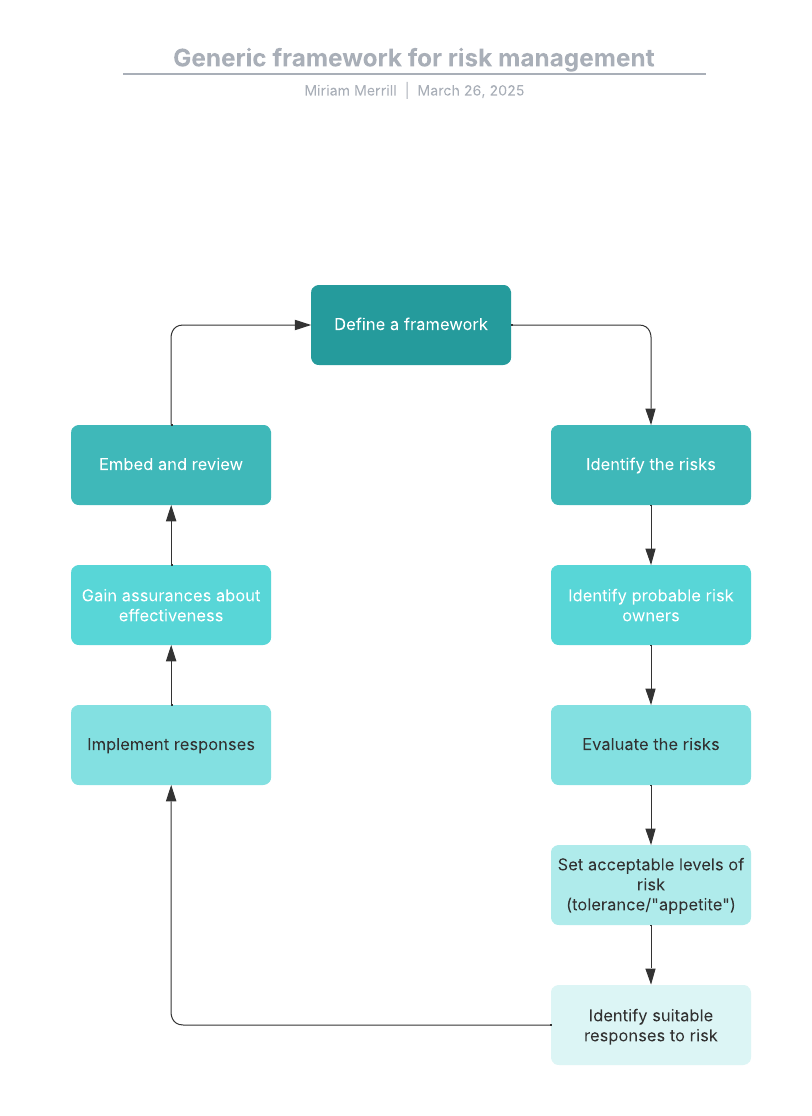
Once you’ve planned your assessment and allocated the necessary resources, you can begin the risk assessment process. Proceed with these five steps.