What is offboarding?
You’ve probably heard of onboarding—when a new employee joins your ranks, you take steps to introduce them to the team, culture, tools, and knowledge base of the organization so they are equipped to succeed in their new role.
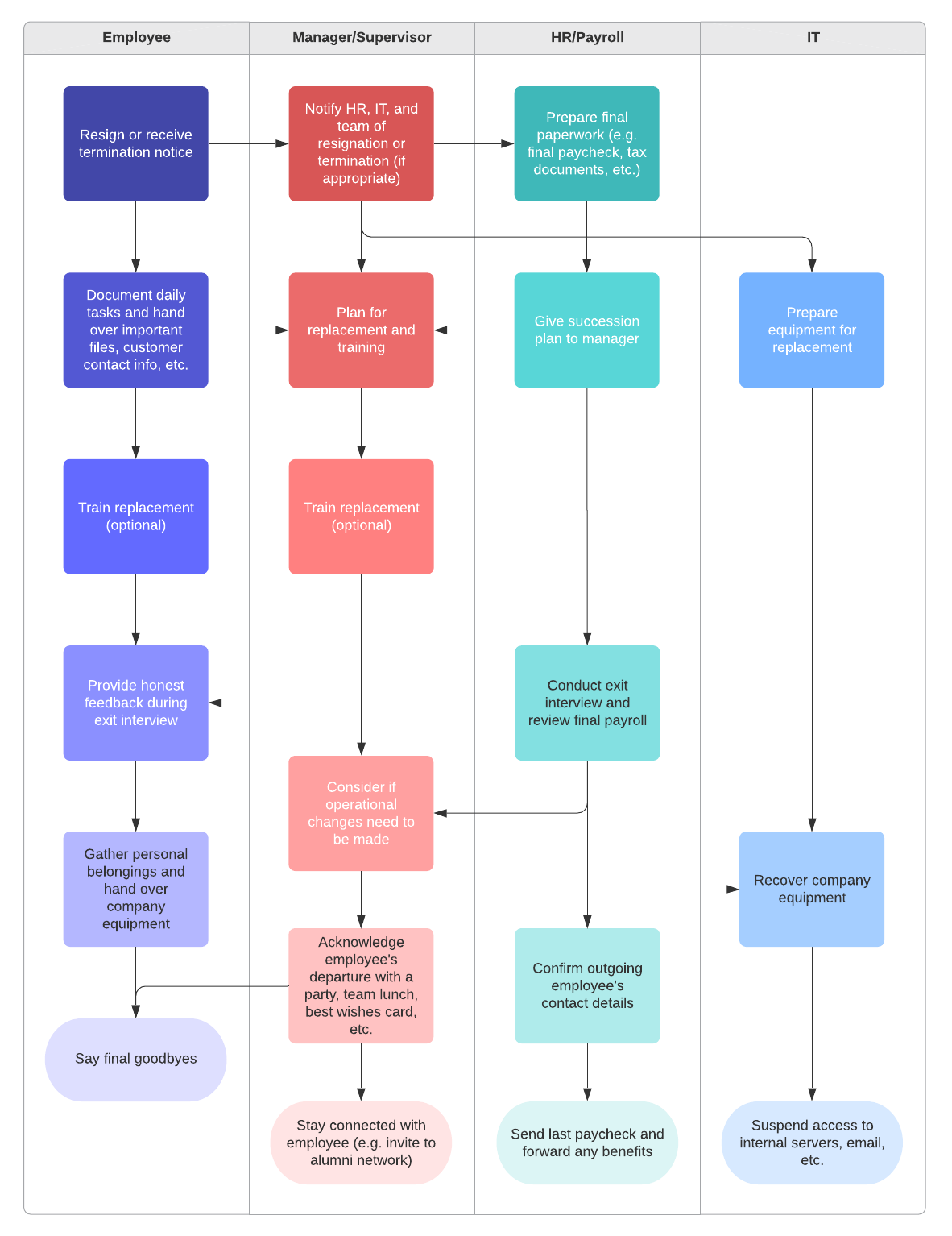
In contrast, offboarding manages the employee experience at the end of their tenure with the organization. Offboarding covers all the steps necessary to successfully part ways with an employee following their resignation or termination.
When done well, a clear offboarding process ensures a smooth transition for both the company and the departing employee.
Why you need an offboarding process
We’ve already touted the importance of creating an employee termination process. But the truth is that the work isn’t done when the termination (or resignation) is official. What comes next is a crucial part of your employee lifecycle and organizational success in the long run.
There is a laundry list of to-dos for both HR and the employee during the exit period. The employee will need to return any company-issued resources (such as a laptop or mobile phone), hand in their ID badge, and clear their desk.
HR will also have to handle all the necessary paperwork (such as benefits documentation, signed resignation, NDA agreements, etc.) on top of managing the team response and monitoring morale.
Without a clear process in place, it’s easy for important steps to fall through the cracks—opening up the company to potential security risks or legal threats, and possibly damaging the relationship with the outgoing employee.
An offboarding process makes this transition easier for both parties.
Offboarding helps companies:
- Mitigate security risks (e.g., reclaiming company assets and revoking employee access to company accounts).
- Prevent legal issues (such as contract disputes, compensation, or wrongful termination).
- Manage the logistical challenges of transitioning the work/team.
- Get valuable feedback for improvement.
- Part ways on the best possible terms.
While offboarding does take extra effort, the reward is worth it. The Aberdeen Group found that companies who invested in a formal offboarding process saw higher employee retention and engagement.
Offboarding best practices
The exact process you follow will differ based on the size of your company, the employee’s position in the company, and the nature of their departure. Use the following checklist and best practices as a guide to create your own custom offboarding program.
Note: The offboarding process and timeline will be different for layoffs or terminations.
Phase 1: Manage the resignation process
When an employee tenders their resignation, it’s time for HR to jump in and begin the offboarding process.
- Document the contract termination: Have the employee sign a formal letter of resignation for your records.
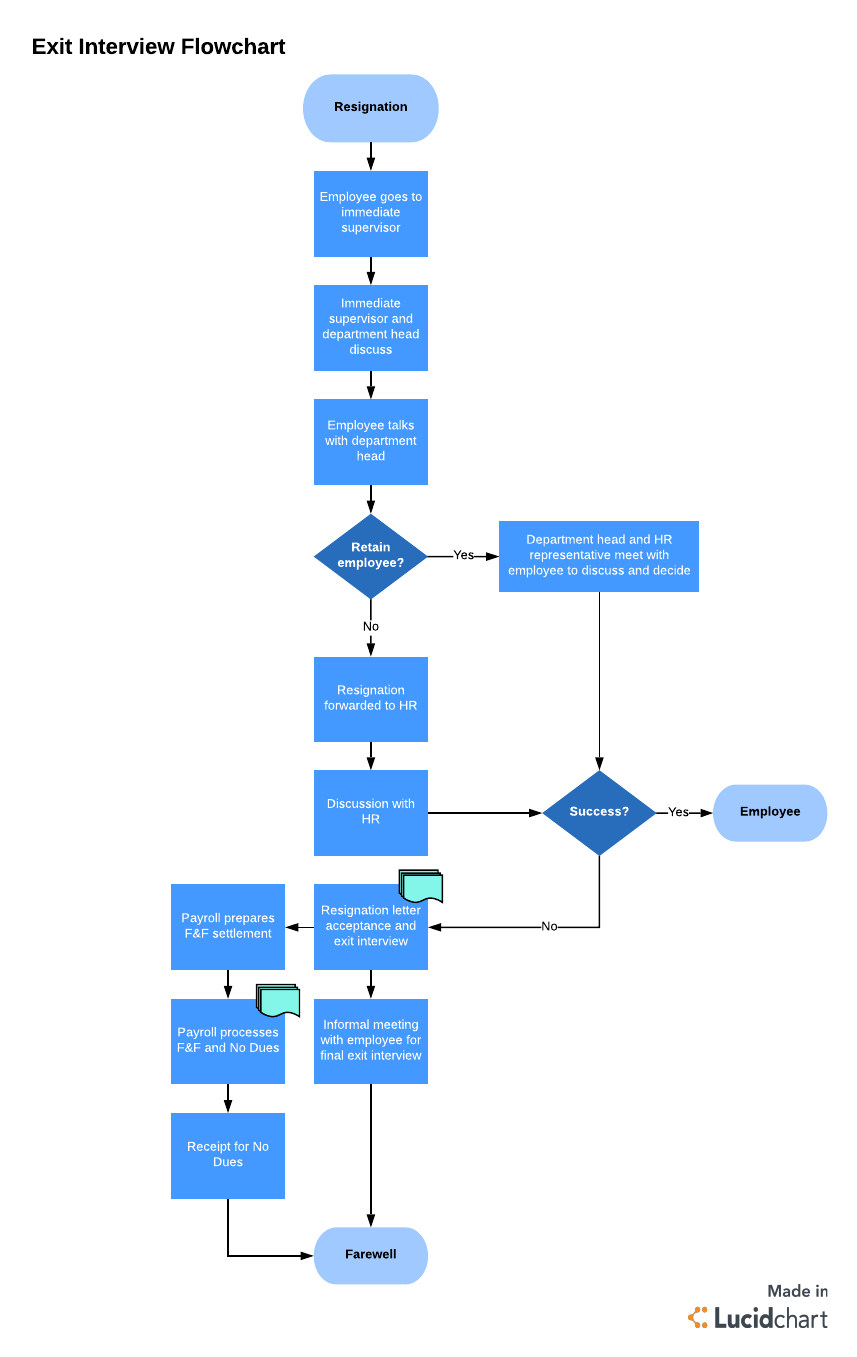
- Schedule an exit interview: Plan a time to meet with the employee before they leave to get feedback on their experience with the company, their role, and reasons for leaving. The exit interview is one of the last interactions the employee will have with your organization, so it’s important to make it a priority and come prepared.
- Notify their team: Don’t let gossip get ahead of you. Let the team know of the employee’s upcoming departure and monitor the team’s reaction and needs. Keep lines of communication open to ensure the team is supported and confident moving forward.
- Communicate with clients: If the employee was client-facing, create a plan of action for notifying their clients and managing the client handoffs (e.g., identify who will be taking over the accounts and make sure they have the information and resources needed for a smooth transition).