Tips on maintaining a state of high performance
Maintaining a level of high performance requires a constant commitment to adaptation. Usain Bolt only maintains his speed by continually working on his technique, optimizing his training, recovering from his training, and adapting his training to reach new heights in performance.
These principles apply to the way work gets done, too. Even the most buttoned-up project managers and expert Agile teams know that product development rarely goes entirely according to plan, and even the best sprints can leave room for improvements in process, mindset, and technology.
Focusing on high performance rather than a final destination can help your team find motivation and satisfaction in the journey to make incredible, worthwhile products. Here are a few tips to help your teams stay agile, recover from setbacks and changes, and stay motivated during the product development process.
Focus on morale
As Lyssa states in her book, Agile frameworks are designed to be simple and easy to set in motion. But without proper management, they can also make teams feel like they're racing from one sprint to another, always making progress but stuck running laps.
Notice what motivates your team, and notice how these motivations vary across each member of your team. Some may find a lot of intrinsic satisfaction in a job well done and a sprint complete. Some are self-motivated by personal growth and learning. Others may need more extrinsic or external motivation.
Once you understand your team's motivations, you can establish processes, incentives, and even recurring or one-off events to look forward to. Now and then, take the reins off your team and give them space for more divergent ways of thinking.
Hackathons are a popular way to think beyond current workflows and focus on innovative solutions to new or existing problems—they're also not reserved for developers or product teams. They can be excellent opportunities for cross-functional collaboration, which may spur new ways of thinking, too.
High performance may mean different things to different team members, but establishing a shared vision on what success means will help you collectively get through hard times and challenging sprints together.
Establish a long-term vision
Just like trained athletes, high-performance teams visualize their progress and how they'll deal with situations that arise in their journey toward a shared objective. It's important to establish a long-term vision of what your team is working to achieve, but it's equally important for Agile teams to be open to the final product looking different from what you might expect.
Focus on milestones and checkpoints to give you proof points of your progress along the way. Strategies and benchmarks like a Definition of Done (DoD) can help your team stay flexible, productive, and focused.
Deliver consistent feedback
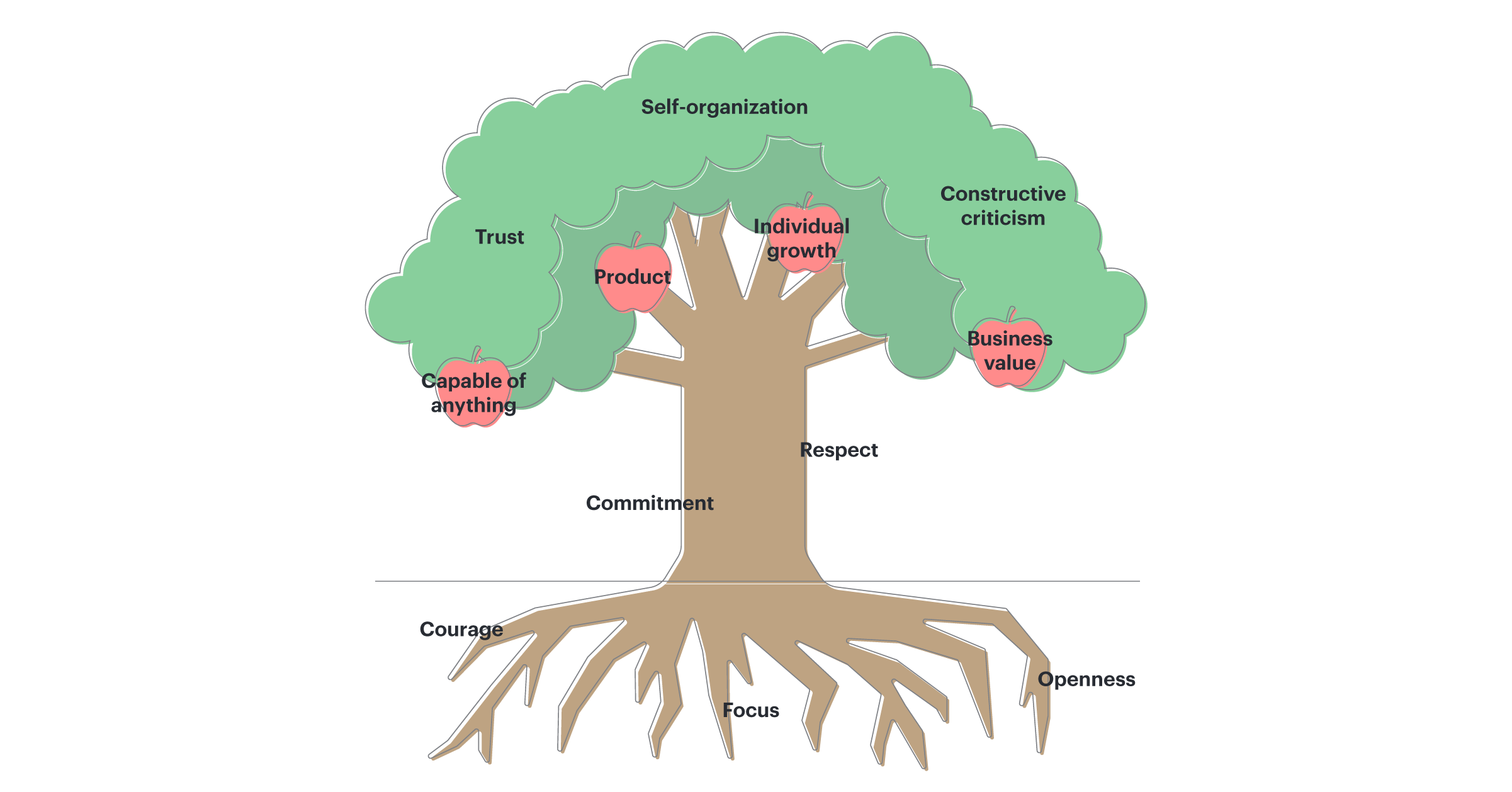
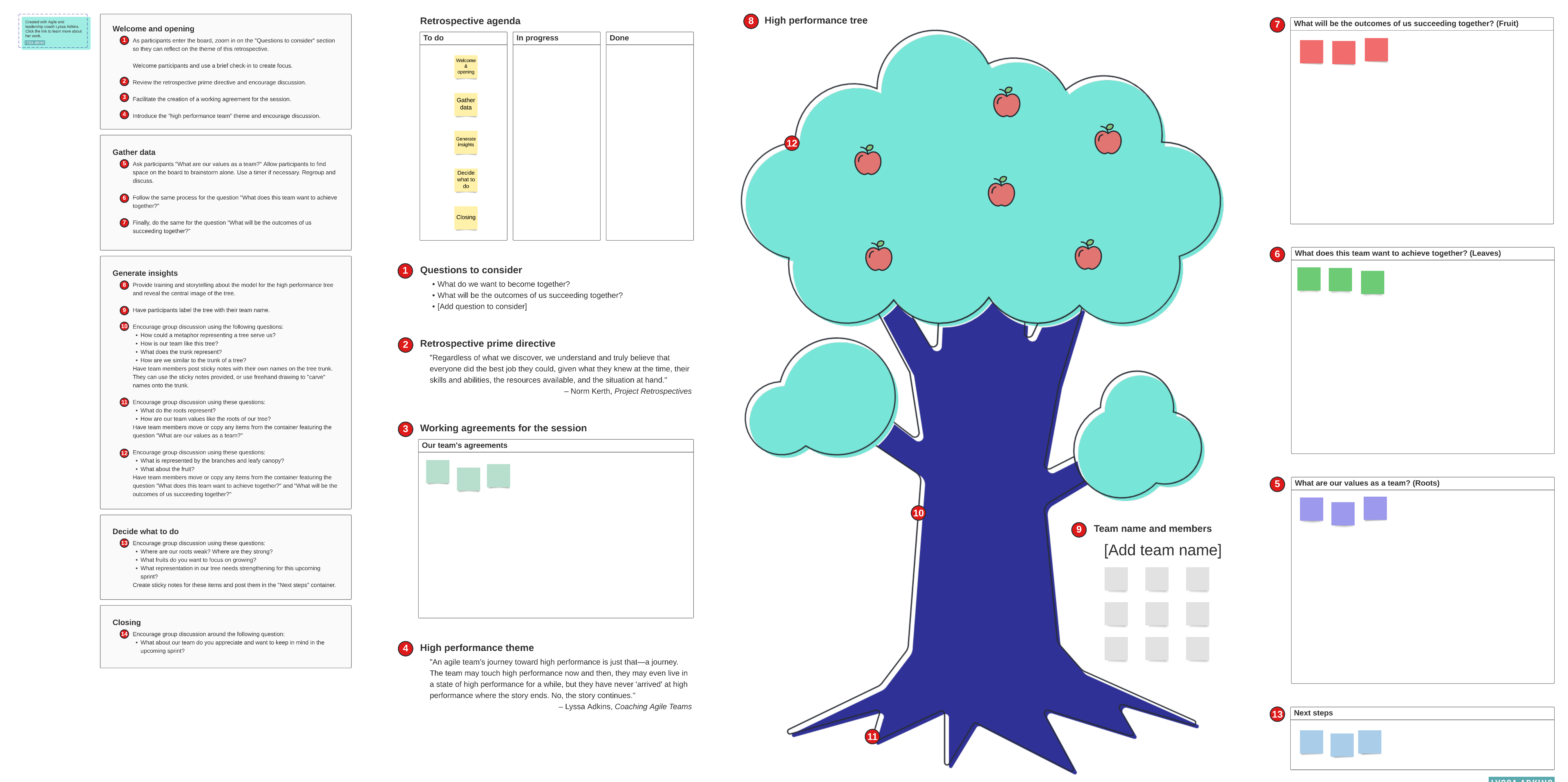
High-performance also relies on regular checkpoints, consistent feedback, and ongoing evaluation of your team's progress. The performance tree template can help you deliver feedback visually as a project manager. Teams can effectively:
- Evaluate the holistic experience of a recent experience or project, from the roots to the leaves to the fruit;
- Identify what went right and what could have been done better;
- Help team members visualize how they can adapt to deliver an even better outcome.
Remove roadblocks
Sometimes, roots get gnarled. A late frost can kill budding leaves. Not every piece of fruit is perfect, and projects rarely go exactly according to plan. However, the most fruitful trees—and teams—adapt to these threats. And the most successful project leaders coach teams to expect roadblocks along the way while using visuals like the performance tree template to help their teams better anticipate challenges and stay agile.
How to create the expectation of high performance as a leader
You can state your expectations and hope for your team's motivation and behavior to meet that expectation—or you can establish a culture where high-performance expectations are simply a part of the way teams interact and work gets done.
The Lucidspark high-performance tree template involves the entire process of high-performance team growth, from establishing roots and values to cultivating productive behaviors and collaboration to bearing the fruit or success of the project. The high performance tree template and metaphor helps teams visualize their contributions to the whole and the process of growth, effort, and creating shared ideals.
As a leader, the high performance tree template can help you continuously communicate high-performance expectations and navigate what goes into that process.