Scale faster as a business
Business processes that worked great when a company was small and had fewer employees don’t always work in the future. It’s why adding twice the people to a workforce or doubling production speed on the line doesn’t necessarily assure 200% growth. Scalability can be tricky.
With process improvement, you can better determine whether your company’s current infrastructure, business systems, and employees are able to accommodate growth. Manual processes might require automation. Systems may need integration. Facilities may need a complete upgrade.
Without continuous process improvement, realities like these may be overlooked entirely.
Respond to industry changes
Seizing new market opportunities and getting ahead of the competitors in your industry takes more than initiative or desire. It demands a greater awareness of one’s business strengths and limitations.
The importance of process improvement techniques in adapting to industry changes is critical. A great example of this is how Netflix changed its process for delivering movies to subscribers. In 2007, while its DVD-by-mail model was adapted by competitors (including its brick-and-mortar rival, Blockbuster), Netflix strategically shifted its emphasis to streaming.
The benefits of process improvement in this instance would include the adoption of Netflix on several platforms, faster expansion into international markets, and eventual market dominance.
Meet compliance requirements
Continuous business process improvement helps keep businesses aware of compliance-related changes or updated security protocols. Building compliance into process improvement helps to avoid eleventh-hour attempts to implement regulatory requirements or document procedures.
Being proactive with process improvement also helps avoid compliance delays and costly fines.
Add new technologies effectively
Process improvement also allows for businesses of all sizes to better assess software needs in support of new developments and organizational requirements. Without continuous business process improvement, many organizations might waste time, money, and effort to develop a custom web application when a commercially available software program will solve their need.
Increase employee satisfaction
A work environment that lacks business process improvement can prove highly demoralizing for even the most hard-working or loyal employees. The more time team members have to focus on the critical aspects of their job instead of doing repetitive, tedious tasks, the better.
With better processes and a happier workforce, productivity and revenue will also improve. By automating data entry and order taking, more resources can be directed to profitable activities.
Much happier customers
Automation and the continuous improvement of a business process can also improve response times, order-fulfillment accuracy, and consistency of service—increasing customer satisfaction.
Happier customers are also more likely to recommend products and services to friends, family, and colleagues, helping to differentiate your business from competitors. Loyal customers mean repeat business and steady sales for years to come, reason enough for process improvement.
Types of business processes to improve
From the most complex to the most basic, any process can gain from continuous improvement. Each designed to streamline how work is done, business processes can be formal or informal.
Formal processes
Encompassing safety guidelines, financial matters, legal issues, and other sensitive functions, formal processes hold particular importance for businesses and comply with rules or regulations.
In most instances, formal processes are well documented with established steps to follow. An example of a formal process might include how expenses are submitted and reimbursed or how a customer is acquired by your organization, onboarded, and assigned to an account team.
Informal processes
In contrast, informal processes are often instituted by individuals or teams within a business to complete certain tasks. Even if they lack written instructions or rules, they’re still highly valued. An informal process might include who signs for a package in the absence of a receptionist or the unspoken rule about the last person to use the printer being the one to refill it with paper.
When and how to improve a business process
Process breakdowns rarely happen overnight. With continuous business process improvement, it becomes easier to isolate, identify, and resolve issues within your organization. Inefficiencies and waste are often the most important to tackle first. If there are bottlenecks causing delays in fulfilling orders or servicing accounts, they must also be addressed immediately. However, as a general rule, the sooner you act to improve a failing or outdated business process, the better.
Mapping out a process
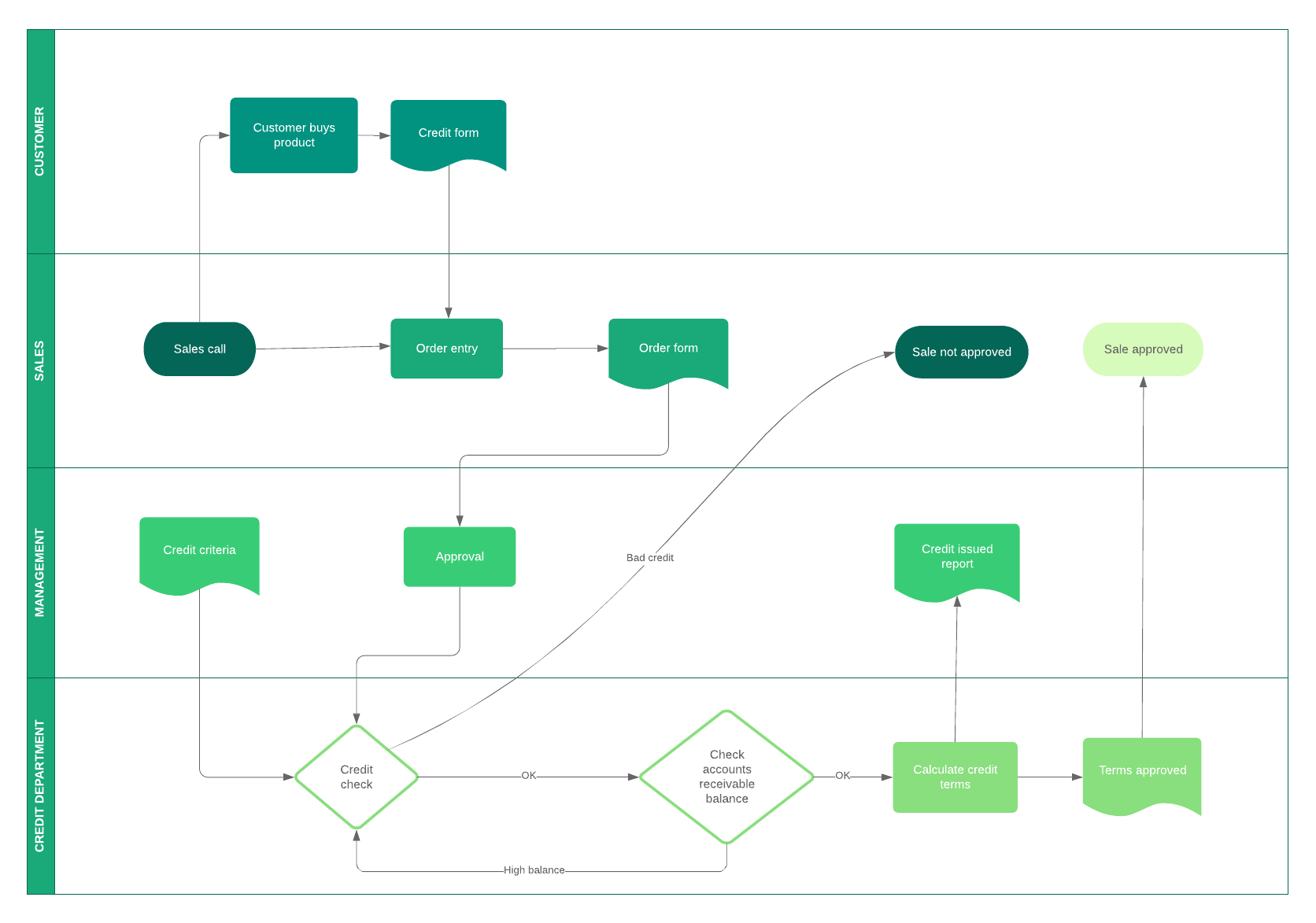
After you’ve determined which process to improve, it’s helpful to document the process with a flowchart or other diagram. Participation by all involved (or affected) by the change in process is recommended to help ensure nothing vital is overlooked—including any unexpected sub-steps.
If the process is a complicated one, mapping it out may span a few days’ time. Plan accordingly.