2. Customer validation
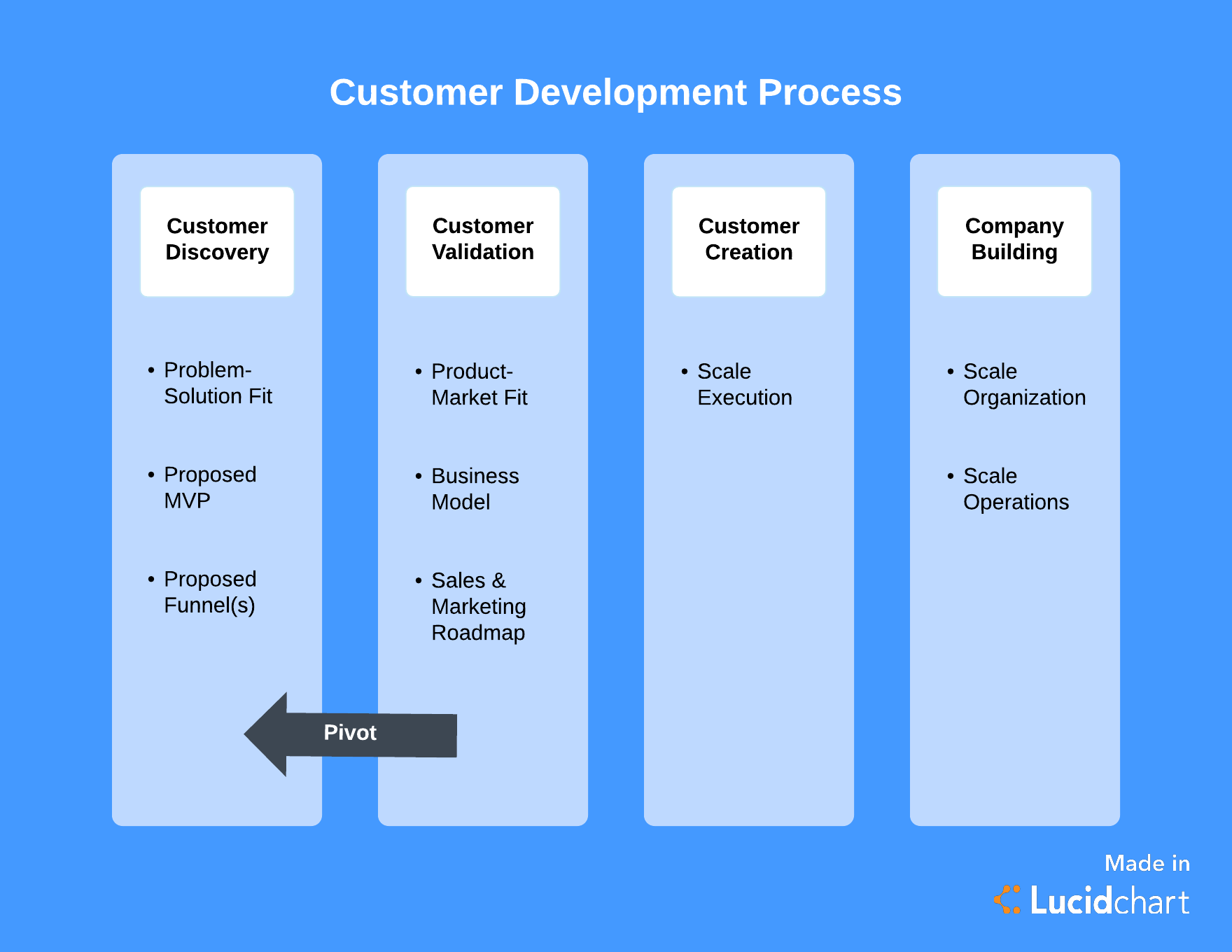
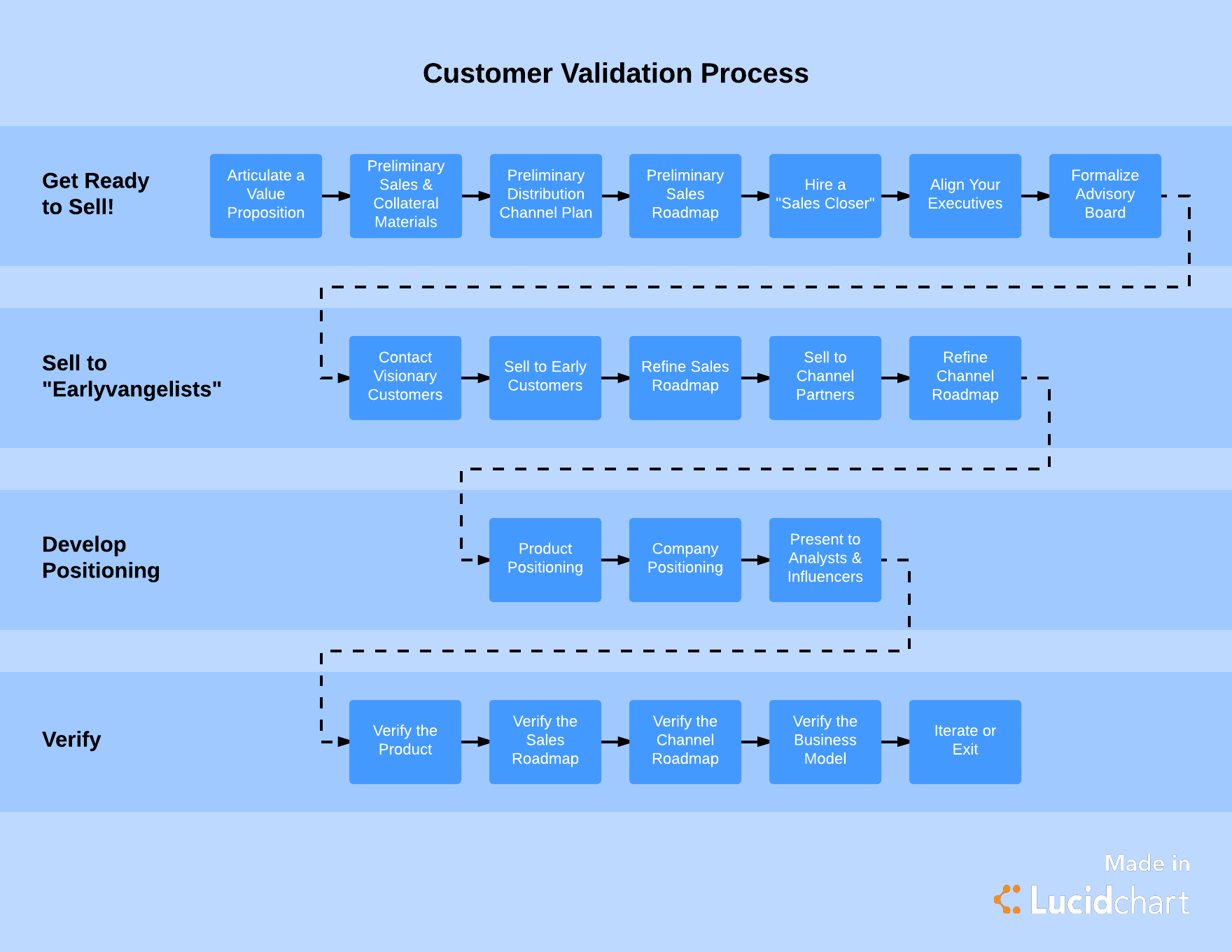
Now that potential customers have verified your concept, you can prepare to sell. During this second phase, you’ll develop a repeatable, scalable sales process as you sell to “earlyvangelists,” or visionary customers who immediately understand the need for your product or service. Use the insight you gathered from customer discovery to develop the materials you need, including a business model canvas, value propositions, sales collateral, and product positioning.
If you look to other startups for guidance, keep in mind that sales, marketing, and business development will radically change depending on which of the three market types you go after:
- Existing market
- Resegmented market
- New market
According to Steve Blank, this is the step of the customer development process that shows you whether your business has a future. That decision is always for the business owners and stakeholders to make—after all, other factors like capital and overhead will also affect your business’s viability.
However, failure at this stage doesn’t necessarily mean it’s the end of the line. For startups entering the marketplace with just one product or service, this is the time to turn around if there isn’t enough demonstrable customer interest in what you’re selling. Revisit the first step if needed to make sure you have the necessary buy-in.
3. Customer creation
At this point, you should see quantifiable demand for your product in the marketplace, so shift your focus to increasing that demand. Make your product and business sustainable by figuring out how to scale, or continue to profit and function efficiently with growth.
Continue listening to feedback, watching industry trends, and adapting so you can both offer the best product you can and retain the customers you’ve earned. This phase is less about exploration and more about maintaining the momentum you already have. Though the details may diverge, the main point of this phase is to guarantee sustainability for your business through careful growth strategy.
4. Company building
As the final phase of the customer development process, customer building “transitions the organization from one designed for learning and discovery to a well-oiled machine engineered for execution.” This phase could include defining roles, creating formal departments, and hiring more people to help your bootstrapped, loyal team accomplish bigger goals.
Steve Blank created the customer development methodology with startups and their unique needs in mind, so it’s okay if your company doesn’t reach this step the first time you move through the customer development process. Some companies may need to turn around and redirect focus after customer validation or customer creation, and others take a long time to reach this “final” phase.
Use Lucidchart as you create timelines, org charts, onboarding plans, and other documentation that will help you build your company.
Use Lucidchart to guide your customer development
If you start your business with the customer development methodology in mind, you’ll find the right customers and solutions to make your startup a success. Sign up for Lucidchart to track your progress and adapt along the way.