Break the ice with new hires
It can also feel intimidating for new employees to break into existing workplace social circles. Recent polls have found that quality friendships at work have a direct link to job satisfaction and engagement. Employee satisfaction skyrockets nearly 50% when a worker develops a close relationship on the job. Employers can capitalize on this effect by making a proactive effort to get new hires involved in company culture.
For example, before you send new hires into a conference room for hours of training, give them the opportunity to see their new workspace and meet their co-workers. And beyond orientation day, give new and tenured employees a chance to break the ice and get to know each other, whether it’s a monthly new hire lunch or an after-work event.
Break up meetings
Although new hire orientation often happens in one day, avoid overwhelming new hires with too many facts at once. Split up the content over time, use visuals to show key information, and schedule breaks in between meetings so that information is easier to digest and remember.
Ask for feedback
Recognize that you will need to continuously iterate on and improve your orientation process to set new employees up for success. After orientation, send out a survey to new hires or ask them directly to provide feedback. Talk to people managers as well to gauge whether new hire orientation effectively prepared these new employees to fulfill their roles and follow company policies.
Key benefits of building an orientation process
To put it simply, a solid new hire orientation process will boost your bottom line. Thoughtful and thorough employee onboarding will increase retention, boost productivity, and improve your company’s culture.
Reduce employee turnover
58% of employees who go through a structured orientation process are more likely to still be with the company after three years. When you take into account all of the time, money, and energy that goes into recruiting new employees, it makes sense to invest your dollars on the employees who are already in the door, so you are less likely to have to keep recruiting new ones.
When you increase retention, you also make your company orientation a lot easier: Employees who have been with the company for longer can help train new employees and make them feel welcome. If your retention numbers are low, on the other hand, employee onboarding becomes all that much harder.
Boost productivity
A study by the Aberdeen Group found that 15% of respondents cited a lack of orientation processes as contributing to their decision to quit. The same group also found that 62% of companies with onboarding programs reported a higher time-to-productivity ratio. New hire orientation and onboarding is the perfect time to make sure the employee is aware of their responsibilities and to give them a safe space to ask questions and, more importantly, to have those questions answered quickly.
For new hires, the most frustrating part of a job can be figuring out who to ask questions to and, depending on the company culture, how to ask questions. An effective orientation process will make a new hire’s time more productive by getting them up to speed quickly on internal processes.
Improve company culture
While the orientation process for new hires can offer a safe space to ask questions related to internal processes, it can also be a way to share more about the company’s culture. Maybe you have annual retreats where you bring in industry thought leaders or employees have a book club that meets every month.
Following an orientation process can be an excellent way to help new hires feel welcome and connect to the company in ways that align with their passions. By making new hires feel welcome on day one, it’s much more likely that they will feel supported and ready to excel.
Visualize your orientation process with Lucidchart
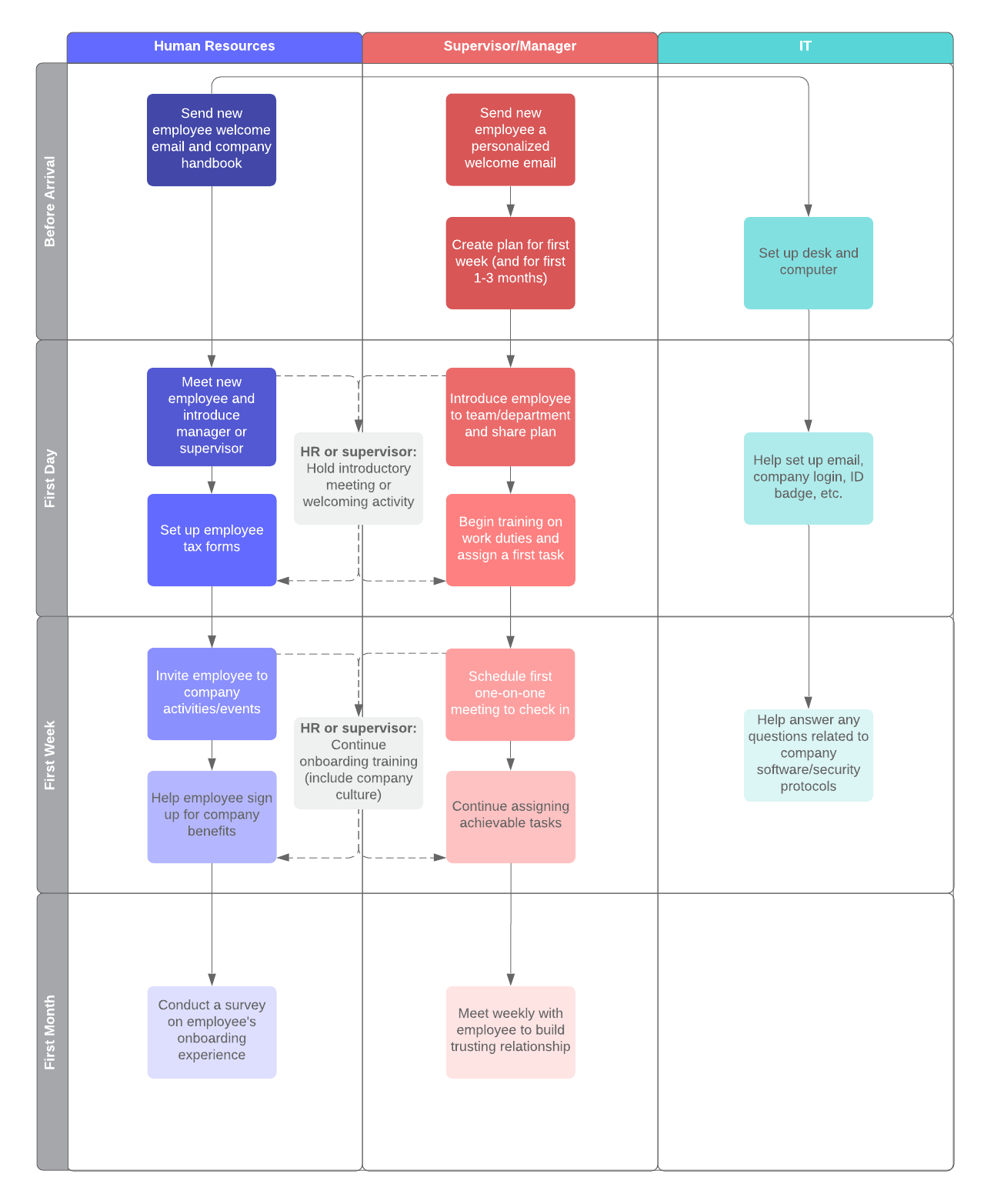
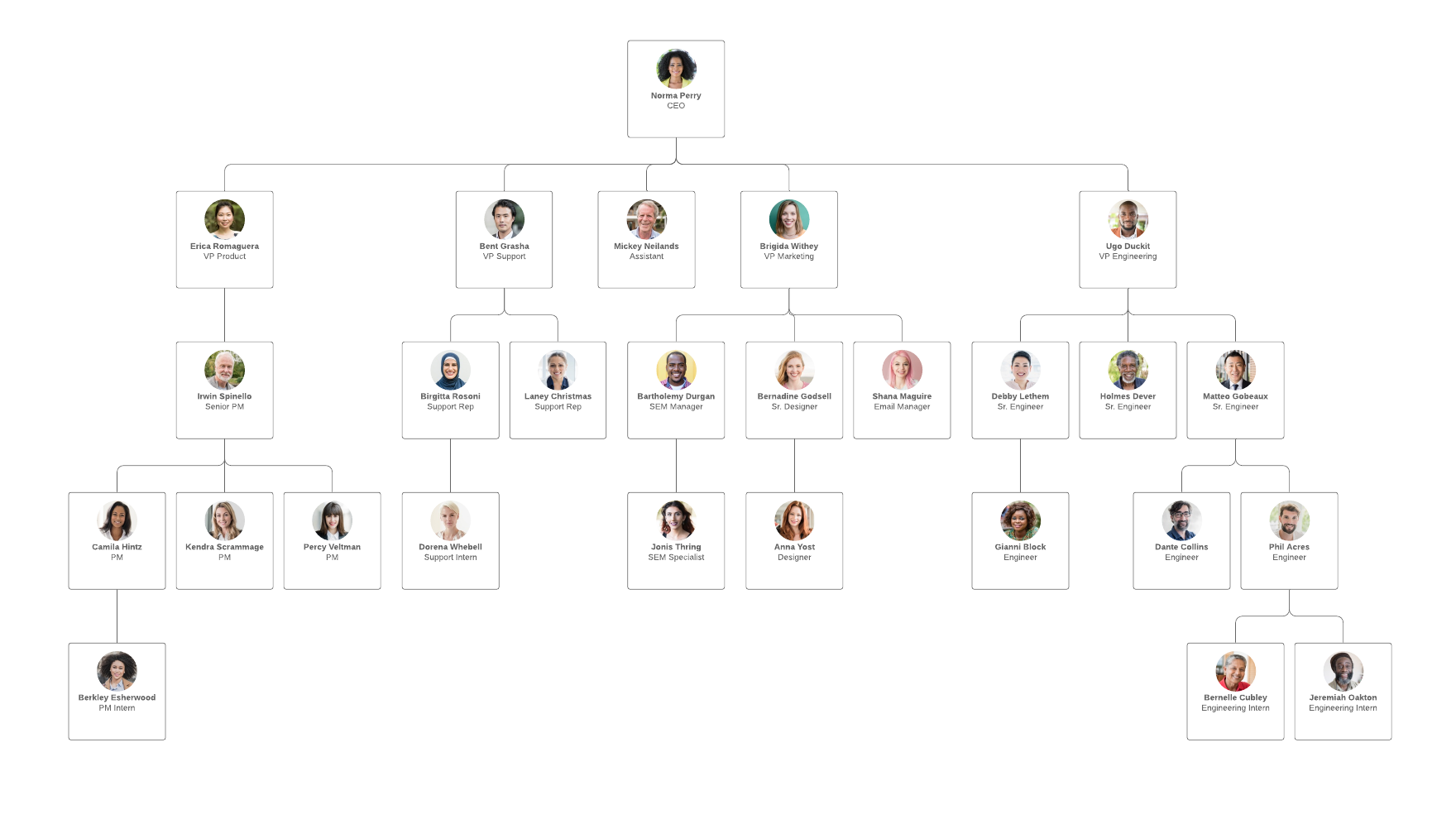
Throughout the orientation process for new employees, visuals can help them quickly grasp and understand new concepts and company information. You can create flowcharts and process maps using Lucidchart to better illustrate the orientation process, as well as your company and its culture. Along with helping new hires become acquainted with your company, our visual workspace can also help HR and IT departments better prepare for these incoming employees, such as mapping out processes for provisioning hardware.
With diagrams that are storable in Google Drive, Confluence, and other apps for future reference or self-guided orientation training, Lucidchart helps you streamline the orientation process, improve employee satisfaction, and boost your bottom line.