What is the difference between a process and a standard operating procedure?
Processes and procedures each include step-by-step instructions to help you to correctly perform a specific task. However, process documentation is a high-level overview of routine operations while a standard operating procedure is more granular— adding more detail, specific assignments, and workflows to conform with company or industry standards. In other words, a process tells you what to do and an SOP tells you exactly how to do it.
For example, you don’t need an SOP to program a drum machine because there are too many variables. There are no standard drum sounds that you have to use to create a beat. All you need is a step-by-step process describing how to select a time signature, a tempo, and the specific sounds you want to use and how to arrange those sounds in a pattern that sounds good to you. This basic process leaves it up to you to unleash your own creativity.
An SOP also describes what needs to happen for an outcome but includes more detailed steps and information such as who, when, and where.
For example, let's say you need to create an SOP for people who produce release notes. The SOP could include:
- Which information should be included (bug fixes, new features, known issues)
- Which information shouldn’t be included (fixes or improvements that are not customer-facing)
- When information should be collected (how many weeks or days before release)
- Who collects the information (writer, product manager, testers)
- Which format to use for the output (HTML, PDF)
- How the review cycle works (when the document is sent for review, who reviews the document, how much time to review, how much time to implement edits)
- Who needs to approve the document (team leads, product owners, senior managers)
When to create an SOP
SOPs are important for running an efficient and compliant business. They help eliminate uncertainty about how to complete routine work and ensure the right people are doing the right tasks at the right time. While no SOP can guarantee performance, they standardize best practices across the team or organization, improving the quality and predictability of outcomes.
Here are a few reasons you may need an SOP:
- To ensure compliance standards are met
- To meet production requirements
- To ensure the procedure has no adverse impact on the environment
- To ensure safety
- To adhere to a schedule
- To prevent manufacturing failures
- To be used for training
How do you write a standard operating procedure document?
No matter what kind of business you are in, you should have well-defined SOP documents that will help your employees understand how to perform routine jobs safely, in compliance with regulations, and consistently no matter who completes the task.
No official standard operating procedure document will teach you how to write an SOP. But there are steps you can follow to organize your thoughts and plan the most effective path to standardizing your procedures.
Step 1: Begin with the end in mind
Define what the end result or the goal is for the SOP you are writing. For example, if you are writing a document that describes the procedures for closing a restaurant each night, the goal is to secure the building until the prep crew arrives in the morning.
This step does not include details such as cleaning floors or arming alarm systems. You simply want to identify what the procedure will accomplish.
All organizations have processes and procedures that are repeated daily, weekly, and monthly. As you define your goals, ask whether an SOP document is needed for that particular goal. Or, see if an SOP has already been created to accomplish the goal and maybe you just need to review it and looks for ways to improve it.
Ask yourself if there is a specific reason why this goal should be accompanied by a standard operating procedure document.
When you know what you want your SOP to accomplish, it’s much easier to write an outline and define the details.
Step 2: Choose a format
Chances are that your company already has some SOP documents that have been written for other procedures in the past. Refer to those documents as templates for preferred formatting guidelines.
If you don’t have any documents to use as a reference, try one of these ideas:
- A simple steps format: Use this format for routine procedures that are short and easy to follow. In addition to safety guidelines and other mandatory documentation, this type of format is generally a numbered or bulleted list with short, simple sentences that are clear and easy for the reader to follow.
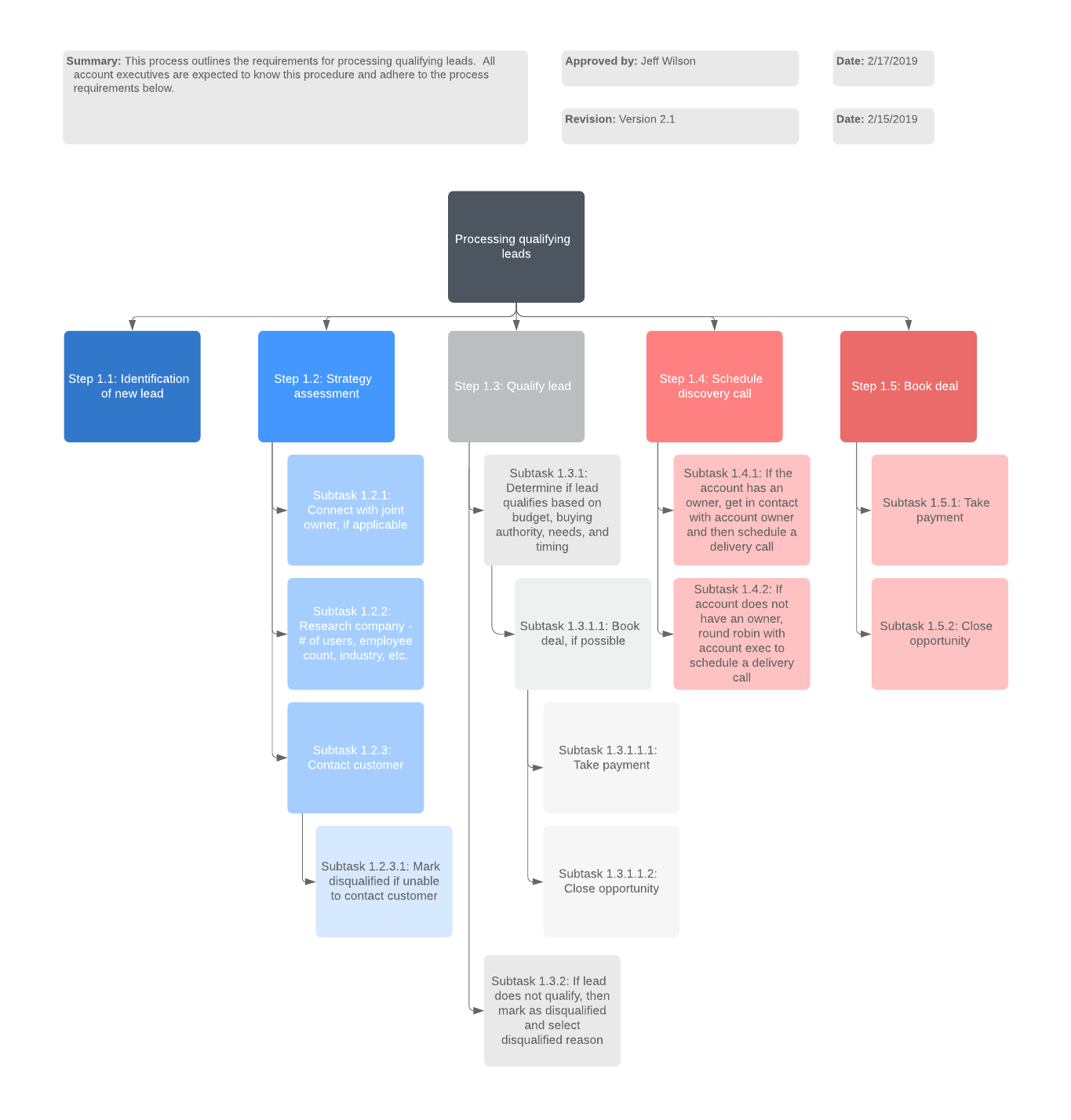
- A hierarchical steps format: If your procedures have a lot of steps that involve decisions, you may want to use the hierarchical steps format. This is usually a bulleted or numbered list of main steps followed by a set of specific substeps.
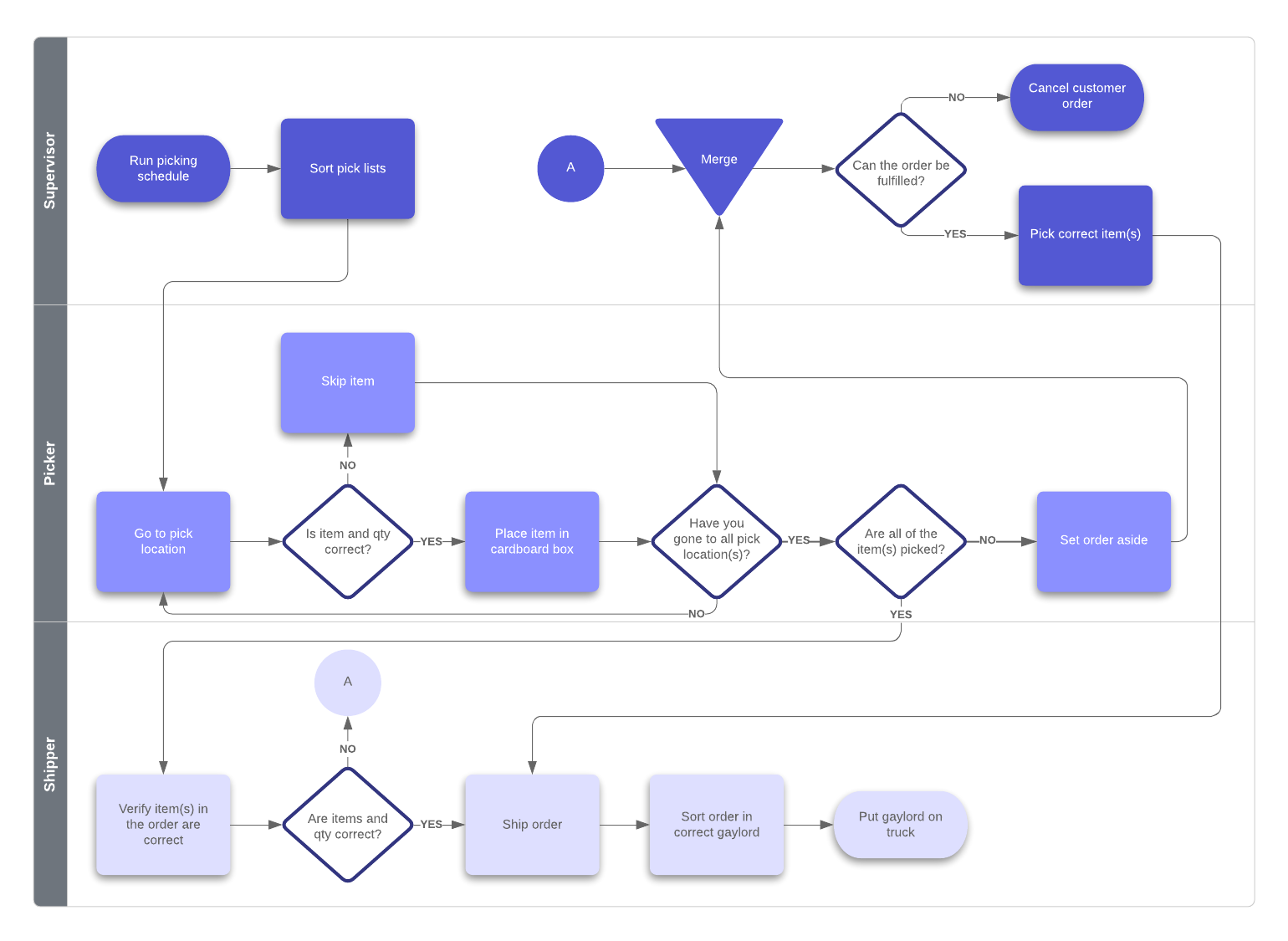
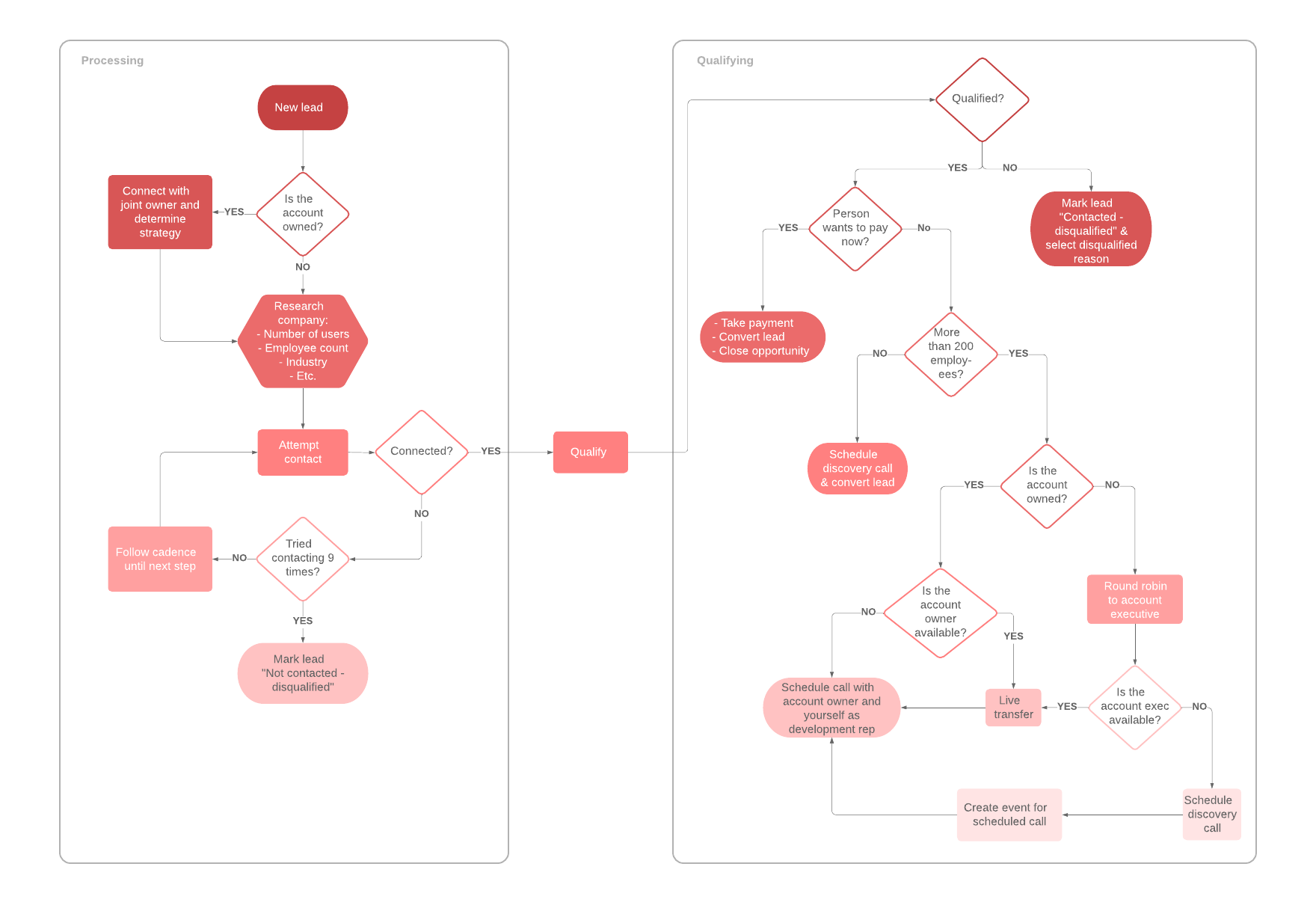
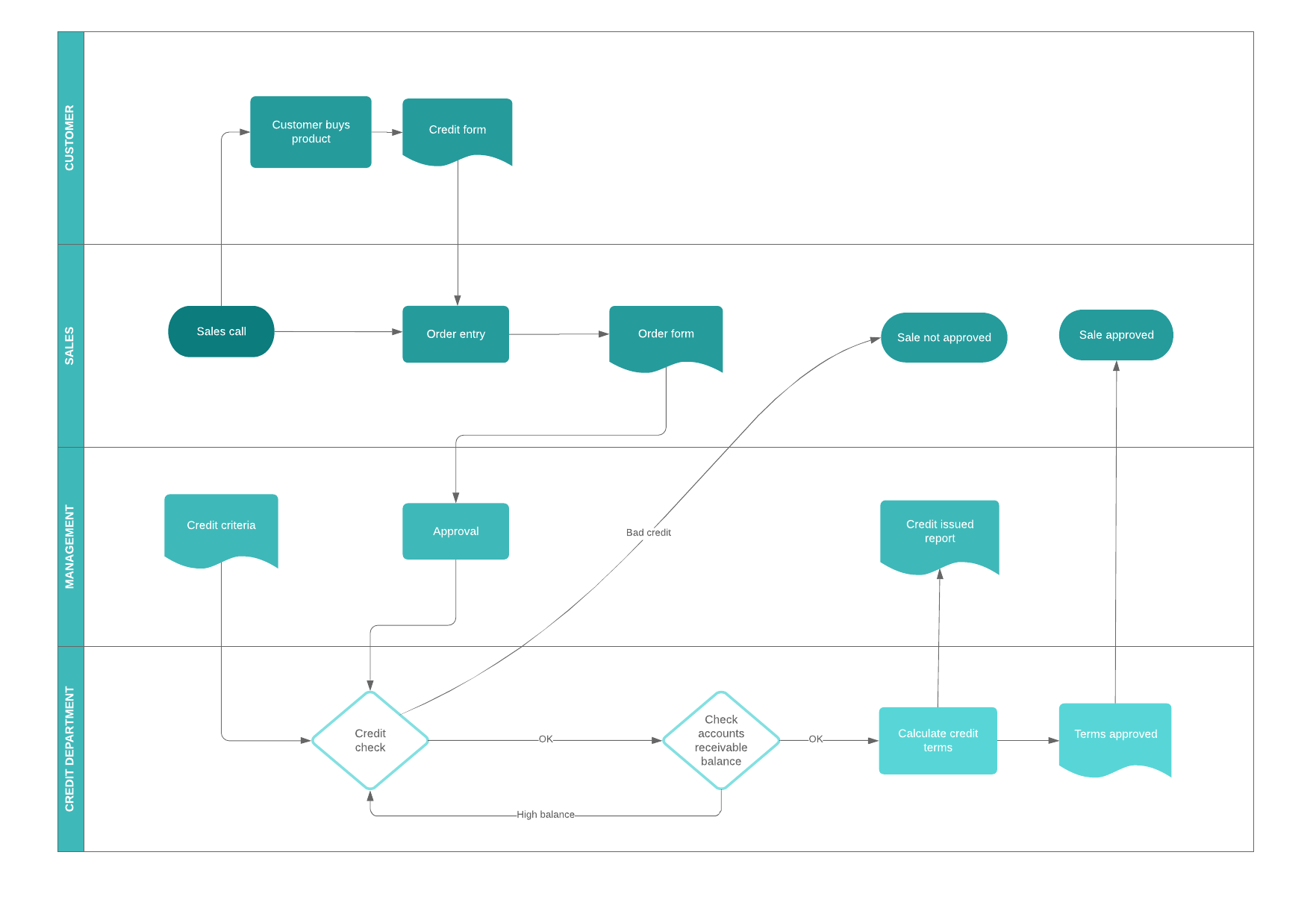
- A flowchart format: Use a flowchart to map out and plan procedures that include many possible outcomes. This is a good choice when the results are not always predictable.
Lucidchart has a library of customizable templates to help visualize your SOP. See our examples that could be included as part of an SOP on qualifying and processing sales leads.