Have you ever attended a weekly team meeting and wondered why the meeting was called in the first place? Say your team leader starts the meeting by saying, “I don’t really have anything to talk about, so this will be a short meeting,” and fifty-five minutes later, the meeting is still going and the team leader is yammering on without really saying anything. No assignments are given and no decisions are made. The only accomplishment is wasting an hour of everybody’s time.
If you have been through this type of weekly team meeting, you should know how important it is that you don’t put your employees through the same type of experience.
While your employees may never look forward to your weekly meeting, the suggestions we present here will help you establish a weekly team agenda to promote team collaboration and keep your team members from dreading the next meeting.
1. Create a weekly team agenda
Merriam-Webster defines the word agenda as “a list or outline of things to be considered or done.” If you don’t have an agenda, don’t have a meeting. There is no reason to meet simply because a meeting is scheduled.
If you truly don’t have much to discuss or share with the team, don’t have a team meeting just to have a meeting. If your business can be completed with an email, send the email and cancel the team meeting.
Prepare a meeting agenda ahead of time
Don’t wait until 30 minutes before the scheduled time to write your meeting agenda or to send it out to your team. If this is truly a team meeting, invite team collaboration to help you prepare. Send out an early draft of the meeting agenda and ask for feedback. If this is your first meeting with stakeholders to discuss an upcoming project, create a kick off meeting agenda outlining what's likely going to be needed from each attendee and their team.
Don’t spend too much of the team’s time in creating an agenda for the weekly meeting. Just be sure to give all team members a chance to look at the meeting agenda and to add items they want to discuss. Knowing what to expect in the meeting will get the team thinking about the agenda topics so they are more likely to participate in the meeting and share ideas.
You probably won’t be able to discuss everything that the team wants to put on the weekly meeting agenda. After you receive some feedback, prioritize which agenda items are most important and table the ones that can wait until another time.
Create an effective team meeting agenda
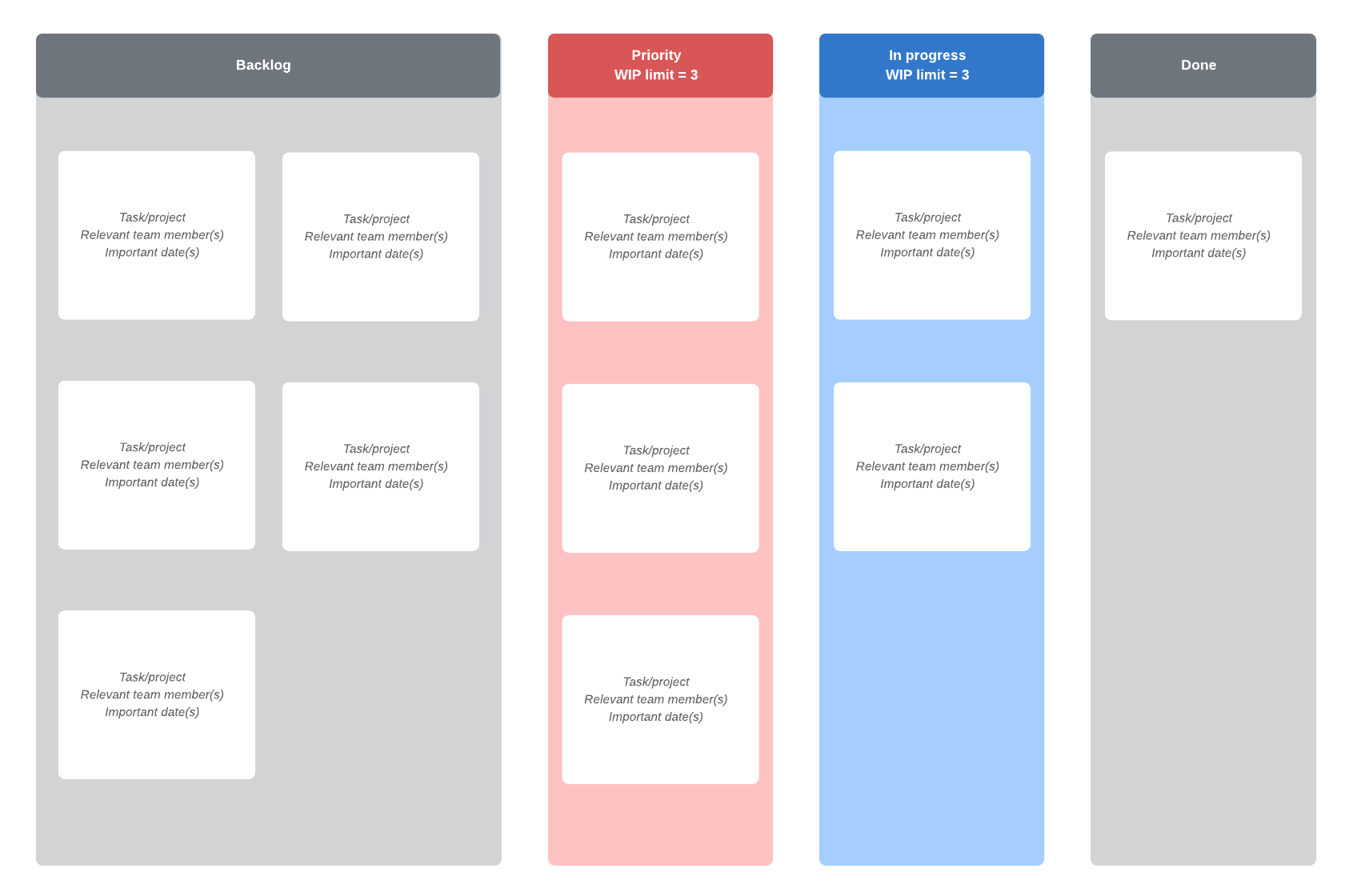
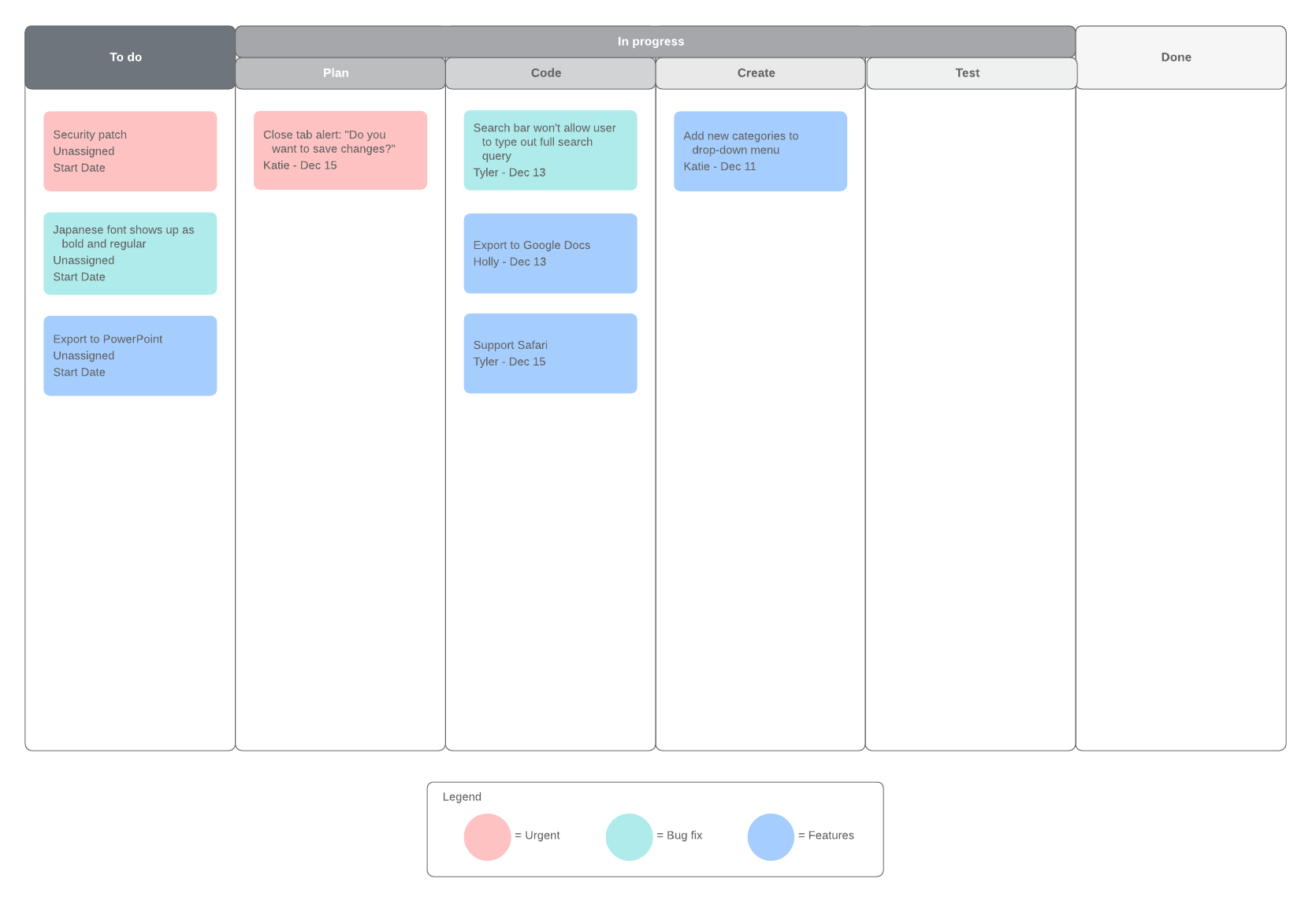
In order to help avoid creating too many meetings, your weekly team agenda should have a purpose. You can use some of the time to get project updates. Just don’t make the entire hour a status update—project status can be quickly communicated in a report or an email. You can even use Lucidchart's weekly project status report template to keep everyone updated on projects.
Your weekly team meeting should be used to solve problems, discuss next steps, and assign tasks. These types of team meeting agenda items have value and can keep the entire team engaged. If your team does not perceive that your weekly meetings have value, they will likely not feel a need to attend.
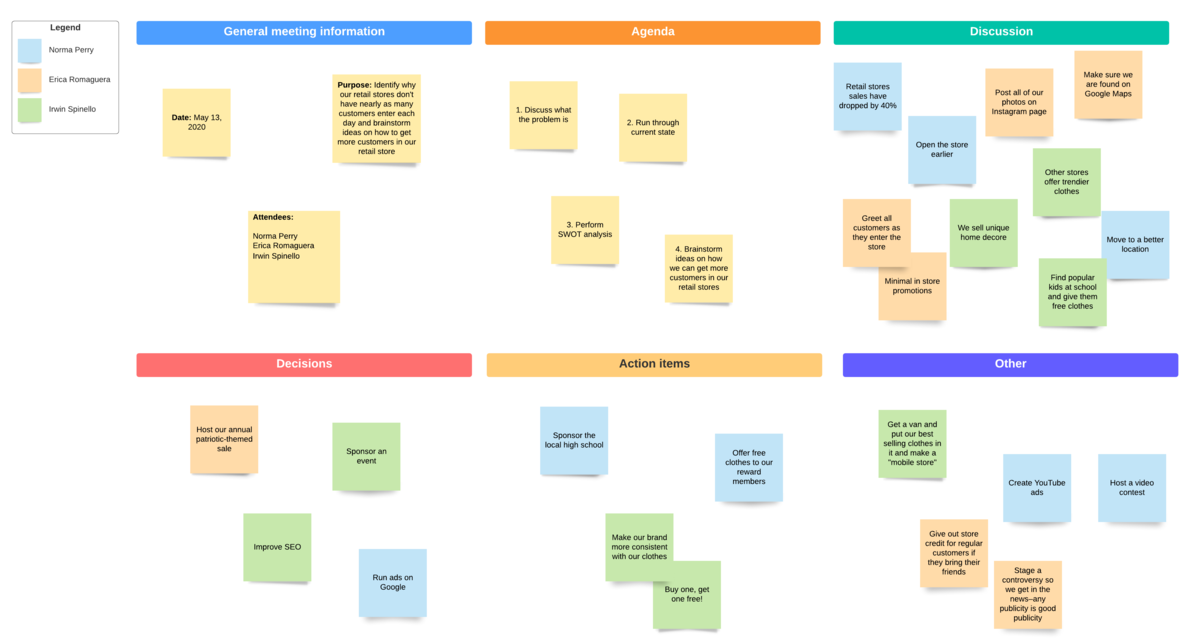
Meetings with a purpose invite more participation and team collaboration. Use Lucidchart to send product roadmaps, process workflows, or other visuals that give your team members necessary context before the meeting or to start a virtual brainstorming session.
Be consistent
Define a meeting planning process that is consistent so all team members know what to expect each week. For example:
- Determine which day you will send out the weekly team agenda.
- Define a specific window of time to allow members to give feedback and to suggest agenda topics.
- Create a finalized meeting agenda based on the feedback you receive.
- Post the agenda, and any other materials needed for the meeting, to the same location at the same time every week so the team can easily find it and prepare for the weekly meeting.
- Use the same format or meeting agenda template so team members know where to look on the document for the information that they need.
Consistency improves workflow and productivity. When your team knows what to expect on a weekly basis, obstacles are easier to overcome. Get started quickly with a meeting agenda template from Lucidchart that's perfect for dispersed teams and remote workers.