2. Clearly define your goals
Seventy-nine percent of teams throughout an organization are siloed, Forrester reports. Because cross-functional teams are drawn from different departments within an organization, they often have different, and sometimes conflicting, agendas or legacy processes that could hinder performance. Without clear alignment on shared goals, team members may find it difficult to cooperate and collaborate.
Project managers can fend off this discord by defining clear project goals. Determine the outcome you’re trying to achieve and map that back to the actual deliverables needed to achieve that goal. Make sure the team is working collaboratively to develop goals that are clearly defined and measurable.
Allowing everyone on the team to contribute their thoughts will not only improve the quality of the goals you set but also help each team member feel ownership in the project.
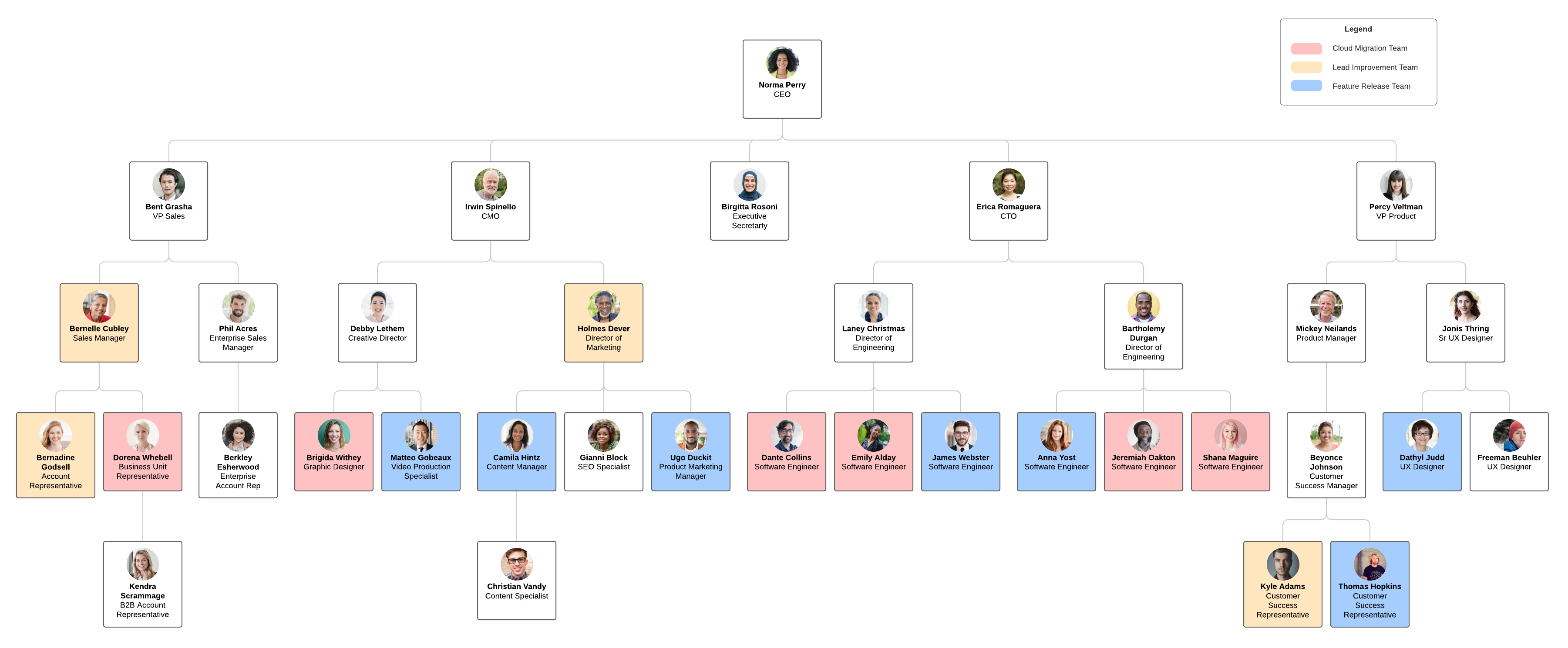
It’s also important to establish clear roles. When your team members understand their role in the process, they’re more likely to work cross-functionally with other teams to get the work done, leading to smarter, more sustainable decision-making.
3. Use the right communication channels and tools
Managing cross-functional teams can feel a lot like herding cats, particularly when teams are used to working independently. But creating greater transparency and streamlined processes is essential for working cross-functionally. According to a survey by Forrester, 46% of respondents said poor business processes result in a higher risk of manual errors, mistakes, and poor decisions.
Collaborative communication requires a shift in mindset—your team members must be able to see how opening up channels between teams will not only improve results but also help them do their jobs better.
Project management and office communication tools can enable much of this collaboration as long as your teams know how to use each tool effectively.
Office communication tools like Slack and Google Chat and meeting technology tools like Zoom can help establish open lines of communication across disparate teams in your company. They can be particularly useful when team members are in different locations.
Project management tools like Asana, Workfront, or Trello can keep teams aligned on workflows and priorities. Cloud storage tools can make it less cumbersome to share and collaborate while also maintaining quality and version control.
A few best practices can help you maximize the effectiveness of these tools and resources:
- Create specific channels for project members to support quick, efficient, and transparent communication on fast-moving or complex projects.
- Use @mentions and chat to communicate with teammates in the correct documents.
- Leave comments in context to quickly find and resolve any issue in a timely fashion.
- Create a single source of truth where all your documents are indexed and connected.
Companies can see huge benefits from merely getting previously disconnected teams in the same room (even if that room happens to be virtual). Set up team-building exercises to encourage open lines of communication. Schedule regular meetings for teams to interact and share their progress and ideas.
Cross-team collaboration can help you identify communication inefficiencies across your organization. Shining a light on these areas and opening clear lines of communication will have a positive, long-term ripple effect across your business and your bottom line.
4. Build trust
Functional organizational structures often fall back on siloed methods of communication or terminology that might not be easily understood across an organization. This corporate jargon can create barriers to communication and make collaboration more challenging.
When building cross-functional teams, encourage team members to reframe their ideas in more simple, general terms that are understandable to anyone in the organization. By developing a cross-functional shared language, you can foster improved collaboration, trust, and creativity.
Here are a few easy ways to build a culture of trust and acceptance:
- Listen respectfully to all ideas.
- Get to know your team.
- Give your team permission to fail.
5. Encourage failure
Let’s take a closer look at that third idea. You may have seen the concept of failure touted by many motivational speakers, business consultants, and entrepreneurial coaches as a key step to success. However, for results-driven project managers, this step may feel counterintuitive.
But research has shown that permitting teams to fail results in more breakthroughs. Create a risk-free culture that encourages failure, iterative processes, and growth. These failures will help cross-functional teams uncover new ways of thinking about old problems.
6. Be ready for conflict resolution and difficult situations
Workplace conflict is common. According to new research from The Myers-Briggs Company, over a third (36%) of people now report dealing with conflict often, very often, or all the time, compared to 29% in the previous 2008 report.
Sometimes managing cross-functional teams means bringing together teams that are traditionally siloed. Think about sales and marketing. While sales and marketing alignment results in more effective marketing campaigns and improved sales, these teams often spend more time pointing fingers at each other than finding solutions.
Building cross-functional teams can often result in people jostling for power, influence, and limited resources. As a project manager, it’s important to be prepared for—and even embrace—this conflict. Differences in opinion are often nothing more than masked opportunities for growth and new ideas.
7. Develop a plan and timeline for the project
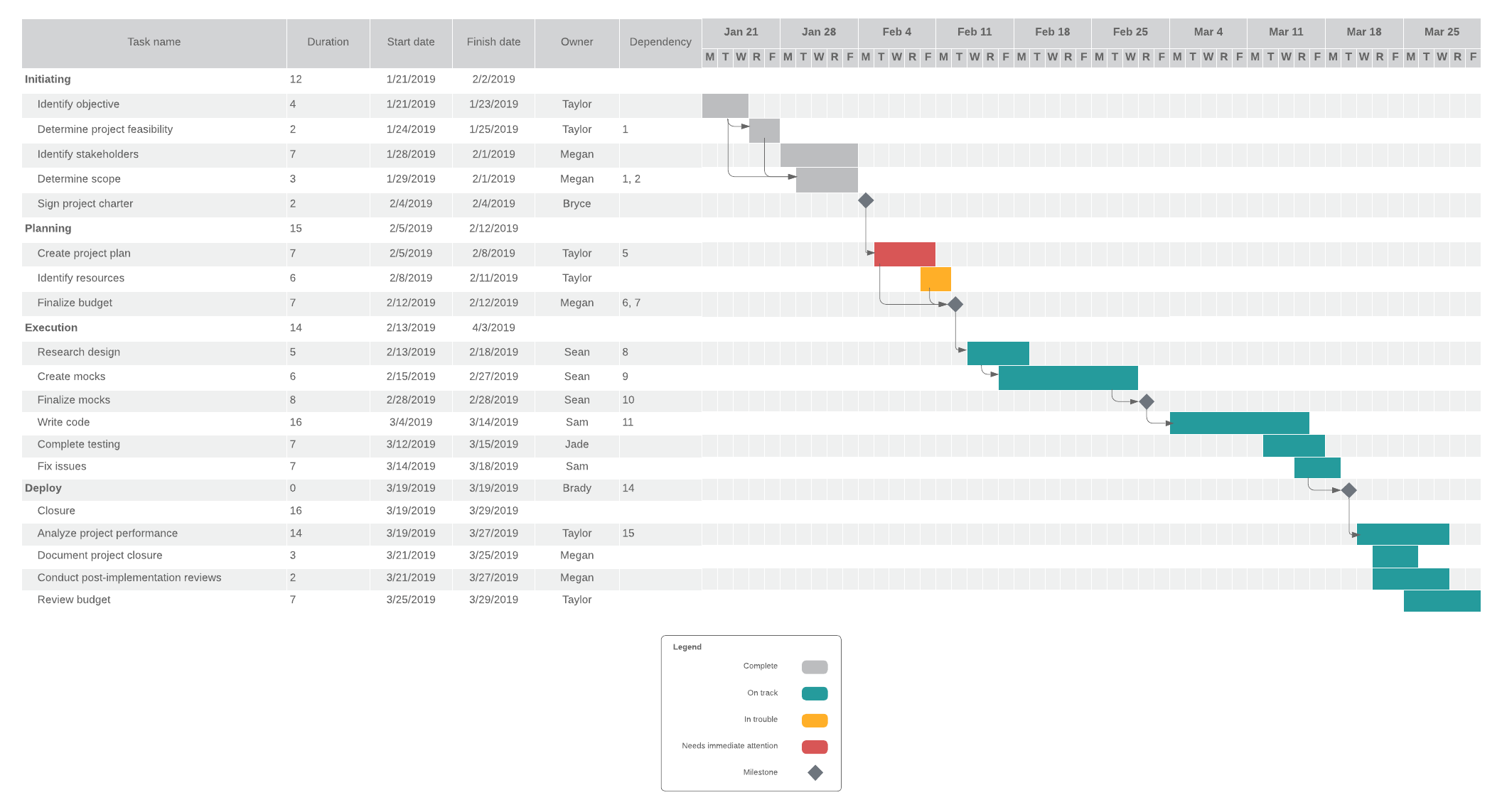
Even the best-laid plans can go awry without a clear picture of where you’re going. Visualize your project from start to finish with the right project management templates customized for the needs of your project and your project management methodology.
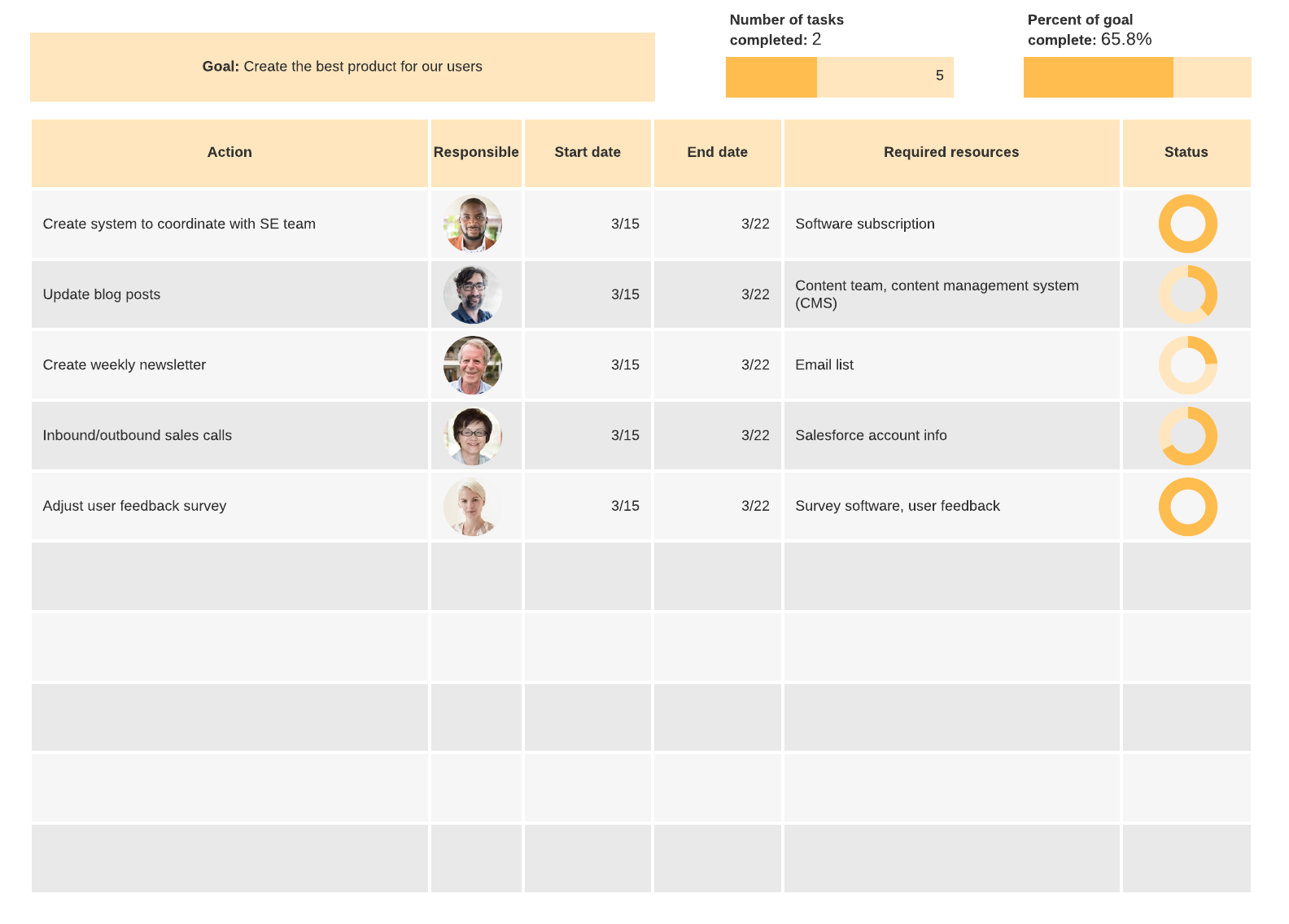
Action plan summary: A comprehensive action plan summary template will give cross-functional teams a holistic overview of project deliverables, timelines, owners, and objectives.