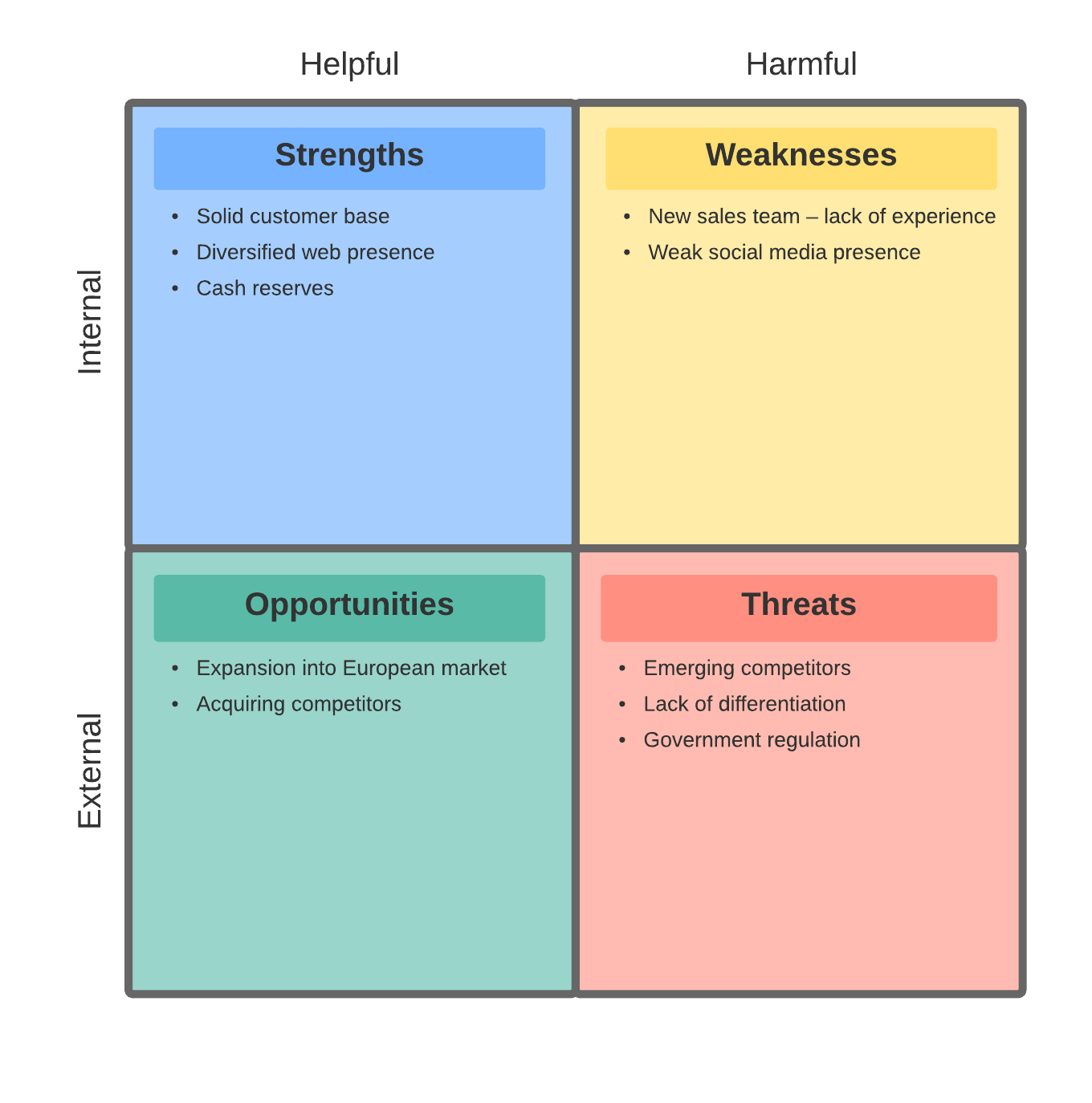
Combining these macro- and micro-level analyses of your business will help you understand a complete picture of your market and your business’s unique opportunities so you can mitigate risks and effectively plan for the future.
When to do a PEST analysis
A PEST analysis is best used when you need a big-picture understanding of your business. Some of the best times to do a PEST analysis include:
- When you’re starting a new business
- When you uncover a major problem
- When/if your business is pivoting
- When you recognize impending changes in one area (e.g., politics) and want to re-evaluate the market
Keep in mind that PEST analyses are macro-level evaluations.
How to do a PEST analysis
Conducting a PEST analysis is fairly straightforward, but it can be time-consuming. Use the following steps to help you conduct your next PEST analysis—just be sure to give yourself plenty of time to do a thorough evaluation.
1. Consider PEST factors that could impact your business
The first step is to research and gather as much information about your organization’s external influences as possible. Enlist the help of other leaders or managers in the business to ensure you have a comprehensive data set.
As you start brainstorming and gathering data, consider the following list of PEST examples to guide your research:
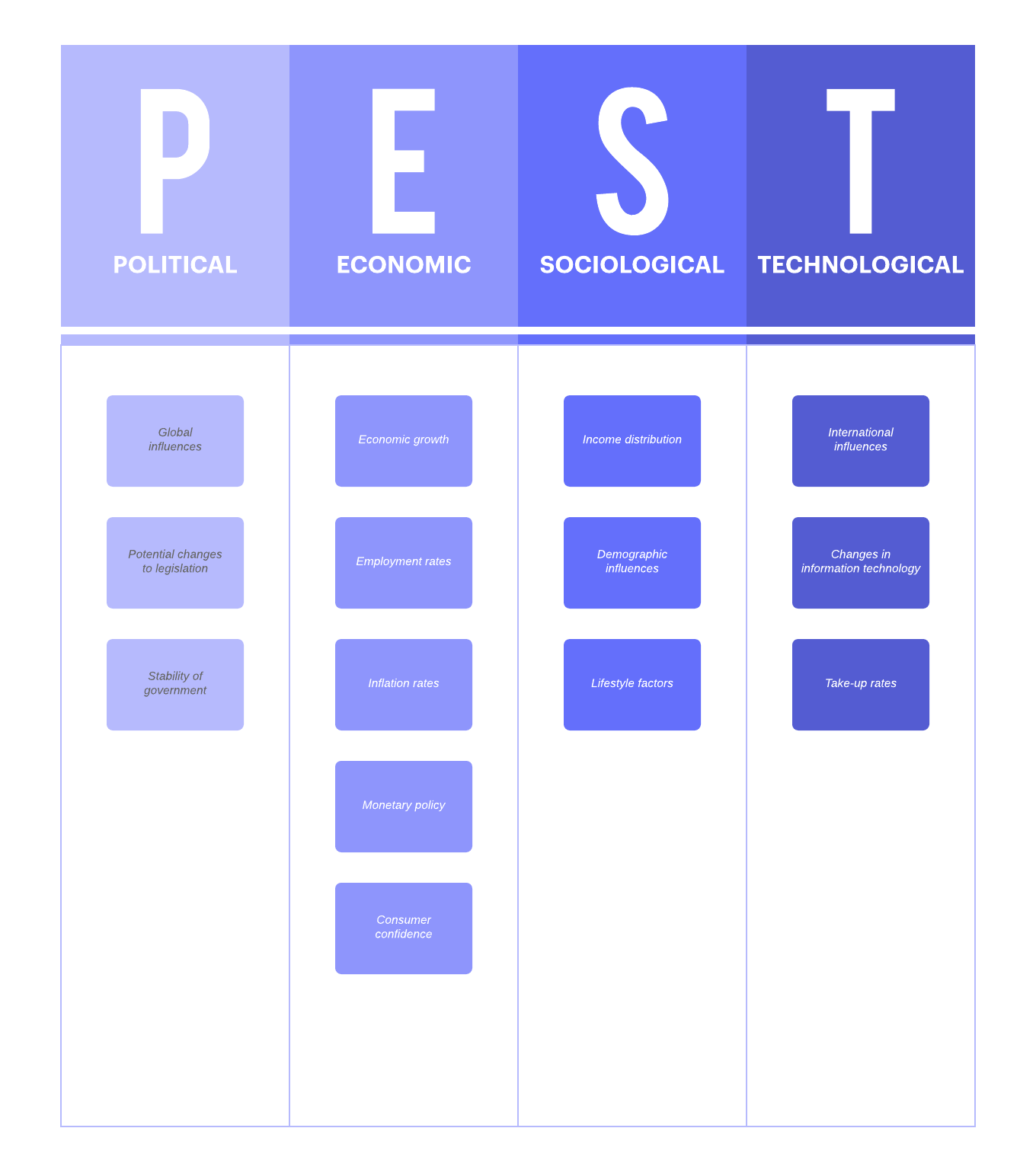
P: Political factors
Political factors look at how legal and governmental regulations, as well as the political climate, might affect your organization’s freedom to operate and its ultimate profitability.
These factors might include:
- Upcoming local, state, or national elections
- Main political candidates and their views on different policies
- Government regulation of industry or competition
- Trade policies (e.g., tariffs, current or prospective trade deals, etc.)
- Level of corruption or organized crime in your region or country
- Import restrictions
- E-commerce policies
- Consumer and employee protections
E: Economic factors
The economy has a significant impact on any business. Consider the following economic factors that could influence your business operations:
- Current economic stability
- Projected growth and inflation rates
- Interest rates
- Fiscal policies
- Consumer habits and financial stability
- Unemployment rate and competition for jobs
- Access to credit (personal and business)
S: Socio-cultural factors
Socio-cultural factors consider the makeup of the population and your target demographics to understand how well your business can compete in the market. These factors might include age distribution, cultural attitudes, and workplace or lifestyle trends.
As you analyze the market, consider how the following factors could impact your organization:
- Population growth and demographics
- Generational shifts
- Consumer habits and values (e.g., focus on product quality or eco-friendliness)
- Family size and structure
- Consumer lifestyles
- Immigration rates
- Attitudes toward work
T: Technological factors
This step considers technology’s specific role and development in an organization and the industry, as well as broader technological trends and uses that affect society as a whole.
For example, one way technological changes have affected the workforce is by increasing access and availability of remote working opportunities. These changes have far-reaching consequences for the future of work and will impact how organizations structure their businesses and employees.
Other technological factors to consider include:
- The organization’s access to new technology
- The competition’s access to technology
- Rate of technological change
- Evolution of infrastructure
- Government or institutional research
2. Identify opportunities
Once you’ve researched the various ways your organization is influenced and affected by external conditions, start identifying opportunities these changes could provide.
For instance, is there a technological development of which you could take advantage to increase efficiency? Or are there shifts in consumer demographics that could open new markets for your products?
Seek out as many opportunities as possible so you can develop the best strategic response for your business.
3. Identify threats
Unfortunately, change also comes with risks. Whether an economic downturn threatens your bottom line or a competitor’s access to new technology gives them a competitive edge, you need to identify potential threats to your organization so you can mitigate the risks and adapt your strategy accordingly.
The sooner you recognize threats, the more likely you are to avoid them or reduce their impact.
4. Act on your findings
With all your data collected and your opportunities and threats outlined, it’s time to take action. Incorporate these findings into your business plan to take advantage of opportunities and manage threats as soon as possible.