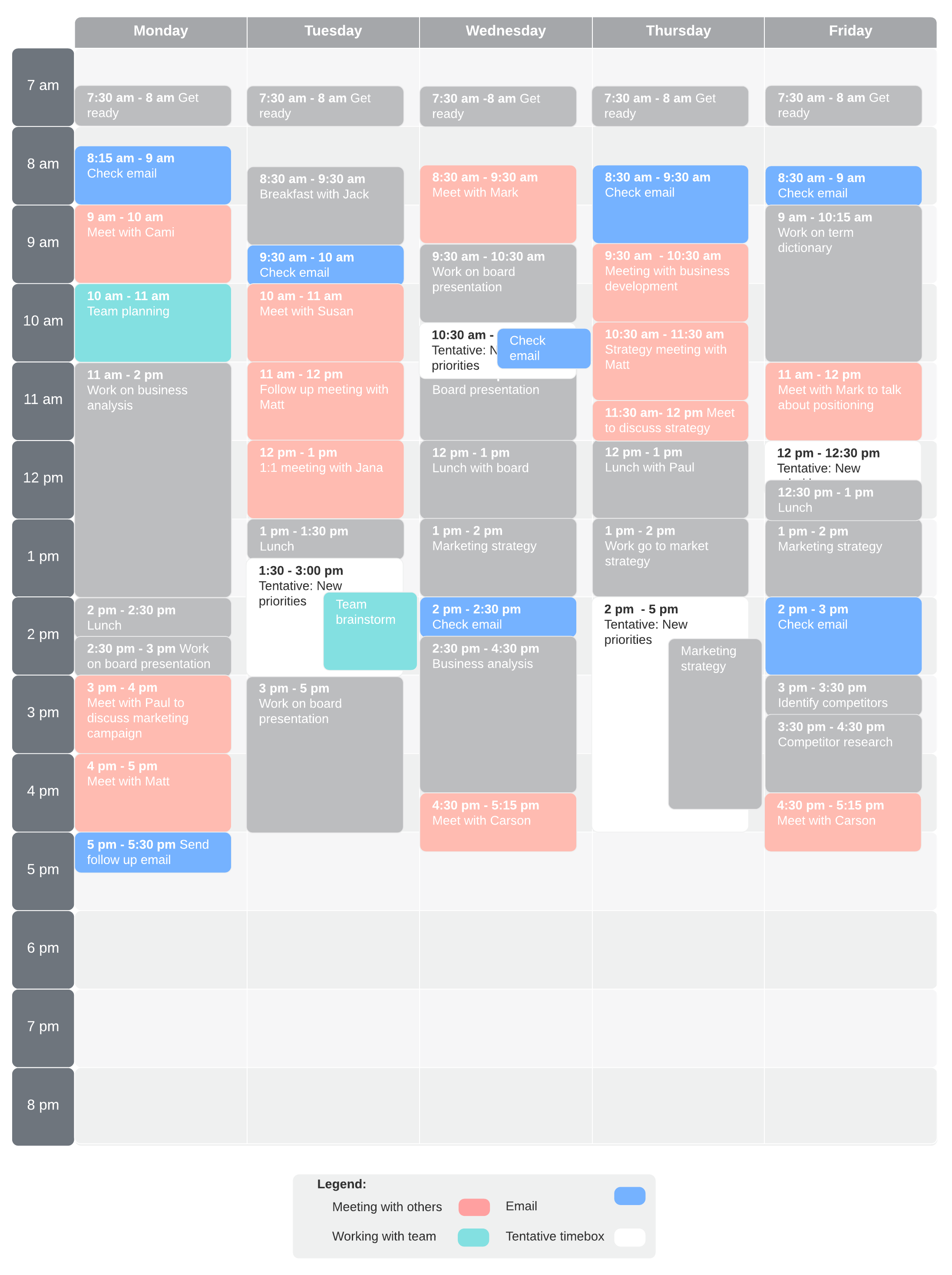
7. Build in buffers.
It may sound counterintuitive, but breaks are essential to better time management.
Research shows that regular breaks increase productivity, mental well-being, decision making, and memory. And skipping breaks can lead to faster burnout and more stress.
So what does this have to do with time management?
Higher stress levels impact energy, fatigue, cognition, and productivity and engagement at work. So ironically, working less (by taking more breaks), can help you do more in less time.
Make breaks a part of your schedule. When you finish a task, give yourself time to breathe. Take mini breaks to recharge, whether that be a short walk, a game of ping pong, some meditation, etc.
8. Learn to say no.
You’ll never learn how to manage time at work if you don’t learn how to say no. Only you truly know what you have time for, so if you need to decline a request in order to focus on more important tasks, don’t hesitate to do so. And if you take on a project that is obviously going nowhere, don’t be afraid to let it go.
Rather than doing a lot of tasks that yield little or no value, complete fewer tasks that create more value. Remember the 80/20 rule—80% of your output comes from 20% of your inputs. Focus your efforts accordingly.
If you can’t say no, delegate it. While delegating can be a hard skill to learn, it can work wonders for your personal time management. You’ve put together a talented team, so determine the tasks you can pass on.
9. Get organized.
For effective time management, this tip needs to actually go on your to-do list. If you have piles of papers scattered all over your desk, finding the one you actually need will be like finding a needle in a haystack. There are few things as frustrating as wasting valuable time looking for misplaced items. Not to mention how hard clutter can make it to focus.
Little things make a big difference. Create a filing system for documents. Unsubscribe to emails you no longer need. Automate repetitive tasks or processes where you can. Create systems for organizing and accomplishing tasks to increase your efficiency. Just think—you only have to do it once, but you get the benefits forever.
10. Eliminate distractions.
Social media, web browsing, co-workers, text messages, instant messaging—the distractions at work can be limitless. A key to personal time management is being proactive about getting rid of them. Shut your door to limit interruptions. Close all tabs except the ones you are currently working on. Turn off messaging notifications and leave your personal phone calls for lunch.
Take baby steps. Identify your top two distractions and focus on conquering those for two weeks. And remember that getting enough sleep, drinking enough water, and eating healthily can all help you stay focused during the workday—especially when that afternoon slump hits.
Better time management is about skills not hacks
At the end of the day, no “pro-tip” or calendar tool will magically make your time management woes disappear if you don’t have a foundation of good time management skills.
The Harvard Business Review identifies three primary skills that separate time management success from failure:
- Awareness: thinking realistically about your time by understanding it is a limited resource.
- Arrangement: organizing goals, plans, schedules, and tasks to most effectively use your time.
- Adaptation: regularly monitoring how you use your time while performing activities, including adjusting to interruptions or changing priorities.
Use the tips above to help you develop these skills and create effective time management habits that stick.