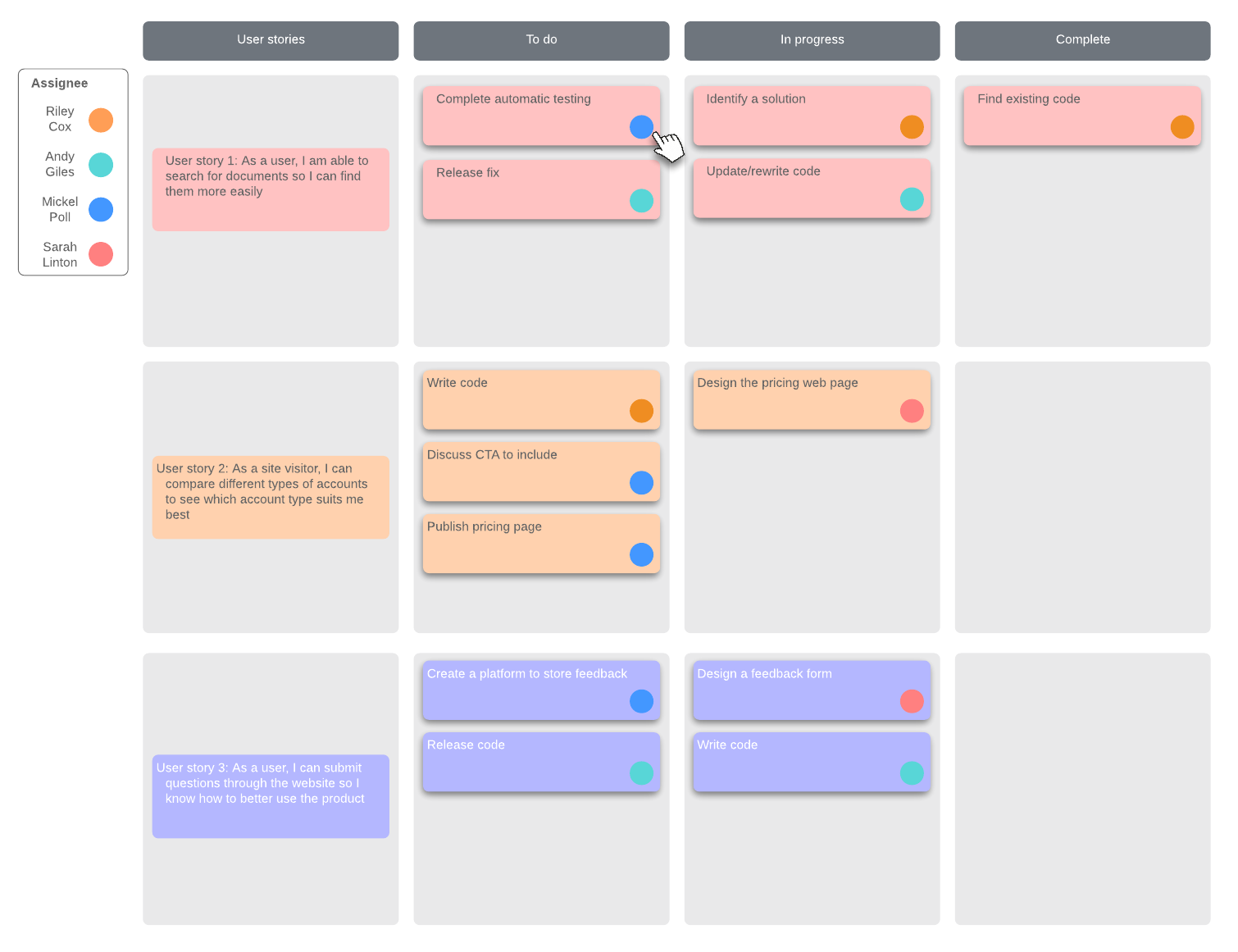
Scrum involves five events, and all five events are timeboxed.
Sprint: A sprint is an interval of one month or shorter during which a team defines a goal and achieves it. Timeboxing is used to set the length of a given sprint and can even be used to set time limits on individual processes within a sprint.
Sprint planning: Before setting off on a sprint, the sprint planning process is required to identify exactly which tasks need to be executed and how they will be executed. Sprint planning is timeboxed by setting a specific length of time for the planning process—experts recommend eight hours or fewer for one-month sprints, and two hours or fewer for one-week sprints.
Daily Scrum: Each day in a sprint, teams meet for a 15-minute Scrum timebox to align on priorities and address any obstacles to the sprint goal.
Sprint review: At the conclusion of a sprint, teammates review the backlog and give feedback in a process called the sprint review. The sprint review is a timebox relatively equal to half the length of a sprint planning meeting.
Sprint retrospective: Once a sprint is fully completed, Scrum teammates meet to discuss the entire sprint process, reflect on areas of improvement, and make decisions on changes for the next sprint. This sprint retrospective is a Scrum timebox of around three to four hours per one-month sprint and is a similar length as the sprint review.
The value of timeboxing in and out of work
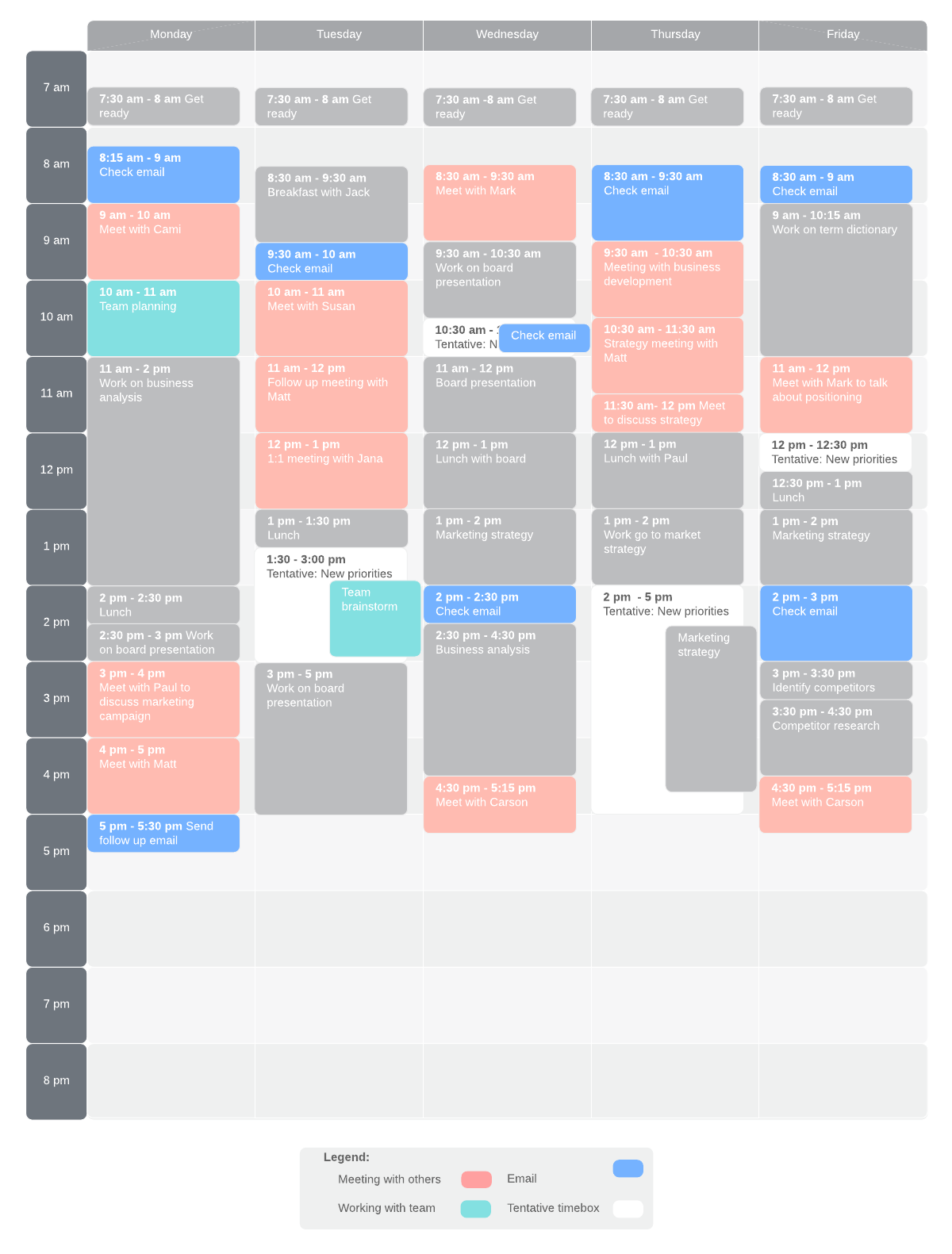
Experts in productivity have concluded that when tasks are handled in chunks of time rather than given focus until completion, the gross time spent on a task can be reduced significantly.
Time restraints alone, however, are not potent seeds for fruitful work. Vigorous focus, when met with a designated time limit and oscillated with meaningful rest, is a powerful combination for productivity.
Some experts suggest working in chunks of time, giving focused attention to a task for 25 minutes straight, followed by a five-minute break. This technique, called the Pomodoro technique, is an example of timeboxing.
The advantages of timeboxing include:
Focus: Because the central value of timeboxing relies on accomplishing one task at a time, project managers can be assured that all mental resources are being applied to each task. The timeboxing technique requires that each task is given full attention to make sure it's completed within a fixed deadline.
Scope: Defining project objectives before beginning allows the timeboxing technique to deliver scope on a given project timeline. When timeboxing is combined with task dependency, like in a Gantt chart, project management becomes as easy as looking ahead to see each task’s effect on the entire project outcome.
Clarity: Timeboxing provides clarity by defining boundaries both on project outcomes and on project timelines. Project managers have the added benefit of knowing that by the end of X time period, Y item will be completed.
Timeboxing is even a great way to instill mundane but valuable tasks into your daily life. For example, many mental health professionals suggest setting aside just five minutes a day for mindful breathing and meditation. This five-minute timebox can fit its way into any part of your schedule, with excellent physical and mental benefits. Even setting aside five minutes a day to tidy up a bedroom and make your bed is a timebox that adds to mental calm by providing a clear space.
Take timeboxing with you
As with any productivity tool, tracking next steps and current progress is essential to results-driven work—and visuals are often the best way to keep team members informed and increase productivity.
For the best in diagramming, top performers turn to Lucidchart, where they can create Scrum boards and other project management visuals and share them directly with team members across a variety of integrated platforms. Manage your time and tasks without stress using free Lucidchart templates and tools.