What does process improvement look like in your organization? Chances are you don’t have a single solution for all business process hurdles. Even after month-long projects are implemented and big budgets are spent, no system is perfect—and while an initiative may temporarily improve the way work is done, chances are that you’ll need to change it again at some point.
You don’t have to overcomplicate or silo growth and business process improvements (BPI). Using the Kaizen method of continuous improvement encourages organizations to play the long game—the slow and steady.
And the best part? Anyone from a project manager to a CEO can implement it.
What is Kaizen, exactly?
Kaizen is a Japanese word which translates to mean “continuous improvement.” It's a “do better every day, with everyone, and everywhere” philosophy. The focus is on small, frequent improvements to existing work processes, generated by all employees at all levels in an organization—not just managers and executives. When applied, it can improve every function of a business, from marketing to finance to the warehouse.
The Kaizen philosophy challenges the statement of “that’s just the way we do things.” Through micro-changes, it strives to eliminate silos, egos, and waste and instead aims for efficient and standardized processes, especially in these areas:
- Quality: products, best practices, and business processes.
- Cost: materials, energy, and resources.
- Delivery: delivery time and non-value added activities
- Management: training, attitudes, flow, and documentation
- Safety: working conditions
You might have heard the term Kaizen in reference to The Toyota Way—a famous tale studied in business school. Or, maybe you've heard it tossed around with other continuous improvement methodologies like Six Sigma, Lean, Total Quality Management, 5S, and the like. Kaizen methodology is more mindset than toolbox, so it actually can (and probably should) be implemented alongside other BPI methodologies like Six Sigma and 5S. But why implement it at all?
Why implement the Kaizen method?
Over time, small incremental improvements can deliver significant results—it’s basically a grassroots movement for BPI.
Kaizen also fosters conditions in which employees are deeply engaged. When implemented successfully and clearly, Kaizen fulfills three essential needs of employees:
- Connection: Feeling connected to a bigger organizational goal, to their work, and to their co-workers
- Creation: Opportunities to think and solve existing problems with creative, yet practical solutions
- Control: A sense of ownership and awareness throughout the process
Using the Kaizen methodology is an easy way to engage employees and develop a culture of continuous improvement. It seems obvious, but employee engagement has a direct impact on business processes and success. When you organize and empower all employees to participate in the big picture through small effects to their local environments, they'll stick around longer and work smarter.
You can easily loop in employees with Lucidchart, simply by sharing your process diagrams and collaborating in real time with the chat feature or even by directly commenting on specific parts of your document.
How to put Kaizen into practice
Kaizen can be implemented company-wide, within teams, or even personally. Some cases may require clear direction from leadership and company culture shift.
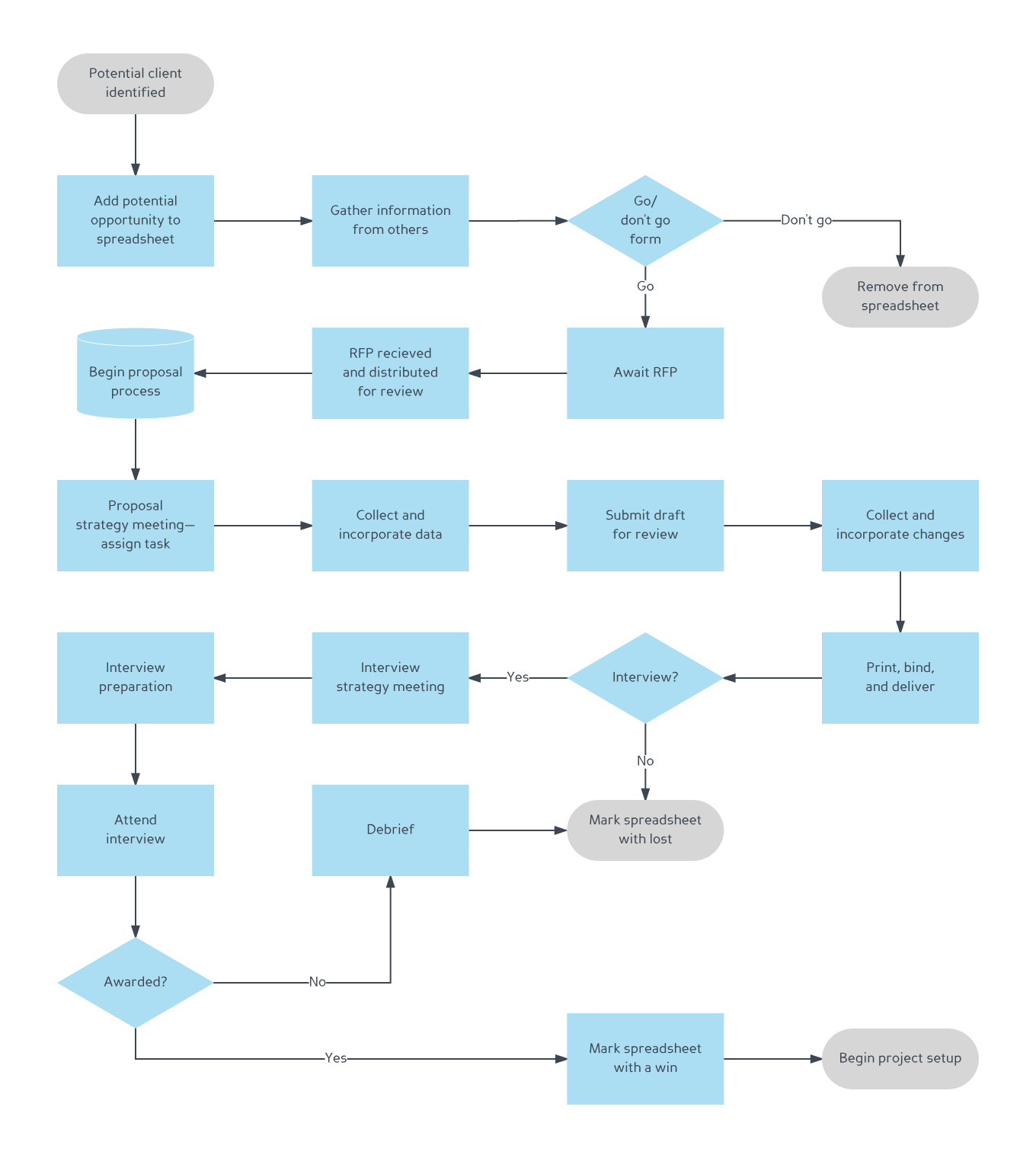
Use the idea of Kaizen continuous improvement to build process and deployment flowcharts to visualize your current processes and more easily detect where waste might be hiding in your company. Something as simple as taking a step toward visually documenting your business processes with a Kaizen diagram could be an improvement that could lead to further valuable realizations and changes.
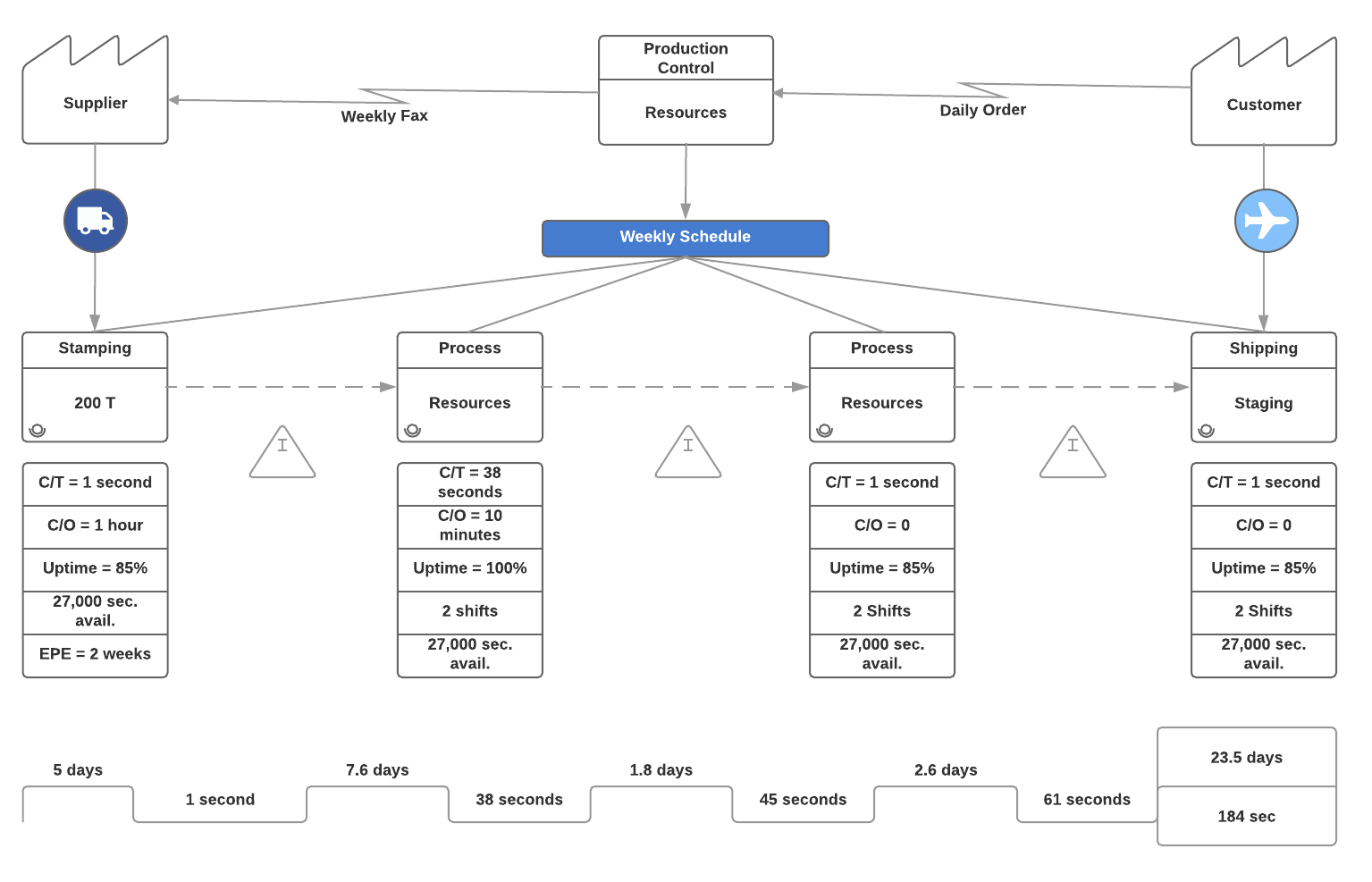
For example, you could use a value stream map to detect waste and non-value added time in manufacturing or even in a DevOps environment.