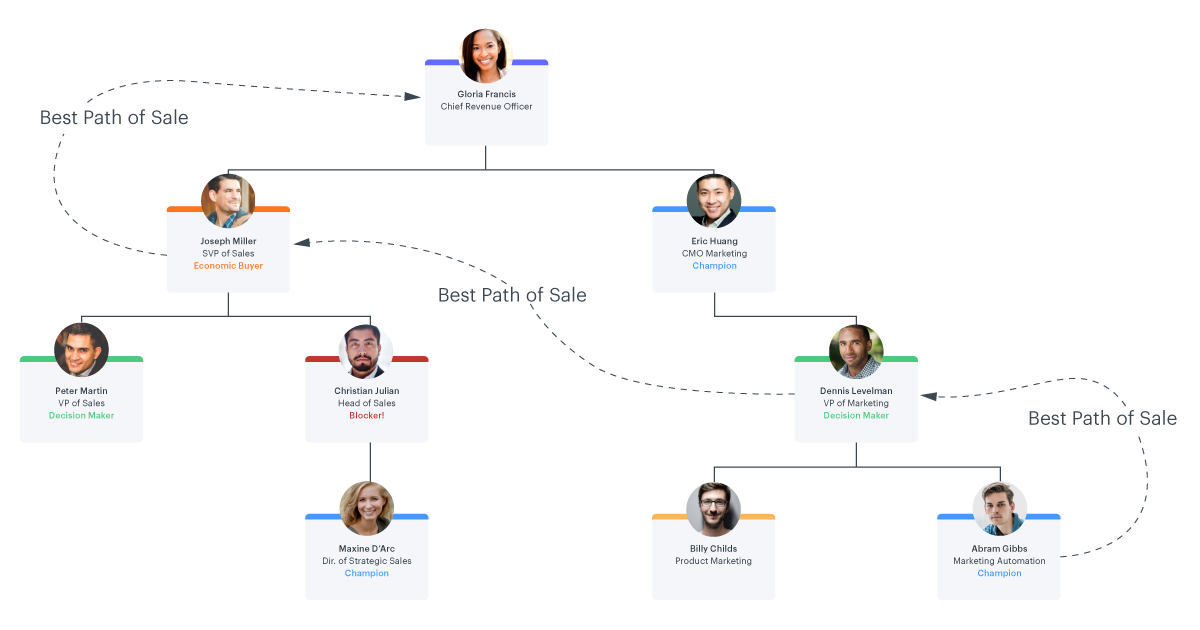
KAMs can streamline their communications by mapping out their key accounts in Lucidchart. Account maps outline organizational relationships and help sales reps and KAMs identify the right people to contact. Uncover the fastest path to sale, share account updates, and track touchpoints all on one platform.
2. Company and customer expertise
One of the primary goals of key account management is to nurture strategic relationships with top accounts, so a KAM must possess an in-depth knowledge of the company and its customers. This expertise allows them to identify the best opportunities for growth and service to the client.
This expertise is particularly important because key accounts expect customized service. In other words, key customers typically don’t buy “off the shelf” products. Instead, the KAM needs to curate custom offerings tailored to the customer’s specific needs.
To do this, the KAM has to understand each part of the business and be able to communicate effectively to build bespoke offers.
When the KAM understands the account’s strategy, market position, budget, and goals, they can develop better offers that deliver greater value to both the client and the business.
3. Strategic perspective
One major distinction between traditional AMs and KAMs is the level of strategy involved in managing each account.
KAMs need to have a strategic perspective that goes beyond short-term gains. They must be able to juggle many moving parts and orchestrate deals and long-term plans that align with a mutually beneficial strategy.
This is one reason why your top salesperson may not be the best fit for key account management. While strong selling skills are important, key account management prioritizes the long-term relationship over short-term transactions.
4. Leadership
KAMs are leaders. They must be adept at directing customers and managing employees at all levels of the business. Because KAMs touch so many parts of the business, they should be confident and command respect from both their clients and co-workers.
Additionally, the strategic nature of the role means the KAM acts as a visionary. Therefore, they will be expected to lead both customers and internal executives and managers on key initiatives.
5. Skilled negotiation
At the end of the day, the KAM’s goal is to build the lifetime value of their customer. In order to do this, they not only need to sell to the customer but also negotiate terms so both parties end up happy.
This requires a keen sense of timing, killer presentation skills, and the confidence to hold their ground and push back when necessary.
6. Value-based selling
Long-term success depends on being able to demonstrate value to the customer.
In fact, 87% of high-growth companies take a value-based approach to sales. Top salespeople help prospects understand the value of the product or service through every customer interaction.
As a KAM, you need to communicate the value of your offerings both strategically and financially to your customers.
This is where understanding the business also comes in handy. KAMs who can curate custom offerings can create more value for their key accounts, helping them to sell more effectively and retain long-term relationships.
7. Project management
KAMs are not just great salespeople, they're great project managers. KAMs must be able to juggle multiple clients, delegate and manage assignments, and keep strategic account plans on track. This also includes impeccable time management skills, as well as strong organizational prowess.
Because KAM is all about strategic relationships with customers, KAMs must often adapt their plans to fit the needs of the customer. Without a strong project management foundation, it is all too easy for customer plans to get derailed at the first sign of change or friction.
Tools for success
With such a broad range of responsibilities and skills, KAMs need the right tools to stay organized and get the job done. Sales leadership should invest in the following tools for their key account managers:
CRM software: Communication is the foundation of relationships, so it is vital that you know what has been communicated, who was involved, and when. Use a robust CRM solution, such as Salesforce, to track each customer relationship and manage every touchpoint.
LinkedIn: LinkedIn is a great way to keep your finger on the pulse of the market. Use LinkedIn to monitor account markets for shifts and developments so you can always stay one step ahead of the competition. Consider adding LinkedIn Sales Navigator to target the right buyers and keep track of company changes.