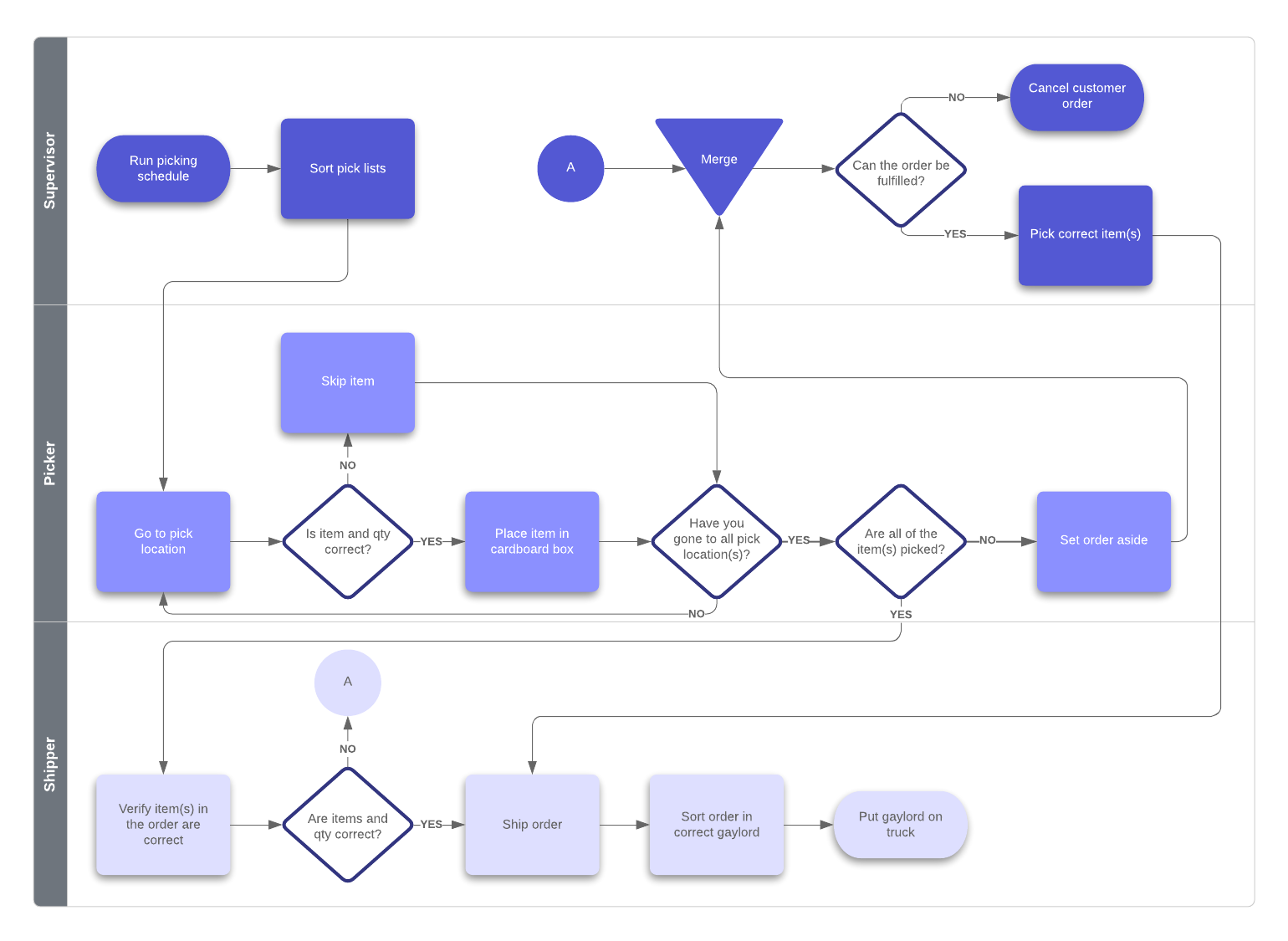
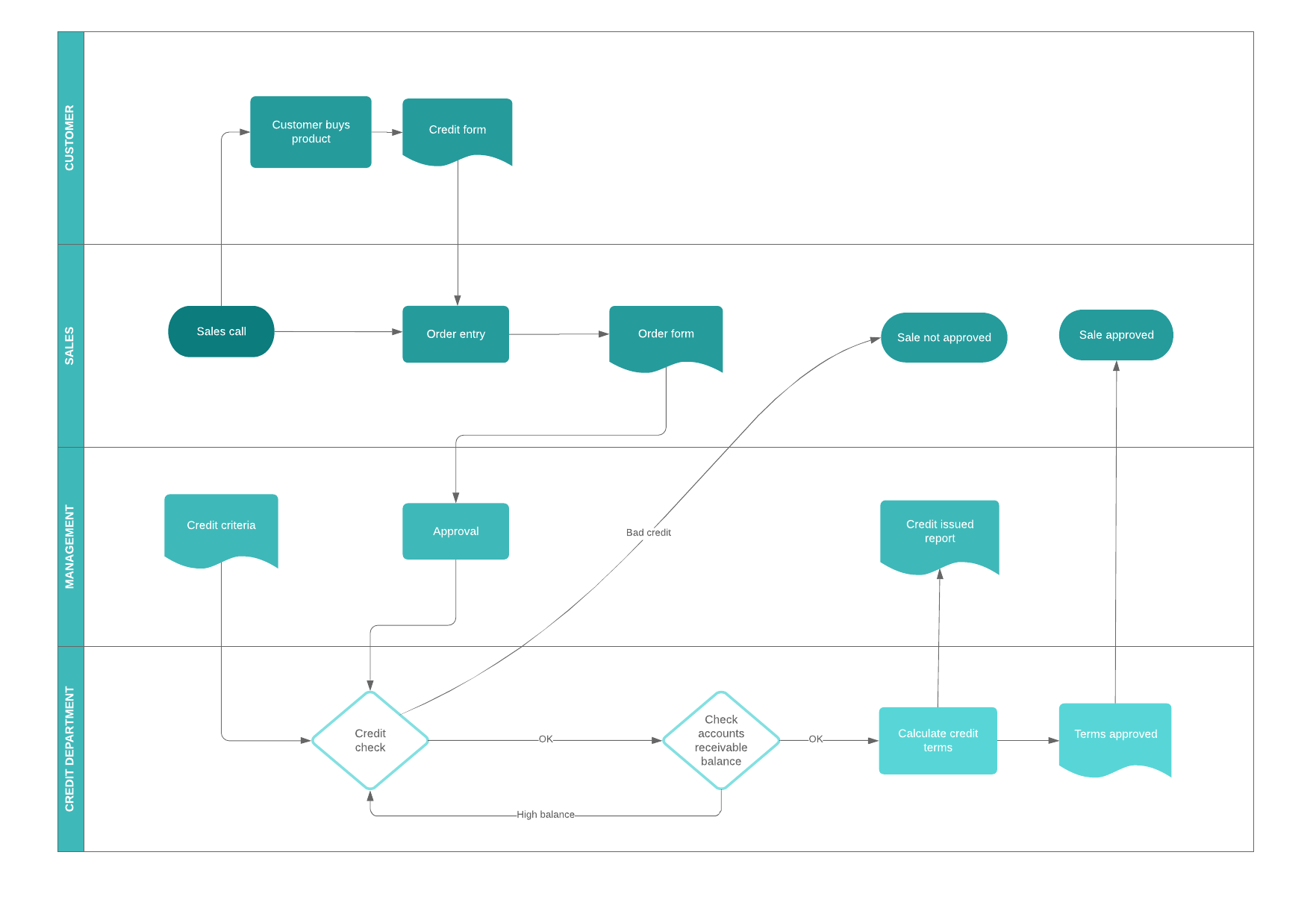
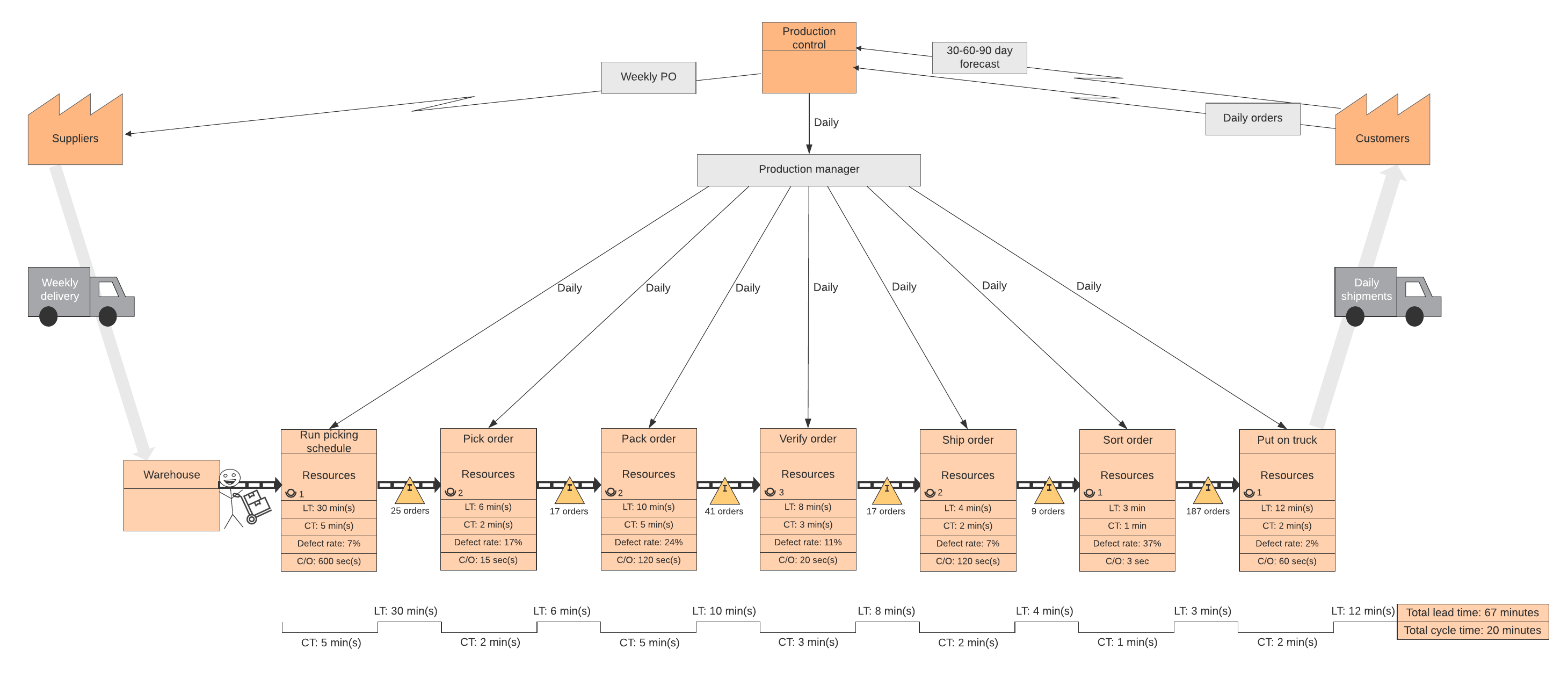
Standardized work processes are generally more detailed. The step-by-step instructions include details on how to do specific tasks. Describing how things need to be done is important when the process needs to be completed exactly the same way each time to ensure consistent quality and output.
Standardized work and Kaizen methodology
But after you have defined and documented standard work processes and steps, don’t think that you are done. Standardized work includes the documented details of the currently known best practices for doing work. There is always room for improvement. This is why standardized work is considered the foundation of the Kaizen methodology. Kaizen is a Japanese word that means “good change” or “change for the better.” As a business concept, it means to look for ways to continuously improve the way you do your work.
The goals of standardized work and Kaizen are to increase productivity and efficiency and to reduce waste. You can do this by making frequent, small improvements to current processes. After the current best practice is identified, documented, and shared through training, you have a baseline for standard work. Use Kaizen to monitor and evaluate the process. Make small adjustments as needed to create the next current best practice. and make adjustments that will become the next currently known best practice.
Elements of standardized work
Standardized work requires the following three elements:
Takt time
Takt time comes from the German word “taktzeit.” It means clock time or pulse time. In Lean manufacturing, takt time refers to the amount of time you need to create your products so you can keep up with demand. The formula is as follows:
Available production time per day ÷ customer demand per day = takt time
For example, say your employees are scheduled to work an eight hour shift (or 480 minutes). If they have two 15-minute breaks and a 30-minute lunch, the available production time goes from 480 minutes to 420 minutes. If there is a 15-minute briefing before the shift starts and another 15 minutes at the end of the shift for cleanup and general maintenance, the available production time ends up being 390 minutes.
If customer demand is 60 units per day, the takt time says you need to create a unit every 6.5 minutes.
390 minutes ÷ 60 units = 6.5 takt time for each unit
Work sequence
This term refers to the order in which each step in the process must be completed within the takt time.
In-process inventory
This term refers to the amount of materials you need on hand at any given time during the production time. You need to have the right amount for your operators to be able to complete the steps in the work sequence within the specified takt time.
Having too little inventory or too much inventory both lead to waste. When there is not enough material, the work sequence is disrupted, and there is downtime until you come up with additional materials. Too much inventory can lead to overproduction and unsold/unused products.
Benefits of Lean manufacturing standard work
People are often resistant to change. It makes them uncomfortable and forces them to think differently. But standardized work and Kaizen can make change a little easier for everybody because it encourages collaboration and allows everybody to share their ideas for improving the process.
The benefits of using standard work and Kaizen include:
-
Consistent, high-quality output: Because everybody is completing work the same way, there is no variation in the output. When the output is identical, it’s easier to predict costs, required inventory, takt time, work sequences, and so on. Plus, customers will be more satisfied with the consistent quality of your products.
-
Increased efficiency: All workers are completing tasks based on the currently known best practices, meaning that the work flows smoothly and efficiently.
-
Reduced waste: Following specific steps reduces or eliminates defects that can cause products to be discarded or heavily discounted.
-
Safer work environment: Because your employees are well-trained and following standardized work processes, everybody is where they are supposed to be and doing what they are supposed to be doing. This reduces risks and potential injuries.
-
Easier time making improvements: When standard work has been in place for a while, it becomes easier for those involved to see where improvements can be made. Little changes are easier to implement because employees have a better understanding of the process and can quickly see how the change can make the work flow better.
-
Faster problem-solving: Does standard work eliminate problems? No. But when problems come along, it’s easier to fix them because you understand the process and can quickly pinpoint where things went wrong.
-
Focus on processes and not people: When your employees are following standardized work exactly as documented, problems and errors are more likely caused by mechanical or process malfunction. Employees know it is not their fault when something breaks.
Where to start with standardized work processes
Ready to jump in and implement standardized work processes? We’ve put together a few steps to get you started.
Step 1: Analyze current operations
Observe how the work is currently being performed. Gather data such as how many people it takes to produce one unit, how long it takes to produce one unit, which steps are dependent on other steps, and so on.
Perform an as-is process analysis and create a visual process diagram that documents the current workflow. When you understand the current workflow, it’s easier to see where things can be improved.